

TL;DR
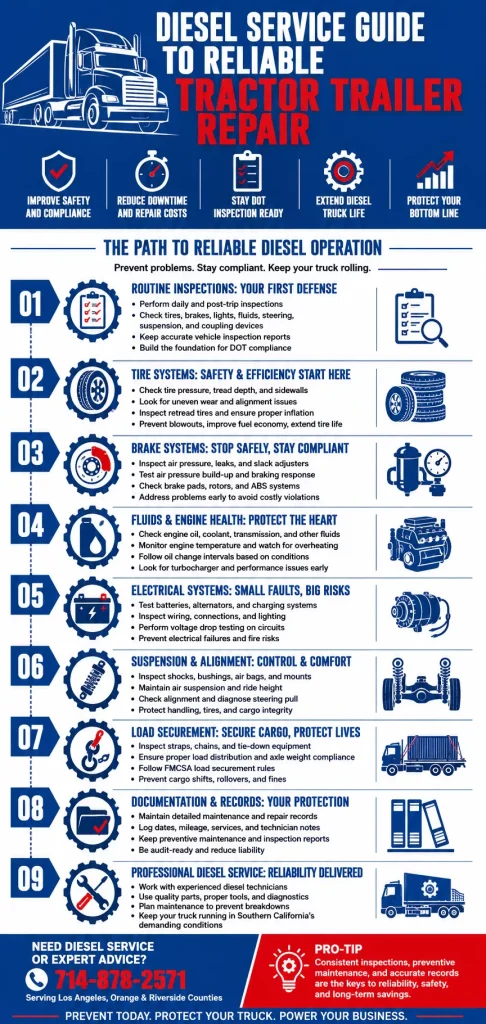
Reliable tractor trailer repair depends on preventive maintenance, routine inspections, and accurate documentation rather than waiting for breakdowns to happen. Consistent checks of tires, brakes, fluids, suspension, and electrical systems improve safety, reduce downtime, support DOT compliance, and extend diesel truck life, especially under demanding Southern California driving conditions.
Key Takeaways for Reliable Diesel Operation
- Preventive truck maintenance reduces downtime and emergency repair costs
- Routine inspections improve safety and DOT inspection readiness
- Tire, brake, and suspension systems require consistent attention
- Accurate documentation protects fleets during compliance audits
- Experienced diesel service supports long-term truck reliability
Keeping a rig moving in Southern California is about far more than fixing problems after they happen. Reliable tractor trailer repair starts with understanding how diesel systems work together, how inspections prevent costly downtime, and how consistent service protects drivers, cargo, and operating budgets. In regions like Los Angeles County, Orange County, and Riverside County, where traffic density, heat, port activity, and long-haul routes all collide, diesel vehicles face operating conditions that expose weaknesses quickly. This guide explains how professional diesel service supports reliability, safety, and compliance for drivers, fleet owners, and business operators who depend on their trucks every day.
Precision Diesel Services works with work trucks, tractor trailers, and fleets across Southern California, often seeing the same failures repeat when preventive care is overlooked. This article breaks down the systems, inspections, and habits that keep diesel equipment reliable and inspection-ready, while helping operators understand what quality service really looks like in the real world.
Why Tractor Trailer Repair Is About Prevention, Not Just Fixes
Most breakdowns do not happen suddenly. They develop slowly through missed inspections, ignored warning signs, or incomplete documentation. Effective tractor trailer repair focuses on identifying wear early so that small issues never turn into roadside failures or out-of-service violations.
Modern diesel trucks operate under heavy loads, long idle times, and extreme temperature swings. In Southern California, stop-and-go traffic near ports and freeways adds additional stress to braking systems, cooling systems, and electrical components. Preventive truck maintenance reduces the risk of lost loads, missed deadlines, and emergency repairs that cost far more than scheduled service.
This approach applies whether you manage a single owner-operator rig or oversee a large fleet. Reliable trucks come from disciplined inspection routines, accurate maintenance records, and experienced diesel technicians who understand how systems interact under real working conditions.
Building a Foundation With Routine Inspections
Daily and Trip-Based Inspections
A consistent daily truck inspection routine is one of the most effective tools for truck breakdown prevention. Drivers who follow a structured pre-trip truck inspection often catch air leaks, tire damage, or lighting faults before the truck ever leaves the yard. Post-trip inspection checklists then confirm whether new issues appeared during the run.
A thorough tractor trailer inspection covers tires, brakes, steering, suspension, lights, fluids, and coupling devices. These checks directly support truck safety inspection readiness and reduce the risk of failing a DOT truck inspection during roadside stops.
Why Inspections Matter for Compliance
Commercial vehicle compliance is not optional. Vehicle inspection reports and preventive maintenance records are often the first documents requested during audits. Missing documentation or inconsistent inspection practices can lead to fines and downtime, even if the truck itself is mechanically sound.
Fleet maintenance best practices tie inspections directly to truck maintenance logging. When issues are documented early, repairs can be scheduled instead of rushed. This approach supports roadside truck repair prevention and keeps vehicles operating efficiently across long-haul and regional routes.
Tire Systems: The First Line of Safety and Efficiency
Understanding Commercial Truck Tire Safety
Tires are one of the most overlooked components in diesel service, yet they are a leading cause of roadside breakdowns. Tractor trailer tire inspection should include checking air pressure, tread depth, sidewall condition, and signs of uneven tire wear causes.
A semi truck tire pressure check helps prevent heat buildup, which is a major contributor to blowouts. Truck tire tread depth requirements vary by axle, with steering axle tread depth being especially critical for handling and braking performance.
Preventing Tire-Related Failures
Truck tire blowout prevention starts with consistent inspections and alignment checks. Truck alignment and tire wear are closely linked. Misalignment increases rolling resistance, fuel consumption, and tire replacement costs. Retread tire inspection is equally important, as retreads can fail prematurely if casings are damaged or inflation is inconsistent.
In Southern California’s hot climate, underinflated tires deteriorate faster. Commercial truck tire safety depends on disciplined inspections supported by professional service when wear patterns appear abnormal.
Brake Systems: Where Safety and Compliance Meet
Core Elements of Brake Inspections
Tractor trailer brake inspection is one of the most critical aspects of any diesel service program. Air brake system inspection includes checking air pressure buildup, air brake leak detection, slack adjuster inspection, and overall braking response.
An air brake pressure test confirms that the system builds and holds pressure correctly. Any delay or pressure loss can indicate leaks, worn components, or valve issues that require immediate attention.
Diagnosing Brake Problems Early
Common tractor trailer brake problems often begin subtly. Drivers may notice pulling during braking, longer stopping distances, or warning lights related to ABS brake fault diagnosis. Truck brake pad inspection and rotor checks help identify wear before metal-to-metal contact causes damage.
Semi truck brake repair is far more manageable when issues are addressed early. A complete commercial truck braking system evaluation reduces accident risk and ensures compliance with truck brake safety checks during roadside inspections.
Fluids and Engine Health: The Heart of Diesel Reliability
Essential Fluid Checks
Tractor trailer fluid checks include engine oil inspection truck procedures, transmission fluid inspection, and truck coolant level check routines. These inspections support diesel engine maintenance and reduce the risk of catastrophic failures.
Truck oil change intervals should align with operating conditions. Long idle times, heavy loads, and stop-and-go traffic accelerate oil breakdown. Ignoring these factors leads to sludge buildup, overheating, and reduced engine life.
Monitoring Performance and Temperature
Engine temperature monitoring is critical in Southern California’s heat. Truck overheating prevention involves proper coolant ratios, clean radiators, and functioning thermostats. Turbocharger failure signs such as loss of power or excessive exhaust smoke often point to lubrication or airflow issues that require immediate service.
A comprehensive truck engine performance check helps identify inefficiencies that increase fuel consumption and emissions, protecting both the engine and operating budget.
Electrical Systems: Small Faults With Big Consequences
Common Electrical Inspection Points
Truck electrical system inspection covers batteries, alternators, wiring, and lighting. Semi truck battery maintenance includes battery load test truck procedures and checking terminals for corrosion.
An alternator output test ensures charging systems support onboard electronics, refrigeration units, and auxiliary power demands. Voltage drop testing truck circuits helps identify resistance caused by damaged wiring or loose connections.
Fire Risk and Reliability
Truck wiring inspection is also a safety issue. Frayed or overloaded wiring increases truck fire risk wiring concerns, especially in high-heat environments. Commercial vehicle lighting inspection ensures visibility and compliance, reducing the chance of citations or accidents during night operations.
Suspension and Alignment: Protecting Handling and Cargo
Suspension Components That Matter
Truck suspension repair inspection includes checking shocks, bushings, air bags, and mounting hardware. A semi truck shock absorber check identifies leaks or reduced damping that affect stability.
Air suspension maintenance ensures consistent ride height and proper load distribution. Uneven ride height truck conditions often signal air leaks or valve problems that compromise handling.
Steering and Stability
Truck alignment check procedures address steering pull diagnosis and tire wear issues. Suspension bushing wear affects steering response and braking stability, especially under heavy loads. Heavy-duty suspension repair restores truck handling stability, protecting both driver control and cargo integrity.
Load Securement: Safety Beyond the Cab
Why Load Securement Matters
Load securement inspection is essential for preventing cargo shifts that affect braking, steering, and rollover risk. Trailer load distribution must account for axle weight compliance and overall truck load balance.
Cargo strap inspection ensures tie-downs are not frayed or weakened. FMCSA load securement rules apply to all cargo types, including flatbed load securement and enclosed trailers.
Preventing Cargo-Related Incidents
Truck cargo shifting prevention protects drivers and the public. Commercial cargo safety depends on proper securement techniques and routine checks throughout a trip, especially after rough roads or sudden stops.
Documentation and Maintenance Records
Why Records Protect Your Operation
Truck maintenance records and fleet repair documentation demonstrate compliance and professionalism. DOT compliance documentation often determines whether a roadside inspection ends quickly or turns into a full audit.
A detailed truck repair log supports preventive maintenance records and warranty repair documentation. Maintenance log best practices include recording dates, mileage, services performed, and technician notes.
Preparing for Audits
Truck compliance audits review vehicle inspection reports and service history. Accurate records show that preventive truck maintenance is part of daily operations, reducing liability and downtime during enforcement reviews.
How Professional Diesel Service Supports Reliability
Quality tractor trailer repair is not just about tools. It comes from technicians who understand long-haul truck maintenance, fleet reliability needs, and the realities of Southern California operations. Heavy-duty truck repair requires experience with high-mileage engines, emissions systems, and modern diagnostics.
Precision Diesel Services regularly works with fleets and owner-operators across Los Angeles County, Orange County, and Riverside County, helping trucks stay inspection-ready and operational. When drivers have questions or need service guidance, reaching an experienced diesel team at 714-878-2571 often prevents small concerns from becoming major failures.
FAQ: Diesel Service and Inspection Answers
What are the daily truck inspection requirements?
Daily inspections include checking tires, brakes, lights, fluids, steering components, and coupling devices. These inspections support truck safety inspection compliance and reduce breakdown risk.
How to inspect air brakes on a tractor trailer?
Air brake inspection involves checking air pressure buildup, listening for leaks, verifying slack adjuster movement, and performing an air brake pressure test before driving.
How often should a semi truck be serviced?
Service intervals depend on mileage, operating conditions, and load. Long-haul trucks typically require more frequent inspections due to higher wear rates.
What fluids should be checked on a semi truck?
Engine oil, coolant, transmission fluid, power steering fluid, and brake system components should be checked regularly as part of tractor trailer fluid checks.
How to document truck repairs for DOT?
Repairs should be recorded in a truck repair log with dates, mileage, services performed, and technician details. This supports DOT compliance documentation during audits.
