

TL;DR
The article explains how proactive diesel service practices significantly reduce tractor trailer repair costs by preventing breakdowns, extending component life, and improving fleet efficiency. It emphasizes preventive maintenance, driver training, telematics, and quality parts selection as the main cost-saving strategies. Fleets that follow structured maintenance programs experience less downtime and lower total ownership costs compared to reactive repair approaches.
Key Takeaways
- A proactive preventive maintenance schedule is essential to controlling tractor trailer repair costs.
- Regular pre‑trip and post‑trip inspections prevent minor faults from becoming expensive failures.
- Telematics for fleets and diagnostic tools help predict issues before they occur.
- High‑quality parts selection—OEM, aftermarket, or remanufactured—affects long‑term performance.
- Driver training programs influence maintenance outcomes and fuel efficiency.
- Choosing experienced, certified service providers supports predictable uptime and cost control.
Precision Diesel Services has decades of experience helping Southern California fleets reduce repair costs, optimize performance, and keep trucks running strong. Whether your priority is fleet maintenance, heavy‑duty diagnostics, or improving driver behavior, informed diesel service practices are the foundation of success.
When fleet managers, drivers, and business operators in Southern California think about tractor trailer repair costs, what they really want to understand is how to keep expenses down while keeping trucks on the road and working hard. A proactive approach to truck care not only accelerates operational efficiency but also strengthens your bottom line.
At Precision Diesel Services, serving Los Angeles County, Orange County, Riverside County, and all of Southern California, we’ve worked with fleets of every size. Over time we’ve seen the real cost savings that come from detailed truck maintenance practices, smart use of technology, and an emphasis on driver training and routine checks. This article breaks down the key strategies that help businesses reduce downtime, extend the life of critical components, and lower total cost of ownership without sacrificing performance.
Whether you manage a small independent operation or oversee a large regional fleet, understanding how to optimize diesel service will help you control tractor trailer repair costs while maximizing fleet uptime and efficiency.
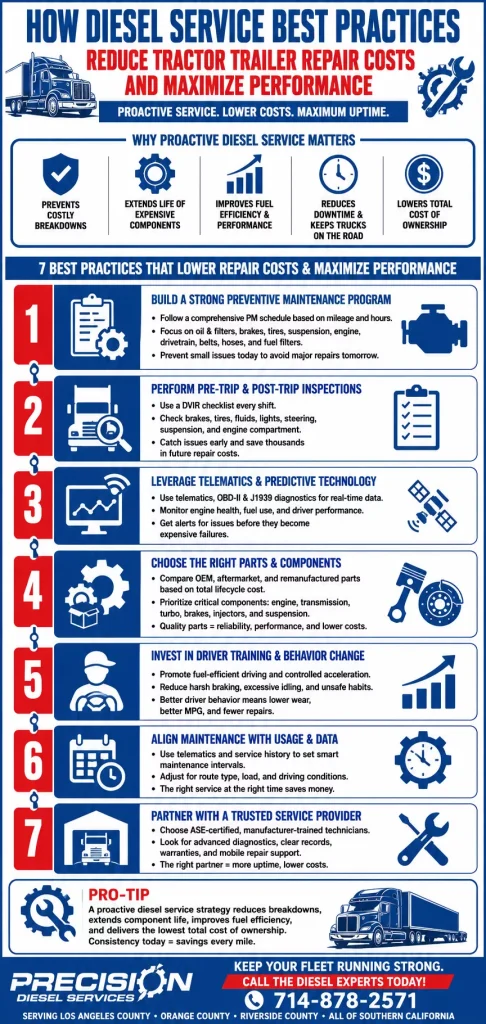
Why Proactive Diesel Service Matters for Your Bottom Line
Effective diesel service goes far beyond fixing issues after they occur. Waiting until a breakdown to address a problem means higher expenses from emergency mechanical intervention, lost revenue during downtime, and expedited parts orders that inflate costs. A strong framework of preventive maintenance and scheduled inspections builds resilience into your operations.
Here’s why proactive service matters:
- Early detection of wear prevents small issues from evolving into major failures
- Regular truck maintenance extends the life of expensive components like engines and transmissions
- Systematic checks reduce roadside breakdowns and improve driver confidence
- A structured maintenance program produces measurable maintenance ROI
In Southern California’s demanding routes—from freeways to construction zones—diesel engines and drivetrains face intense workloads. Establishing a disciplined approach to service is how you reduce long‑term tractor trailer repair costs and ensure high productivity.
The Foundation of Lowering Repair Costs: Preventive Maintenance
Preventive maintenance is the cornerstone of a cost‑effective fleet program. Unlike reactive repairs that respond to failures, preventive practices identify potential problems before they impact performance.
Establishing a PM Schedule That Works
A comprehensive PM schedule should include routine care for systems susceptible to stress and wear under heavy use:
- Oil and filter service to maintain lubrication and engine health
- Brake inspection to ensure stopping power and safety
- Tire inspection and alignment checks for even wear
- Suspension maintenance to protect chassis and cargo
- Engine maintenance to guard against power loss
- Drivetrain maintenance to prevent transmission failures
- Grease fittings to reduce friction and component wear
- Fuel filter change intervals to maintain clean fuel delivery
- Belt and hose inspection to prevent roadside failures
Routine scheduling based on mileage and hours of service helps avoid unnecessary engine stress and costly repairs. When you follow a disciplined preventive maintenance schedule, you reduce the likelihood of sudden failures and stretch out component life far beyond typical expectations.
Scheduled Inspections: Pre‑Trip and Post‑Trip Checks
Two critical moments for spotting issues are pre‑trip inspections and post‑trip inspections. These checks, often conducted by drivers, are early warning systems for mechanical problems.
An effective DVIR checklist should include:
- Brake and suspension condition
- Fluid levels and leaks
- Lights and electrical systems
- Tires and wheel components
- Steering and alignment
- Engine compartment status
Drivers who are trained to perform thorough pre‑trip and post‑trip inspections can catch abnormalities before they worsen. For example, spotting a loose suspension component at the end of a shift can save thousands in repair costs later.
The Role of Technology in Reducing Repair Costs
Fleet professionals have more tools than ever to drive down tractor trailer repair costs and elevate performance. Modern technology provides intelligence that transforms reactive fleets into predictive ones.
Telematics and Predictive Maintenance
Telematics for fleets and predictive maintenance systems analyze vehicle data to alert maintenance teams before components fail.
Key technologies include:
- GPS fleet tracking to monitor routes and identify inefficient patterns
- OBD‑II scanners and J1939 diagnostics for real‑time engine data
- Fleet software with real‑time fuel monitoring
- Driver performance scorecards
Rather than waiting for a failure, maintenance teams receive alerts about abnormal temperatures, low oil pressure, or rising engine hours. This level of insight helps prevent catastrophic failures in critical systems such as the engine or transmission.
Mobile Repair Apps and Fleet Software
Mobile tools help managers schedule maintenance, track service histories, and access reports from roadside or shop settings. This immediacy lets teams act quickly on data trends that point to part wear or operational stress—leading to better planning and fewer emergency repairs.
Choosing the Right Parts and Components
How you handle replacements plays a major role in total cost and reliability.
OEM vs Aftermarket vs Remanufactured Parts
Every part you install affects performance and ROI:
- OEM truck parts provide factory‑spec quality and warranty support
- Aftermarket truck parts can offer cost advantages when quality is assured
- Remanufactured parts provide balance between performance and price
Strategic parts sourcing means evaluating lifecycle costs—not just upfront price. For welded steel frames or engine components, OEM parts tend to offer longer functional life. For less mission‑critical items, aftermarket choices can reduce cost without sacrificing safety.
Critical Components That Influence Repair Costs
Understanding which parts have the biggest impact can help you prioritize:
- Turbo replacement can be expensive if failure occurs suddenly
- Transmission rebuild costs skyrocket without preventive monitoring
- Engine rebuild is one of the largest repair expenses
- Brake pads replacement and wheel service are frequent service items
- Fuel injectors, alternators, and starters benefit from scheduled replacement
- Wheels and tires and axle maintenance keep trucks safe and efficient
- Suspension components affect ride quality and wear on other systems
Clear maintenance planning and parts lifecycle tracking help reduce the chance of unexpected failures and spread expenses predictably throughout the vehicle’s life.
Driver Training and Behavior Change
Drivers are your first line of defense against avoidable maintenance costs. Their habits directly influence wear, fuel usage, and long‑term component life.
Driver Training Programs That Cut Costs
Effective training helps drivers adopt habits that support truck efficiency:
- Fuel‑efficient driving habits like controlled acceleration
- Proper load securement to reduce strain on brakes and suspension
- Driver coaching based on performance data
- Reducing harsh braking events which wear pads and rotors
- Idle time reduction which saves fuel and diminishes engine stress
When drivers understand how their choices affect maintenance and performance, they take ownership of cost‑saving behaviors.
Practical Fleet Maintenance Best Practices
It’s not just about individual actions. Cohesive fleet maintenance best practices create predictable routines that reduce overall cost.
Aligning Service Intervals With Usage Data
Rather than fixed mileage intervals, consider usage patterns:
- Routes with high stop‑and‑go traffic require more frequent brake inspections
- Heavy loads increase strain on drivetrains and suspension components
- Long highway hauls emphasize engine and airflow system maintenance
Smart maintenance scheduling uses data from telematics and historical service logs to time interventions precisely when they deliver the most value.
Parts Consolidation and Bulk Pricing
Buying strategies contribute to lower maintenance costs:
- Parts consolidation reduces carrying excess inventory
- Bulk parts pricing with trusted vendors lowers per‑unit costs
- Grouping similar parts simplifies service coordination
Precision Diesel Services works with fleets to achieve efficient parts management—lowering expenses while ensuring high‑quality materials are always ready.
Selecting the Right Repair and Service Provider
Even the best plans could fail without the right service partner.
What to Look for in Semi Truck Repair Shops
When selecting a service provider, many fleet managers search for a reliable semi truck repair near me now or a trusted mechanic semi truck near me. Key factors to consider include:
- ASE certified technicians who understand heavy‑duty systems
- Manufacturer‑certified service for brands like Cummins, Volvo, and PACCAR
- Advanced diagnostics such as JPRO diagnostics
- Clear warranty management and service records
- Mobile repair support to address on‑the‑road issues
Precision Diesel Services combines expertise with the latest tools so fleets can spend less time waiting and more time working.
Real‑World Scenarios: How Proactive Diesel Service Pays Off
Consider two fleets with similar routes and truck types:
Fleet A only performs truck maintenance when failures occur. They experience recurring breakdowns, high emergency fees, and driver frustration.
Fleet B follows a structured preventive approach with a detailed PM schedule, uses telematics, trains drivers on efficient habits, and picks high‑quality parts. Their fleet downtime reduction results in predictable service expenses, fewer roadside breakdowns, and better driver satisfaction.
Over time, Fleet B’s total tractor trailer repair costs drop significantly due to fewer major repairs and extended component life.
FAQ – Diesel Service for Southern California Fleets
What is the best way to lower tractor trailer repair costs?
Focus on regular truck maintenance, scheduled preventive inspections, and smart parts sourcing. Using telemetrics for maintenance planning and driver training programs also contributes to long‑term savings.
How often should I do pre‑trip and post‑trip inspections?
Conduct both checks on every shift. A strong DVIR checklist helps capture early signs of issues before they become expensive repairs.
What parts should I prioritize to reduce roadside breakdowns?
Keep up with fuel filter change intervals, check belts and hoses, maintain tires and suspension, and address signs of engine or transmission strain early.
How does telematics help with tractor trailer repair costs?
Telematics and predictive systems flag issues before failure, allowing you to schedule service strategically and avoid emergency repairs.
Can driver behavior really affect maintenance costs?
Absolutely. Things like harsh braking, excessive idling, and inefficient driving habits significantly increase wear and fuel consumption.
