

TL;DR
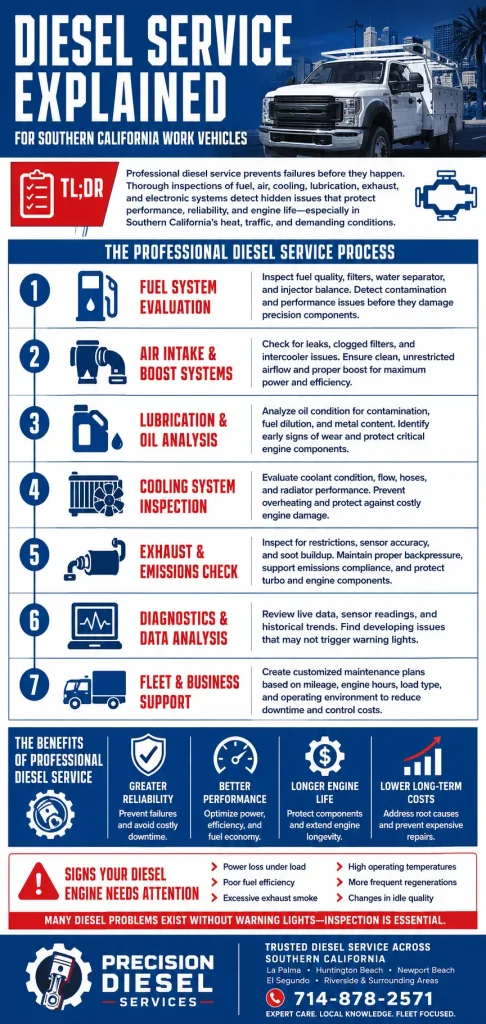
Professional diesel service is about preventing failures before they happen, not just fixing problems after warning lights appear. Thorough inspections evaluate fuel, air, cooling, lubrication, exhaust, and electronic systems together to detect hidden issues that can reduce performance and shorten engine life. In Southern California, heavy traffic, heat, and demanding work conditions make proactive, data-driven diesel maintenance especially important for reliability, efficiency, and long-term fleet performance.
Key Takeaways
- Diesel service is a comprehensive process focused on prevention, not just repair
- Fuel, air, lubrication, cooling, and exhaust systems must be evaluated together
- Data-driven inspections reveal issues before warning lights appear
- Southern California driving conditions demand region-specific expertise
- Proactive maintenance supports reliability, performance, and longevity
Southern California runs on diesel. From early-morning deliveries in Orange County to jobsite hauls across Los Angeles and Riverside, work trucks and fleet vehicles depend on consistent performance. Diesel service is the foundation that keeps those vehicles reliable under heat, traffic, and heavy load. Yet many owners and operators only see the surface level oil changes and warning lights, without understanding what a thorough professional inspection actually involves or why it matters so much in this region.
This guide breaks down how modern diesel vehicles are evaluated, maintained, and protected during a professional visit. It explains what happens behind the scenes, how problems are detected before they turn expensive, and why Southern California driving conditions demand a higher standard of care. The goal is clarity, not hype, so drivers and fleet managers can make informed decisions about protecting the equipment their businesses rely on every day.
Why Diesel Vehicles Demand a Different Level of Care
Diesel engines are built for torque, endurance, and long operating hours. That durability is the reason they power towing rigs, service vans, and fleet vehicles for jobsite use. At the same time, diesel engines operate under higher compression and greater thermal stress than gas engines. Those characteristics change how maintenance and inspections must be handled.
A professional diesel service approach recognizes that diesel engine reliability is not just about replacing parts on a schedule. It is about understanding wear patterns, fuel quality, air flow, cooling efficiency, and how real-world usage affects internal components. Southern California traffic, heat, and stop-and-go driving add even more variables.
This is also where the difference between a diesel service vs gas engine service becomes clear. Gas engines tend to show problems through misfires or obvious drivability symptoms. Diesel engines often continue running while internal damage slowly builds, especially under heavy load. That makes inspection depth far more important than surface checks.
What a Professional Diesel Inspection Is Designed to Reveal
A professional diesel inspection is not a single test. It is a structured evaluation of systems that work together to keep the engine operating efficiently and safely. The goal is early detection of issues that can affect diesel engine performance or shorten engine life.
During a professional diesel inspection process, technicians look for patterns rather than isolated symptoms. A small change in fuel pressure, a minor air leak, or early signs of soot buildup may not trigger a warning light but can lead to injector damage or overheating over time.
This is why a full diesel inspection focuses on cause and effect. Instead of asking what failed, the inspection asks what conditions could lead to failure under continued use. That mindset is critical for work trucks that cannot afford downtime.
The Role of Fuel Quality and Fuel System Health
Fuel is the lifeblood of any diesel engine. Even minor contamination can create cascading problems. Diesel fuel contamination often comes from water intrusion, degraded fuel, or poor filtration. Once contaminants reach injectors, precision components can suffer permanent damage.
A diesel fuel system inspection evaluates more than just filters. It includes checking diesel fuel filters for restriction, performing water separator inspection, and reviewing injector balance data. Diesel injectors operate at extremely high pressure, and small deviations can create injector performance issues that reduce power and increase emissions.
Poor fuel quality is also linked to poor diesel fuel efficiency. Engines may compensate by increasing fuel delivery, which raises exhaust temperatures and accelerates soot accumulation. Addressing fuel system health early helps protect diesel engine longevity, especially for vehicles that idle frequently or operate under heavy load.
Air Intake and Boost Systems Under Real-World Stress
Air is just as important as fuel in diesel combustion. The diesel air intake system must deliver clean, unrestricted airflow under all operating conditions. In Southern California, dust, construction debris, and urban pollution can clog filters and coat sensors faster than many owners expect.
A professional evaluation checks for diesel air intake leaks, cracked hoses, and compromised seals. Intercooler hoses are inspected closely because even small leaks can cause diesel power loss under load. Reduced boost pressure forces the engine to work harder, raising temperatures and stressing internal components.
When air flow is compromised, diesel engines often produce excess soot. Diesel soot buildup does not just affect emissions systems. It can clog intake runners, foul sensors, and reduce overall efficiency. Identifying air-related issues early supports both performance and compliance.
Lubrication and Oil Condition Analysis
Diesel oil and lubrication systems do more than reduce friction. They manage heat, suspend contaminants, and protect components under extreme pressure. Diesel oil condition provides valuable insight into internal engine health.
During a complete diesel service, oil is evaluated for contamination, fuel dilution, and abnormal metal content. Changes in oil condition can point to injector leaks, cooling system problems, or accelerated wear long before mechanical failure occurs.
This level of analysis is especially important for diesel engines under heavy load, such as towing and hauling diesel trucks. Consistent oil evaluation helps maintain diesel engine reliability and avoids unexpected downtime that can disrupt operations.
Cooling Systems and Thermal Management
Diesel engines generate significant heat, especially during prolonged operation. Diesel engine overheating is one of the most common causes of major engine damage, yet it often begins with small inefficiencies.
A diesel cooling system inspection examines coolant condition, flow rates, hose integrity, and radiator performance. Restricted flow or degraded coolant can cause diesel engine running hot without immediately triggering a warning light.
Southern California heat amplifies these risks. Stop-and-go traffic in places like Huntington Beach or El Segundo can reduce airflow through the radiator, increasing thermal stress. Identifying cooling weaknesses before summer temperatures peak is a key part of proactive diesel service.
Exhaust Systems, Emissions, and Backpressure
Modern diesel exhaust systems do more than route gases away from the engine. They regulate backpressure, manage emissions, and protect turbocharger operation. A diesel exhaust system inspection evaluates restrictions, sensor accuracy, and signs of excessive soot.
Excess backpressure can reduce diesel engine performance and increase fuel consumption. It also raises exhaust gas temperatures, which can damage turbochargers and exhaust valves over time. Many issues begin subtly, making inspection data more reliable than visual checks alone.
For commercial diesel vehicles operating across Southern California, maintaining exhaust system health supports compliance while protecting engine components that are costly to replace.
Diagnostics and Engine Data Interpretation
Modern diesel engines rely on complex electronics. Diesel diagnostics go far beyond reading fault codes. A professional approach involves analyzing diesel engine fault data, sensor readings, and historical trends.
Diesel engine sensors monitor pressure, temperature, airflow, and emissions. When values drift outside optimal ranges, performance and efficiency suffer. However, many conditions do not trigger immediate warnings.
By interpreting data patterns, technicians can identify developing issues such as injector imbalance, cooling inefficiency, or airflow restriction. This data-driven process is a cornerstone of professional diesel service and one of the main reasons experienced providers are trusted with fleet vehicles.
How Diesel Service Supports Fleet and Business Operations
Diesel service for work trucks and diesel service for fleet vehicles must align with operational demands. Downtime affects schedules, contracts, and customer trust. A structured diesel maintenance service plan helps businesses avoid reactive repairs.
Fleet operators across La Palma, Newport Beach, and Riverside often rely on proactive inspections to stagger maintenance and reduce unexpected failures. A diesel fleet service schedule considers mileage, engine hours, load type, and operating environment rather than relying on generic intervals.
This approach improves diesel engine longevity and supports predictable budgeting. It also reduces the risk of cascading failures that occur when small issues are ignored.
Signs a Diesel Engine Needs Attention Before Failure
Recognizing signs a diesel engine needs service can prevent costly repairs. Common indicators include diesel power loss under load, poor diesel fuel efficiency, unusual exhaust smoke, or elevated operating temperatures.
Other signs are less obvious. Changes in idle quality, increased regeneration frequency, or subtle performance drops may indicate injector or airflow issues. Diesel problems can exist without warning lights, which is why routine inspection remains essential.
Addressing these signs early through professional evaluation helps maintain diesel engine performance and reliability over the long term.
Southern California Conditions and Local Expertise
Operating diesel vehicles in Southern California presents unique challenges. Traffic congestion, high ambient temperatures, and variable fuel quality all affect engine health. Local experience matters.
Providers familiar with diesel service La Palma and diesel service Huntington Beach understand how coastal conditions influence corrosion and intake contamination. Those serving diesel service Newport Beach and diesel service El Segundo see patterns related to short-trip driving and idle-heavy use.
Precision Diesel Services works with drivers and businesses across Los Angeles County, Orange County, Riverside County, and surrounding areas, applying region-specific insight to inspection and maintenance decisions. When questions arise or scheduling is needed, experienced staff can be reached at 714-878-2571 for guidance tailored to local operating conditions.
Why Professional Care Outperforms Basic Maintenance
The benefits of professional diesel service extend beyond immediate repairs. Professional care integrates inspection data, real-world experience, and manufacturer standards to create a complete picture of engine health.
This approach supports diesel engine reliability by reducing unknowns. It improves diesel engine longevity by addressing root causes rather than symptoms. It also enhances diesel engine performance by ensuring systems operate within optimal ranges.
For businesses that rely on diesel vehicles for jobsite use, these benefits translate directly into reduced downtime and lower long-term costs.
Frequently Asked Questions About Diesel Service
How often should diesel vehicles be serviced?
Service intervals depend on usage, load, and operating environment. Fleet vehicles and work trucks often require more frequent inspections than personal-use vehicles due to extended run times and heavy loads.
Is diesel service more expensive than gas?
Diesel service typically involves more detailed inspection and specialized components, which can increase upfront cost. However, the long-term savings from avoided failures often outweigh the difference.
Can diesel problems exist without warning lights?
Yes. Many issues develop gradually and do not trigger alerts. Data analysis and inspection are key to identifying these conditions early.
Does fuel quality affect diesel engine life?
Fuel quality has a direct impact on injectors, combustion efficiency, and emissions systems. Poor fuel can significantly reduce engine life if not addressed.
How should a diesel fleet service schedule be planned?
An effective schedule considers mileage, engine hours, load type, and regional conditions. Customized planning helps balance uptime and maintenance needs.