

TL;DR
Steering axle tires are critical for truck safety and control, and failures can lead to serious accidents. Prevent blowouts through daily thorough inspections, correct air pressure, tread and sidewall checks, and strict adherence to load ratings. Avoid recap tires and never overload the steering axle. If a blowout occurs, maintain control and pull over safely, then seek professional repair immediately.
Key Takeaways
- Steering axle tires directly control vehicle steering and stability, making them high-risk safety components
- Daily inspections should include tread depth, wear patterns, and physical damage checks
- Sidewall damage such as bulges, cracks, or cuts requires immediate attention
- Proper air pressure maintenance helps prevent heat buildup, wear, and blowouts
- Load ratings must never be exceeded and recap tires are not allowed on steering axles
- Overloading reduces handling control and increases tire failure risk
- In a blowout, stay calm, maintain steering control, and pull over safely
- Professional inspection and repair are essential for any suspected tire damage
- Mobile services like Precision Diesel Repair provide on-site support to avoid unsafe driving conditions
Tragic accidents in recent times have brought steering axle tire safety to the forefront of the trucking community’s awareness.
Your steering axle tires are among the most critical safety components. They control the direction and stability of your vehicle. A single tire failure can be disastrous, not only for you but also for other users of the road. This can be avoided by daily thorough tire inspections, proper air pressure maintenance, regular tread depth checks, and having any visible damage inspected professionally.
At Precision Diesel, we understand how important these tires are for your safety. We want to help you maintain and service your steering axle tires so you can continue staying safe out on the roads of Southern California. Don’t wait until there is a problem; it could prevent a tragic accident.
Understanding Steering Axle Tires
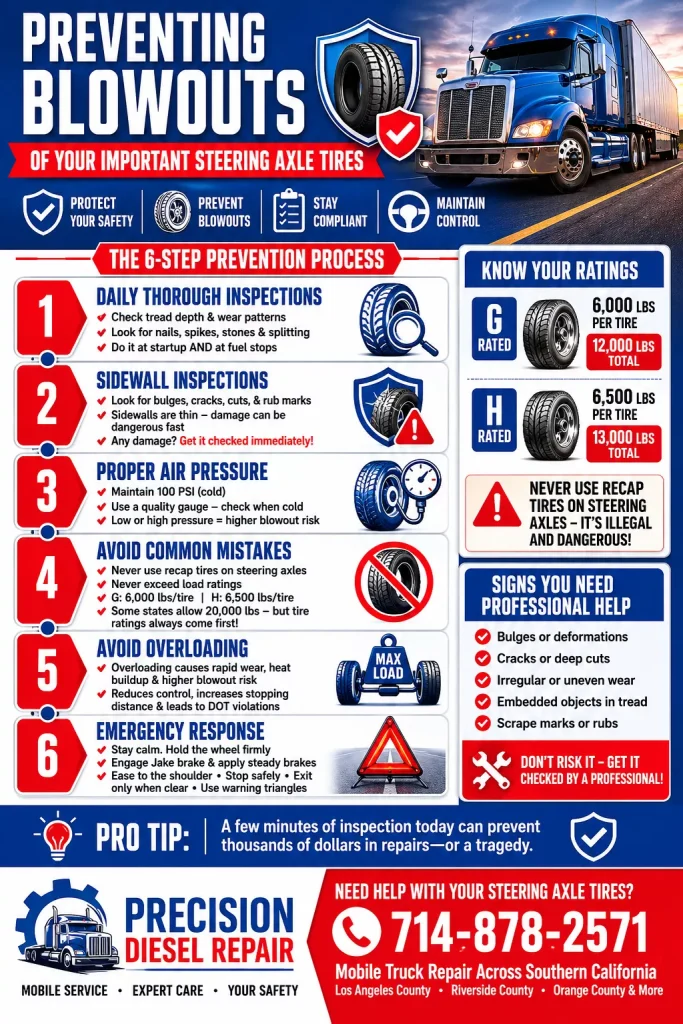
Your steering axle tires are the major components that dictate your truck’s direction and stability. These tires are very vital; they’re not just any regular tires on your vehicle. The tires make a decision as to where your truck goes. G-rated tires will support up to 6,000 lbs. per tire—12,000 lbs. in total. On the other side, H-rated tires will support 6,500 lbs. per tire—13,000 lbs. in total. That becomes important when you’re at maximum weight. Some states let you run 20,000 lbs on the steering axle, but your tire ratings have to meet your load requirements.
DOT inspectors actively check these specs during roadside inspections, and mismatched ratings can result in costly violations. You’ll find the load rating stamped directly on your tire’s sidewall. This isn’t just a suggestion- it’s a legal requirement that directly impacts your safety and compliance on the road!
Never use recap tires on your steering axle. Not only is this practice dangerous, but it’s also illegal. The tendency of recap tires to separate is greater than that of new tires, which can create potentially hazardous driving conditions.
Daily Inspection Routine
Just a walk-by glance at your steering axle tires is not enough to ensure safety. Your daily inspection routine needs to be thorough and systematic to prevent possibly fatal blowouts. Start your day with a thorough circle check, and give your steering axle tires extra time and attention. These critical components deserve more than a casual “yep, it’s round” appraisal-they control the direction of your entire vehicle.
Your tread depth inspection is important for two reasons: water drainage and physical damage detection. Deep treads channel water out from your tires in wet conditions. This drainage system helps to prevent hydroplaning, keeping you safely on the road. When checking for physical damage, look for embedded nails, metal spikes, trapped stones, and signs of splitting.
A new tire shows deep, well-defined tread patterns. When conducting your pre-drive inspection, run your hands over the tread when the truck is safely stopped and parked. The tactile inspection helps you better recognize potential dangers that may prove difficult to find visually. Avoid the tendency to inspect only at morning startup time—include one during fuel stops as well—to help detect failures as they incubate.
Your routine should include a walk-around and physical inspection of tread surfaces. Look closely for wear patterns and any uneven wear or cupping that may indicate alignment problems. Uneven wear patterns can mean there are more significant issues with your vehicle’s alignment. The alignment problems could put additional stress on your steering axle tires and could potentially cause premature failure or a blowout.
Sidewall Inspection
A good sidewall inspection could be the difference between a safe trip and a dangerous blowout. Check both the inside and outside sidewalls of your steering axle tires daily. Here’s what you’re looking for in your sidewall inspection:
- Bulges or deformations in the tire surface
- Cracks or signs of aging
- Scrape marks from hitting curbs
- Rub marks indicating alignment problems
- Cuts or punctures of any size
The sidewalls are much thinner than the tread area, so they are inherently more susceptible to being damaged or failing. Even a light scrape or bulge can easily become a serious problem quickly. Any visible damage must receive immediate professional attention, no matter how small.
Remember: If you see anything unusual when inspecting, pull over and get to a tire professional immediately. You can’t afford to wait when it comes to a sidewall compromise. There’s just too much risk of a blowout if you continue to drive on damaged sidewalls.
Air Pressure Maintenance
Maintaining proper air pressure in your steering axle tires is critical for safe operation. Our recommended cold tire pressure is 100 lb – this standard helps prevent dangerous blowouts and ensures optimal tire performance. Don’t rely on cheap gauges from retail stores for your pressure readings.
Invest in a professional-grade truck tire gauge to get accurate measurements every time. A quality gauge can detect slight pressure changes that could show possible problems before they become hazardous.
Here is your air pressure maintenance checklist:
- Check tire pressure when tires are cold
- Remove valve caps carefully
- Apply the gauge firmly to prevent air leakage
- Record readings for tracking purposes
- Replace valve caps securely.
Low tire pressure results in excessive flexing and heat buildup, causing premature wear and possible blowouts. High pressure makes tires more susceptible to damage from road hazards. Both situations put you at risk – proper inflation is your best defense against steering axle tire failures.
Avoiding Common Mistakes
The two common yet critical errors below can lead to catastrophic steering axle tire failures.
Using Recap Tires on Steering Axles
It’s strictly illegal to use recap tires on steering axles. Recap tires have a higher incidence of separation than new tires. The safety hazard is great enough to outlaw the practice.
Load Rating Violations
G-rated tires have a maximum capacity of 6,000 lbs per tire (12,000 lbs total). H-rated tires have a maximum capacity of 6,500 lbs per tire (13,000 lbs total). DOT inspectors aggressively look for steering axle weight violations.
Some states might allow up to 20,000 lbs on steering axles, but that doesn’t supersede tire ratings. You can find your tire’s load rating stamped on the sidewall. Exceeding these ratings puts you at risk for immediate DOT violations and fines, accelerated tire wear, increased risk of blowout, and possible legal liability in case of an accident.
Too Much Weight on a Steering Axle Can Cause Premature Tire Failure
Too much weight on a steering axle can cause excessive stress on your tires, leading to rapid wear and increased risk of failure. When the load exceeds the tire’s rated capacity, the internal structure of the tire begins to break down under constant pressure. This results in overheating, weakened sidewalls, and a much higher chance of a sudden blowout.
In Southern California, where long hauls often include high temperatures and heavy traffic conditions, overloaded steering axles become even more dangerous. Heat buildup from both the road and the excess weight accelerates tire deterioration. Even if the damage isn’t immediately visible, the internal strain can shorten the lifespan of your steering axle tires significantly.
Steering Axle Overload Effects on Handling and Compliance
Too much weight on a steering axle can cause reduced steering control and unstable handling, especially during braking or lane changes. An overloaded front axle puts additional pressure on suspension and steering components, making the truck harder to control and increasing stopping distance.
Beyond safety concerns, exceeding steering axle limits can also lead to DOT violations and costly penalties. California enforcement agencies routinely check axle weights, and being overweight on the steering axle can result in fines, out-of-service orders, and delays. Keeping your axle weight within legal and manufacturer limits helps maintain control, protects your equipment, and ensures compliance on Southern California roads.
Emergency Response Strategies
A steering axle tire blowout doesn’t have to end in catastrophic loss of control.
Essential Steps for Blowout Management
Keep both hands firmly gripped on the steering wheel, and stay focused – avoid panic reactions or overcorrection! Engage your Jake brake immediately and apply steady, even pressure to your brake pedal.
Safe Vehicle Control
Remember: You still have control through the opposite tire. Ease your truck onto the shoulder smoothly and maintain a calm, metered reaction through the process.
Post-Stop Safety Procedure
Apply your brakes after coming to a safe stop, only exit when clear of traffic. Use warning triangles if partially on the roadway and survey the damage from a safe location.
Your calm and preparedness during such a steering axle blowout can make the difference between an easily manageable situation and a serious accident. Professional drivers may experience this once in their careers, but your calm reaction and proper handling techniques are your best defense against potential catastrophe.
Seeking Professional Help
Your safety on the road requires immediate action if there is trouble with the tires. The following signs of tire damage that are found during your pre-trip inspection require professional attention immediately: visible bulges in the sidewall, cracks or deep cuts, irregular wear patterns, and embedded objects in the tread.
Do not risk driving with deteriorated steering axle tires—get professional help right away. Only a qualified technician can properly determine the extent of the problem and suggest the necessary repairs or replacement.
For Southern California drivers, we here at Precision Diesel offer complete mobile truck repair. Our professional team offers on-site tire inspections and repairs, emergency roadside assistance, diesel repair service, brake system maintenance, and suspension service. We bring professional repair services to your location anywhere in Los Angeles County, Riverside County, Orange County, and surrounding areas.
Our mobile service eliminates the need to risk driving with potentially dangerous tire conditions. A call to our professionals can help save a lot of costly accidents and even lives.
Choose Precision Diesel Repair
Your steering axle tires are very important for your safety while on the road. You can prevent dangerous blowouts by regularly inspecting them, maintaining them properly, and promptly addressing any issues.
Remember these key points:
- Safety First: Never compromise on the quality of tires or the standard of maintenance
- Daily Vigilance: Make thorough tire inspections part of your daily routine
- Professional Support: Solve problems directly with professional expertise
At Precision Diesel, we realize how imperative it is to keep your steering axle tires in shape. That’s why our mobile service team is prepared to assist you with professional expertise right on-site in Southern California. Don’t wait for small problems to become serious hazards.
Need immediate help with your steering axle tires? Call us at (714) 878-2571 for dependable mobile service and expert diesel repair. We are here to ensure your safety and the safety of others on the road. Your due diligence today means no accidents tomorrow.
