
TL;DR
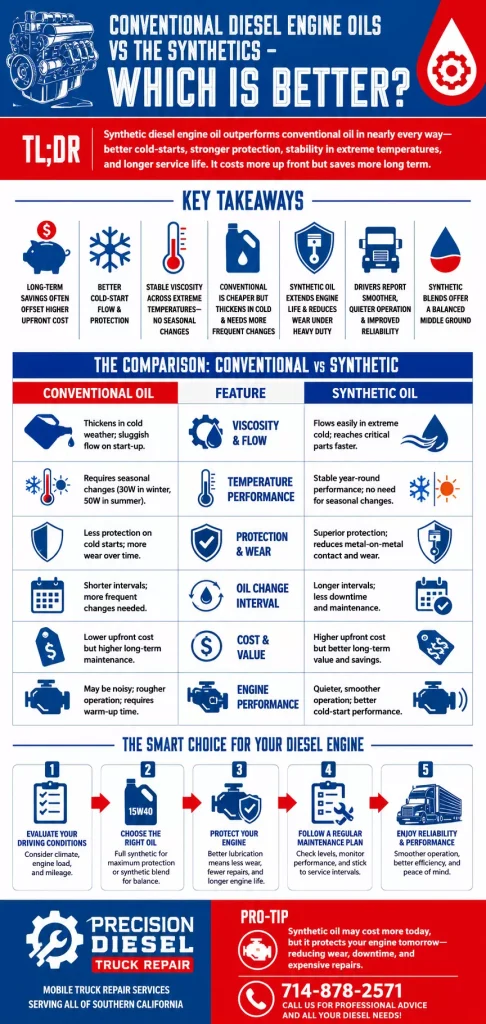
Conventional Diesel Engine Oils still work but struggle in extreme temperatures and require seasonal changes. Many drivers and mechanics favor synthetic or synthetic blends for long-term reliability and efficiency. Synthetic diesel engine oil generally outperforms conventional oil in nearly every category, especially cold-start performance, engine protection, and temperature stability. While it costs more upfront, it typically lasts longer and reduces wear, maintenance needs, and potential repair costs.
Key Takeaways
- Long-term savings often offset the higher upfront cost of synthetic oil
- Synthetic oil provides better cold-start flow and protection than conventional oil
- It maintains stable viscosity across extreme temperatures without seasonal changes
- Conventional oil is cheaper but thickens in cold weather and needs more frequent changes
- Synthetic oil can extend engine life and reduce wear under heavy-duty use
- Real-world drivers report smoother, quieter operation and improved reliability
- Synthetic blends offer a middle-ground option for cost and performance balance
Every truck owner understands that engine oil serves as the lifeblood of their diesel engine. The decision between conventional and synthetic diesel engine oil isn’t merely about preference – it directly impacts performance, longevity, and reliability. Engine oil’s vital role includes lubricating components, reducing friction, and maintaining optimal operating temperatures, becoming especially crucial during extreme weather conditions or heavy-duty operations. Many truck owners now opt for synthetic blend diesel engine oil because it combines the benefits of conventional and full synthetic oils, offering reliable protection and performance in various conditions. Many truck owners often weigh the benefits of synthetic vs conventional oil diesel to decide which type offers the best combination of performance, protection, and long-term engine health.
When comparing synthetic oil vs regular oil diesel engines, the biggest difference shows up in how each oil handles stress over time, especially under heavy loads and long driving hours.
The Evolution of Conventional Diesel Engine Oils
In the 1970s, conventional diesel engine oils were basic single-weight formulations. Truckers typically used 30-weight oil during winter and 50-weight oil in summer. The thicker 50-weight oil provided excellent lubrication for heavy loads and high temperatures. However, these oils presented significant challenges in cold weather operations, requiring drivers to build fires under oil pans and tarp engines to retain heat. Without proper warming, the thick oil wouldn’t circulate adequately, leading to potential engine damage.
The industry later introduced blended oils, starting with 30W30 winter weight formulations and evolving to 15W40 blends. Many veteran drivers found success with these traditional oils, with some reporting over a million miles of trouble-free operation using standard 15W40 Rotella.
The Synthetic Revolution
Synthetic diesel engine oils represent a significant advancement in lubricant technology. Many truck owners prefer synthetic diesel oil because it offers consistent viscosity, superior protection under extreme conditions, and extended oil change intervals compared to conventional oils. Created at the molecular level, synthetic oils feature uniform-sized molecules that deliver superior performance characteristics. Some mechanics recommend switching to a synthetic blend diesel engine oil as a cost-effective alternative to full synthetics while still improving cold-start performance and engine protection. Their enhanced flow properties become evident in cold temperatures, where synthetic oil pours easily while conventional oil remains sluggish.
This is one of the biggest reasons many drivers today choose synthetic oil in diesel engines for dependable year-round protection. Choosing synthetic oil for diesel engines ensures consistent viscosity, better cold-start performance, and longer intervals between oil changes. Professional mechanics often recommend synthetic oil for diesel engines to maximize engine longevity and reduce maintenance costs over time.
Real-world examples highlight synthetic oils’ exceptional cold-weather performance. Loggers report successfully starting trucks after two weeks in -15 to -20 degree weather, thanks to synthetic oil’s superior properties. Drivers also notice quieter and smoother engine operation after switching to synthetics.
The molecular structure of synthetic oils allows them to maintain viscosity through extreme temperature ranges, immediately reach critical engine parts on cold starts, and resist breakdown under severe stress. A lot of heavy-duty applications rely on 5w40 full synthetic diesel oil because it stays stable across wide temperature swings and keeps lubrication consistent when engines are working hard. Their performance in harsh Canadian winters particularly stands out – eliminating the need for heating oil pans with fires and tarps before starting. Even in extreme winter conditions, a synthetic blend diesel engine oil can ensure smoother engine starts and maintain consistent lubrication throughout the engine.
Most experienced drivers who have switched to synthetic oils, such as Shell T6, report improved engine performance and reliability. Products like shell rotella t6 5w40 full synthetic diesel engine oil are often mentioned by drivers because they hold up well during long hauls and demanding work cycles. This enhancement stems from synthetic oil’s ability to provide consistent protection across all operating conditions, making it an increasingly popular choice for modern diesel engines.
What Sets Full Synthetic Diesel Oil Apart?
Full synthetic diesel oil is engineered entirely from ultra-pure, synthesized base stocks rather than refined crude oil. Unlike conventional lubricants or semi-synthetic blends, a complete full synthetic formulation delivers maximum shear stability under intense mechanical pressure. This prevents the oil molecules from shearing down or thinning out when hauling heavy payloads across long distances. For modern high-output engines equipped with sophisticated turbochargers and exhaust treatment systems, upgrading to a full synthetic diesel oil ensures optimal oil film strength, lowers internal friction, and minimizes thermal breakdown during prolonged operation at extreme temperatures.
What is the best 5w40 fully synthetic engine oil?
Choosing the “best” 5W-40 fully synthetic engine oil depends heavily on your vehicle type, as formulations differ significantly between European performance cars, modern vehicles with strict emission systems, and heavy-duty diesel engines.
The top-rated 5W-40 fully synthetic engine oils are organized below by their specific strengths to help you choose the right fit.
Top Options for European & Performance Petrol/Diesel Engines
If you drive a high-performance vehicle or a European car (such as BMW, Mercedes-Benz, or VW), you require an oil that resists thermal breakdown under extreme pressure.
- The Motul 8100 X-cess Gen2 5W-40 delivers high film strength and superior friction reduction for powerful, recent petrol and diesel engines, making it a favorite for turbocharged applications.
- The Shell Helix Ultra 5W-40 Engine Oil SP uses natural gas-based base oils to provide 50% less evaporation and superior active cleansing to minimize engine sludge deposits.
- The Castrol Edge 5W-40 Engine Oil utilizes Fluid Titanium Technology to physically transform its structure under pressure, reducing performance-robbing friction across diverse driving conditions.
Top Options for Modern Vehicles with DPFs / Emission Systems
Modern diesel passenger vehicles and light commercials equipped with Diesel Particulate Filters (DPFs) require specialized “Mid-SAPS” formulations to prevent ash buildup from clogging the exhaust system.
- The Penrite Enviro+ 5W-40 Engine Oil features an OEM-approved, mid-SAPS additive package engineered specifically to safeguard diesel particulate filters while maintaining ultimate engine protection.
- The Castrol Magnatec Diesel DX Engine Oil blends DPF compatibility with intelligent molecules that cling to critical metal surfaces, dramatically reducing wear during the critical warm-up period.
Which one should you choose?
- For elite performance & turbo engines (without DPF): Go with Motul 8100 X-cess Gen2 or Shell Helix Ultra for their top-tier base stocks and exceptional thermal stability.
- For everyday protection & stop-start driving: Castrol Edge offers great high-pressure defense.
- For modern passenger diesels with emission filters: Select Penrite Enviro+ to ensure you do not damage your exhaust after-treatment system.
Real-world Experience with Synthetic Oils
The experiences of real truck drivers can give us a view into how synthetic oils perform under the most extreme conditions. Let’s look at some first-hand accounts from seasoned veterans. A common question drivers ask is, is synthetic oil good for diesel engines? Real-world results clearly show it improves cold starts, reduces engine wear, and enhances reliability. For everyday use, is synthetic oil good for diesel engines becomes less of a question once drivers notice the smoother starts and quieter operation.
DIY Experiments and Driver Insights
Many drivers have undertaken simple experiments to evaluate synthetic oils. Pour tests consistently show that synthetic oil flows much more freely than conventional 30-weight oil at freezing temperatures. Physical testing demonstrates synthetic oil maintains a thinner, more fluid consistency in cold temperatures.
Professional drivers report quieter engine noise, smoother running engines, consistent cold starts in extreme winter weather, and increased engine protection during long idle times. These experiences in the field by professional drivers who have switched over to synthetic oils provide valuable information for those considering the changeover from conventional oils.
Comparative Analysis: Conventional vs. Synthetic Diesel Engine Oils
Regarding viscosity and flow characteristics, conventional oils become very thick in cold temperatures, while synthetic oils maintain consistent flow even at freezing temperatures. Simple pour tests demonstrate synthetic’s superior flow rate at the same temperature, with old-fashioned 30-weight oil feeling far more viscous to the touch.
Temperature flexibility is another key difference. Conventional oils require seasonal adjustments – 30-weight for winter and 50-weight for summer. Synthetic oils perform year-round without adjustment, eliminating the need for oil pan heating in cold weather. Running a quality synthetic 10w30 diesel oil allows for quick, low-resistance starts in cold weather while keeping a durable protective film intact when the engine reaches peak operating temperature.
In contrast, conventional diesel oil often requires seasonal changes and struggles to provide the same protection in extreme conditions. For trucks operating through changing temperatures, 5w40 diesel oil is commonly used because it can handle cold starts and high operating temperatures without constant seasonal adjustments.
While synthetic oils have a higher up-front price compared to relatively cheap conventional oils, their long-term value is evident. Synthetics can go longer between oil changes, provide better engine protection to lower repair costs, and improve fuel efficiency. There’s also no need to buy different oils for seasonal changes.
In terms of engine performance, synthetics offer quieter operation, smoother running characteristics, better cold-start protection, and less metal-on-metal contact during startup. Conventional oils, however, thicken in cold weather, may not provide adequate protection during cold starts, and require warm-up time before full protection.
These differences highlight why many professionals conclude that is synthetic oil better for diesel engines is no longer a debate, it consistently outperforms conventional oils in every measurable way.
While partial blends offer a temporary stepping stone, choosing a dedicated full synthetic diesel oil provides the ultimate level of protection against soot accumulation and sludge buildup. Soot particle suspension is critical in modern EGR-equipped diesels, and full synthetic formulas utilize advanced dispersant additives that keep abrasive particles floating harmlessly in the oil until your next scheduled change. This superior soot-handling capability drastically reduces internal component scoring and helps protect critical valve train parts over thousands of operating hours.
Looking at synthetic oil vs regular oil diesel engine performance side by side, the gap becomes more noticeable during cold starts and extended highway use where consistent lubrication really matters.
Choosing the Right Diesel Engine Oil for Performance and Reliability
Modern diesel maintenance decisions often revolve around advanced lubrication options like 15w40 full synthetic and fully synthetic 15w40, which are widely used in heavy-duty applications across Southern California. Using 15w40 full synthetic oil helps maintain steady pressure and protection even when engines are running long hours under high temperatures. A fully synthetic 15w40 formula also tends to resist breakdown better, which helps engines stay cleaner over longer service intervals. Many technicians recommend the best synthetic engine oil for diesel engines and often compare it with the best synthetic motor oil for diesel to match engine load demands and climate conditions.
For drivers operating in moderate to cold climates or those seeking better fuel economy during lighter towing, choosing a synthetic 10w30 diesel oil provides a great balance of quick cold-weather flow and robust high-temperature protection. While heavier grades like 15W-40 remain popular for extreme loads, a quality 10W-30 synthetic option helps reduce internal engine drag at startup while still delivering the heavy-duty wear protection modern diesel engines require.
For fleet owners managing heavy equipment or severe-duty pickup trucks, selecting a full synthetic diesel oil rated under current API CK-4 standards is one of the most effective ways to lower total cost of ownership. These premium formulations resist oxidation far better than standard oils, helping to preserve oil pressure during prolonged idling and demanding work conditions. By maintaining consistent viscosity over high-mileage drain intervals, a high-quality full synthetic diesel oil actively protects your engine block, bearings, and turbochargers from premature wear.
Choosing the best synthetic oil for diesel engines often comes down to how the truck is used daily, whether it’s long-haul driving or stop-and-go work. Some owners compare products like mobil 1 5w40 full synthetic diesel oil when looking at engine protection, service intervals, and performance during heavy use. Fleet operators also evaluate the best synthetic oil diesel engines and the best synthetic oil for diesel depending on mileage and usage patterns. In many cases, the best synthetic oil for diesel engines becomes the preferred choice for long-term protection and stability.
Professional shops frequently refer to diesel engine oil synthetic formulations and diesel engine synthetic oil options when servicing commercial trucks. Products such as diesel motor oil synthetic and diesel oil synthetic continue to evolve alongside modern diesel synthetic engine oil technology. Drivers also notice improvements when switching from diesel synthetic oil to newer synthetic diesel engine oil blends, especially under heavy load. Industry reports on synthetic diesel oil reviews and performance of synthetic diesel oils highlight smoother operation and reduced wear. Over time, synthetic oils for diesel engines have become a standard choice for many commercial fleets because they help maintain cleaner operation and more stable performance.
Many mechanics still rely on synthetic motor oil for diesel engines, especially when evaluating synthetic oil diesel and synthetic oil diesel engine applications. In fleet maintenance, synthetic oil diesel engines and synthetic oil for diesel engine protection remain standard topics during service planning.
Operators often prefer synthetic oil for diesel engines and synthetic oil for diesels due to improved durability, while synthetic oils for diesel engines and synthetic blend diesel engine oil continue to serve as balanced options for cost and performance. Over time, synthetic oil for diesel engines tends to reduce buildup and keeps internal parts cleaner compared to older oil types.
Understanding Diesel Oil Performance, Compatibility, and Key Differences
Engine compatibility questions often include can synthetic oil be used in diesel engines and can you use regular motor oil in a diesel engine, especially when comparing modern lubrication systems. The answer to can synthetic oil be used in diesel engines is yes, and many newer engines are actually designed to run better with it. Technicians also address can you use synthetic oil in a diesel engine and can you use synthetic oil in diesel engine scenarios during service consultations. Discussions around diesel oil vs conventional oil and diesel synthetic oil vs regular oil help clarify maintenance choices.
In real use, diesel synthetic oil vs regular oil differences show up in reduced engine wear and smoother operation over time. Many shops also explain diesel synthetic vs conventional oil differences and how difference between base oil and diesel relates to lubrication stability. Customers frequently ask difference between diesel oil and conventional oil and difference between diesel oil and regular oil when comparing service intervals.
Maintenance advisors often evaluate is semi synthetic oil ok for diesel engines and whether is synthetic oil better for diesel engines based on engine age and load. Real-world testing shows is synthetic oil good for diesel engines depends on driving conditions, while questions like is synthetic oil thicker than conventional oil help explain flow behavior in cold starts. Drivers comparing regular oil in diesel engine setups often transition to synthetic oil in diesel for improved performance. Using synthetic oil in diesel engine setups helps maintain consistent lubrication even when temperatures swing throughout the day.
Shops also analyze synthetic oil in diesel engine and synthetic oil in diesel engines when diagnosing wear patterns. Comparisons such as synthetic oil vs regular oil diesel engines and synthetic vs conventional diesel oil remain common in service discussions. Technicians often break down synthetic vs conventional oil diesel differences along with using synthetic oil in diesel engines for fleet optimization. Many also clarify what’s the difference between diesel oil and regular oil to help owners make informed maintenance decisions.
Diesel Engine Maintenance Considerations
Whether you run conventional or synthetic oil, your diesel engine requires regular attention. Regular maintenance schedules help prevent unexpected breakdowns and extend your engine’s life.
Important Care Tips for Your Engine
Check oil levels between changes, listen for unusual engine noises, keep an eye on engine temperature, keep track of maintenance in detail, and follow manufacturer-recommended service intervals. The type of oil you use is very important to your engine’s health. Synthetic oils generally provide greater protection from wear and tear, reducing the need for repairs. They create a more stable protective film around engine components, especially during cold starts when most engine damage occurs.
A real-world example from the trucking industry demonstrates how proper oil selection affects maintenance needs. Long-haul drivers who have switched to synthetic oils report quieter engine operation, smoother performance, fewer maintenance issues, and better cold-weather startups. Your choice of oil directly impacts your engine’s reliability and how often it needs repairs. Using synthetic diesel oil can also help reduce deposit buildup over time, which becomes important for engines handling long hours and repeated heavy loads. Synthetic oils may cost more up front, but they often reduce the need for frequent repairs and help maintain peak engine performance.
Choose Precision Diesel Repair
The choice between conventional and synthetic diesel engine oils isn’t about following trends; rather, it’s about being informed and making the right decision for the specific needs of your truck. Based on what we learned from experienced drivers, synthetics have earned their keep and proved themselves, especially when the weather gets extreme. Your truck’s performance and longevity depend on choosing the right oil and properly maintaining the vehicle.
For owners focused on long-term reliability, using synthetic oil diesel engines provides proven benefits that help maximize performance and reduce costly downtime. Investing in synthetic diesel oil can also improve fuel efficiency and reduce engine wear, making it a practical choice for heavy-duty trucks.
Though some drivers may be reluctant to give up conventional oils for synthetic ones, there are noticeable benefits: better cold-weather performance, smoother running of the engine, and a guaranteed start even after being in very cold temperatures for a prolonged period. For drivers looking for a balance between performance and cost, using a synthetic blend diesel engine oil provides many of the advantages of full synthetics without the higher price tag.
Need professional advice on your diesel engine? The team here at Precision Diesel specializes in guiding you through making the right decisions for your truck. We specialize in mobile truck repair for all of Southern California’s top-rated services. For professional guidance and help on all of your diesel needs, call us at (714) 878-2571.
