

TL;DR
Diesel is a petroleum-based fuel with higher energy density, wide availability, and strong performance, but it produces more emissions. Biodiesel is a renewable, cleaner-burning alternative with better lubricity and lower emissions, though it typically has slightly lower fuel economy. Most diesel engines can safely use biodiesel blends like B5 or B20, making the choice a tradeoff between performance, cost, availability, and environmental impact.
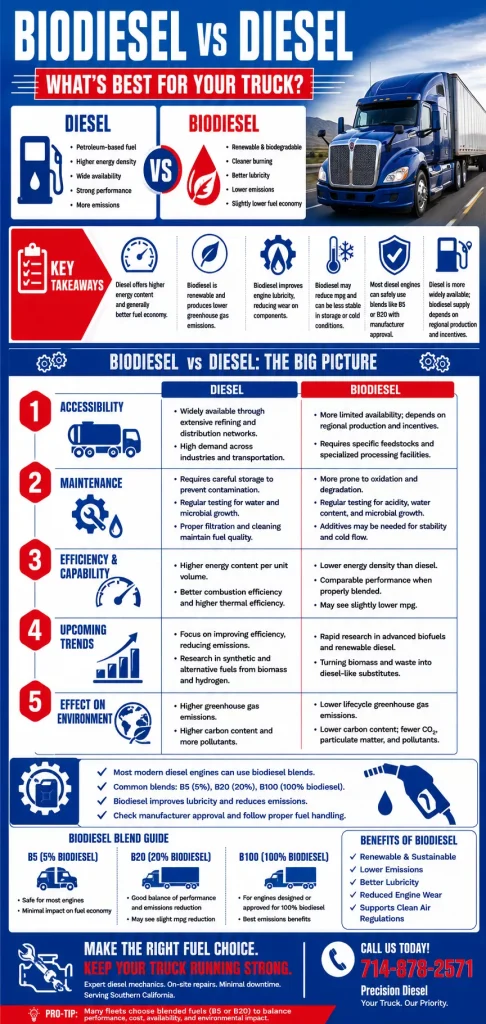
Key Takeaways
- Choice depends on balancing cost, performance needs, and environmental priorities
- Diesel offers higher energy content and generally better fuel economy than biodiesel
- Biodiesel is renewable, biodegradable, and produces lower greenhouse gas emissions
- Biodiesel improves engine lubricity, which can reduce wear on components
- Biodiesel may slightly reduce mpg and can be less stable in storage or cold conditions
- Most diesel engines can use biodiesel blends (such as B5 or B20) safely with manufacturer approval
- Diesel is more widely available, while biodiesel supply depends on regional production and incentives
What Does Your Truck Need? Biodiesel vs Diesel
Understanding the nuances of biodiesel vs diesel can save your truck from long-term engine issues and optimize fuel efficiency.
Your truck is not just a vehicle but a revenue-generating powerhouse worth billions. Choosing between biodiesel vs diesel (including options like biodiesel vs diesel #2 and bio-diesel) may impact your engine’s performance and cost. However, the wrong fuel choice between Biodiesel and diesel can contribute to truck breakage. This is a very important decision because if the wrong diesel type is used, it can cause major consequences.

A wrong choice of biodiesel or low-grade diesel may cause several problems, such as forming an engine deposit. This can reduce performance and increase fuel consumption. Hence, we have drawn up a detailed comparison that shall rid you of confusion and help in making the correct decision. When comparing biodiesel fuel vs diesel, it is important to understand how each option affects engine durability, fuel economy, and long-term operating costs for heavy-duty trucks.
What is Diesel?
People often ask, Is biodiesel the same as diesel? or What’s the difference between diesel and biodiesel? We’ll break it down here.
Diesel is a refined product derived from petroleum. It contains hydrocarbons specially formulated for the compression ignition of engines. Unlike spark-ignited engines, such as those running on gasoline, a diesel engine ignites the fuel by compression.
Here are a few properties of diesel:
- Diesel fuel is denser than gasoline, providing more energy per volume.
- It is used in compression ignition engines where the fuel-air mixture ignites due to high temperature and pressure.
- Diesel fuel has a higher viscosity compared to gasoline, affecting its flow characteristics.
- Unlike gasoline engines that use spark plugs for ignition, diesel engines ignite the fuel through compression alone.
- Diesel fuel has a higher boiling range than gasoline, suitable for compression ignition engines.
- It naturally possesses lubricating properties, which help reduce wear on engine components.
Is diesel the same as biodiesel? While many drivers wonder if diesel is the same as biodiesel, the truth is, there are key chemical differences between diesel and biodiesel. Diesel is a petroleum-based fuel, whereas biodiesel is derived from renewable sources. The difference between diesel and biodiesel engines can also influence performance and environmental impact.
What is Biodiesel?
If you’re wondering what does biodiesel mean or what is biodiesl, this section is for you.
Biodiesel is a sustainable and biodegradable alternative to traditional diesel fuel, derived directly from renewable sources such as organic oils, vegetable oils, animal fats, or recycled restaurant grease.
A few properties of biodiesel include:
- It is biodegradable; it can break down naturally and quickly in the environment.
- Biodiesel is considered non-toxic and safer to handle compared to conventional diesel fuel.
- Biodiesel has high lubricity, which can potentially reduce wear on engine parts.
- Biodiesel generally has a slightly lower energy content per unit volume compared to diesel fuel.
- It exhibits good storage stability, similar to conventional diesel, under proper conditions.
- Biodiesel can be blended with conventional diesel fuel at various ratios (e.g., B5, B20) to achieve desired performance and environmental benefits.
Biodiesel vs Diesel Performance, Mixing, and Truck Compatibility
The real-world difference between diesel and biodiesel becomes most noticeable when you look at how each fuel behaves inside modern diesel engines used in Southern California trucking routes. Diesel fuel vs biodiesel comparisons often focus on combustion stability, energy output, and long-term engine wear, especially in heavy-duty applications like biodiesel truck fleets and biodiesel pickup trucks that operate under constant load. While petroleum diesel delivers higher energy density, biodiesel compared to diesel usually offers improved lubricity, which helps protect injectors and fuel pumps during long hauls.
When evaluating biodiesel vs diesel performance, fleet operators often notice that biodiesel mpg vs diesel can vary depending on blend ratios such as B20 biodiesel vs diesel or biodiesel blend vs diesel setups. This is where biodiesel efficiency compared to diesel becomes important, since biodiesel and diesel comparison tests show slightly reduced fuel economy but cleaner combustion. Many technicians also analyze biodiesel vs diesel efficiency alongside biodiesel emissions vs diesel to understand how performance trade-offs balance with environmental compliance in California regulations.
A common concern is whether biodiesel in diesel engine systems is safe for long-term use, especially when asking can you mix diesel and biodiesel or can biodiesel be mixed with regular diesel in standard fuel systems. In most cases, biodiesel in regular diesel engines is acceptable in controlled blends, which is why biodiesel for diesel engine applications is widely used across commercial fleets. However, operators still question can I use biodiesel in my diesel truck, can you use biodiesel in a regular diesel engine, or can biodiesel be used in normal diesel engines, and the answer depends on manufacturer approval and proper fuel handling practices.
From a mechanical standpoint, biodiesel truck engines and biodiesel in trucks require attention to fuel stability, especially in Southern California temperature changes and long storage cycles. The biodiesel vs diesel properties difference includes oxidation sensitivity and cold flow behavior, which can influence whether biodiesel is better than diesel or if diesel remains the more stable option for specific routes. This is also where biodiesel vs regular diesel discussions matter, since biodiesel diesel comparison studies show that petroleum diesel still leads in energy output while biodiesel leads in lubricity and emissions reduction.
In terms of cost and operational planning, price of biodiesel vs diesel and biodiesel vs diesel cost per gallon often guide fleet decisions more than performance alone. Operators managing biodiesel trucks and biodiesel vs diesel fuel strategies must also consider biodiesel vs diesel performance under load, especially for long-haul freight where downtime is expensive. This is why many fleets adopt blended fuels instead of choosing strictly biodiesel or diesel, balancing biodiesel better than diesel claims with real-world efficiency needs.
Biodiesel vs. Diesel: Choosing the Best Fuel for Your Truck
Many drivers compare diesel vs biodiesel, ask about the difference between biodiesel and diesel, or wonder if there’s a difference between diesel and biodiesel in performance and cost. For truck owners searching for semi truck mechanics near me in Southern California, our team provides on-site diagnostics and repair services.
You may still be asking, biodiesel vs diesel #2 – what’s the difference? While diesel #2 offers higher energy density, biodiesel B20 blends can offer a balance of cleaner emissions and reliable performance.
Let’s find five differentiating factors between biodiesel and traditional diesel to help you pick the most appropriate one for your truck.

1. Accessibility
Diesel
Diesel fuel is widely available because it is produced in large quantities by refineries and distributed through established infrastructure. There is a large demand for diesel in industries and transportation around the world.
Biodiesel
Biodiesel may have more limited availability due to fewer production facilities and distribution networks. Its production often requires specific feedstocks (such as vegetable oils or animal fats) and specialized processing equipment. Biodiesel availability can be influenced by government regulations and incentives that promote its use. In regions with strong biofuel mandates or subsidies, biodiesel availability may be more reliable.
2. Maintenance
Diesel
Diesel fuel requires careful storage to prevent contamination and degradation. Regular testing for water and microbial growth is essential. Proper filtration and cleaning of tanks and fuel lines are necessary to maintain fuel quality.
Biodiesel
Biodiesel is more prone to oxidation and degradation compared to diesel. Acidity, water content, and microbial growth should be tested regularly. Some additives might also be necessary for some biodiesel products to increase their stability and avoid gelling in cold conditions.
3. Efficiency and Capability
Diesel
Diesel fuel typically has a higher energy content per unit volume compared to biodiesel. This higher energy density generally translates to better combustion efficiency and potentially higher thermal efficiency in diesel engines.
Biodiesel
Biodiesel, while lower in energy density compared to diesel, can still provide comparable performance in terms of energy efficiency when properly blended and used in engines designed or adapted for its use. Still unsure whether to use biodiesel vs regular diesel or curious about biodiseal blends? We cover that below.
4. Upcoming Trends
Diesel
Much emphasis is currently placed on improving efficiency, enhancing combustion efficiency, and minimizing emissions in diesel fuel formulations. Research is currently underway to find synthetic and other alternative diesel fuels from renewable biomass and hydrogen to reduce carbon footprints.
Biodiesel
Research in synthetic diesel fuel is the fastest-growing area of interest. It involves turning biomass and other wastes into substitutes that could become diesel-like in form.
5. Effect on Environment
Diesel
Diesel fuel typically produces higher greenhouse gas emissions compared to biodiesel, primarily due to its fossil fuel origins and higher carbon content. This is because diesel fuel is derived from crude oil, which is a non-renewable fossil fuel, while biodiesel is produced from renewable resources such as plant oils, animal fats, or recycled cooking grease.
Biodiesel
Biodiesel generally has lower lifecycle greenhouse gas emissions than diesel, as it is derived from renewable sources like vegetable oils, animal fats, or recycled cooking oil. Additionally, biodiesel has a lower carbon content and produces fewer emissions of carbon dioxide, particulate matter, and other pollutants when burned.
Understanding Biodiesel vs Diesel Fuel: Key Differences and Benefits
Biodiesel vs diesel fuel isn’t just a debate about energy sources—it’s a conversation about sustainability, cost, and engine performance. In Southern California, where clean air regulations are strict and trucking routes cover diverse terrains from Los Angeles highways to inland valleys, understanding the difference between biodiesel and diesel can help fleet operators make smarter choices.
Biodiesel fuel is produced from renewable feedstocks such as soybean oil, algae, and animal fats, using a process called transesterification. This biofuel offers several advantages over traditional petroleum diesel, including lower carbon emissions, improved lubricity, and a reduction in nitrogen oxide emissions. On the other hand, diesel #2 fuel, often called regular diesel, delivers higher energy density and widespread availability, making it the traditional choice for heavy-duty trucking.
Biodiesel Fuel Benefits and Engine Compatibility
Biodiesel fuel blends, such as B5, B20, and B100, can be used in most diesel engines without extensive modifications. Using biodiesel in diesel engines may improve fuel lubricity, reduce engine wear, and enhance combustion efficiency, though fuel efficiency can vary depending on the blend ratio. Fleet operators in Southern California often balance biodiesel vs diesel cost per gallon, environmental benefits, and cold-weather performance when planning routes and fuel stops.
Environmental Impact and Emissions Comparison
Biodiesel vs diesel emissions show clear differences. Biodiesel generally reduces greenhouse gas emissions and carbon emissions reduction, supporting California’s sustainability goals. It also lowers particulate matter and sulfur content compared to ultra-low sulfur diesel, making biodiesel a cleaner-burning option for diesel engine fleets concerned with nitrogen oxide emissions and long-term air quality compliance.
Practical Considerations for Fleet Fuel Management
Commercial fuel services and bulk fuel delivery providers in Southern California now supply biodiesel blends alongside petroleum diesel. Understanding the difference between diesel and biodiesel helps fleet managers plan fuel delivery, maintain engine performance, and implement sustainable fuel solutions. Whether evaluating diesel engine vs biodiesel engine efficiency or the cost of biodiesel fuel vs diesel, operators can make informed decisions that optimize both environmental and economic outcomes.
Key Differences Between Renewable Diesel and Biodiesel
While biodiesel and renewable diesel both come from renewable sources, they are not the same. Biodiesel is made via a chemical process called transesterification, whereas renewable diesel is chemically similar to petroleum diesel and is produced through hydrogenation. This results in a fuel that can be used in modern diesel engines without modification.
Want to know the key differences between renewable diesel and biodiesel or the difference between biodiesel and green diesel? Precision Diesel also serves as a full-service semi truck repair shop, capable of addressing both mechanical and fuel-related issues. It comes down to processing method, performance, and cold weather usability.
Make the Right Oil Decision for Your Truck with Precision Diesel!
Our certified mechanic diesel mechanic team ensures every engine component runs smoothly, avoiding costly breakdowns.
Precision Diesel is available at your service if your truck has oil problems, solving all your lubrication issues. Leaving such issues unresolved might lead to the breakdown of your vehicle during a trip. With our semi mobile mechanic near me service, we bring expert repairs directly to your truck’s location, minimizing downtime.
Don’t stress out about your truck fluid issues; allow us to solve them for you. Our heavy duty diesel mechanic experts specialize in servicing trucks that carry large loads, keeping your fleet on schedule. Trust our experts with your truck, we will take care of all major and minor issues. If you’re searching for a diesel mechanic near me in Southern California, Precision Diesel offers convenient service locations across the region. Your comfort is our top priority.
Contact us now and go on a carefree trip. Our diesel mechanics near you in Southern California are ready to handle routine maintenance and unexpected repairs efficiently.
Want to learn more? Call us at 714-878-2571.
FAQs
1. Which is better, biodiesel or diesel?
Compared to diesel, biodiesel has higher performance because of its higher cetane rating and added lubricity. Biodiesel’s higher cetane rating means that an engine is easier to start. Higher lubricity means less wear and tear on your engine over time.
2. Can you use biodiesel in a regular diesel engine?
Biodiesel and conventional diesel vehicles are identical. While light-duty, medium-duty, and heavy-duty diesel vehicles do not count toward alternative fuel vehicle acquisitions, nearly all can run on biodiesel blends.
3. Is biodiesel more expensive than diesel?
Generally, biodiesel is more expensive than diesel. The production cost of biodiesel is about the same as that of petroleum. Government incentives keep the prices in constant competition with diesel.
4. What is a biodiesel truck?
A biodiesel truck is a vehicle that runs on biodiesel fuel or biodiesel blends. It functions similarly to a regular diesel truck but uses renewable sources like vegetable oils or animal fats as fuel.
5. What’s the difference between biodiesel and diesel #2?
Diesel #2 is a common form of petroleum diesel used in vehicles, especially in warmer climates. Biodiesel, particularly blends like B20 biodiesel vs diesel #2, offer renewable benefits and added lubricity, though they may slightly reduce fuel economy. The difference between diesel 2 and biodiesel comes down to the source and environmental footprint.
