

TL;DR
Regular diesel engine maintenance helps truck owners improve fuel efficiency, reduce emissions, avoid costly breakdowns, and extend engine life. Key services like oil changes, fuel system care, cooling system checks, and preventative inspections protect long-term performance and lower operating costs. While maintenance requires ongoing investment, it delivers major savings through better reliability, compliance, and reduced repair expenses.
Key Takeaways
- Routine diesel maintenance improves fuel efficiency and lowers fuel costs.
- Preventative care reduces breakdowns and extends engine lifespan.
- Oil changes, fuel filter replacements, and cooling system checks are essential.
- Proper maintenance helps diesel trucks meet California emissions regulations.
- Early inspections prevent small problems from becoming expensive repairs.
- Diesel engines may cost more to maintain, but they often last longer than gas engines.
- Maintenance schedules should be based on mileage, workload, and driving conditions.
- Technology like onboard diagnostics and predictive maintenance tools improves reliability.
- Professional servicing and DIY maintenance can work well together.
- Consistent upkeep protects resale value and supports long-term truck performance.
If you’re reading this, chances are you’re already aware of how important your diesel engine is to your livelihood. Whether you’re hauling freight across the country or using your truck for local business, keeping that engine in top shape is crucial. Today, we will dive into the world of diesel engine maintenance and explore why it’s not just a good idea – it’s essential for your success on the road.
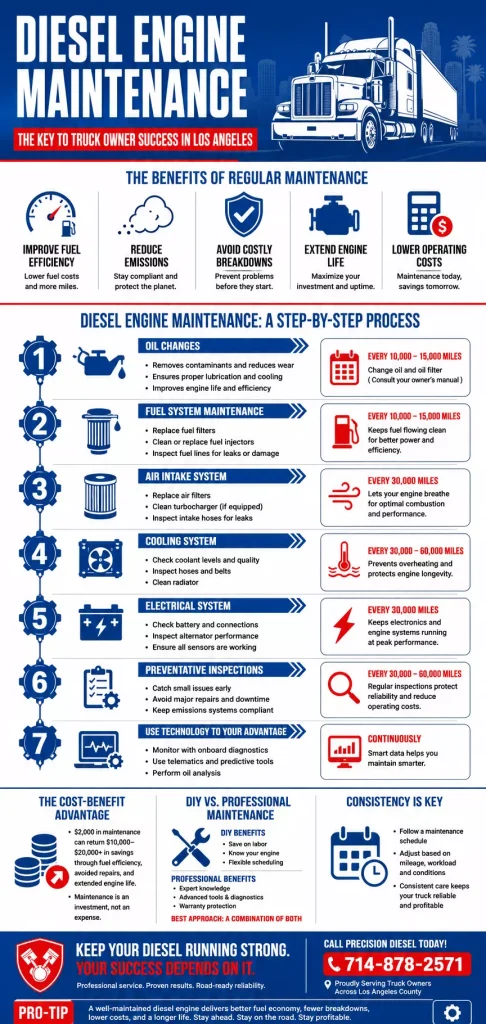
Why Diesel Engine Maintenance Matters
Diesel maintenance goes beyond basic checkups – it’s a proactive way to keep your truck reliable and road-ready for both short hauls and long-distance drives.
Let’s face it: your truck is more than just a vehicle. It’s your office, your reliable partner, and often, your ticket to a steady income. That’s why taking care of your diesel engine isn’t just about avoiding breakdowns (though that’s certainly important). It’s about optimizing your truck’s performance, saving money in the long run, and ensuring you can keep rolling mile after mile.
Fuel Efficiency: More Miles, Less Money
One of the biggest benefits of regular diesel engine maintenance is improved fuel efficiency. In an industry where fuel costs can make or break your bottom line, this is huge. Here’s how maintenance helps:
- Clean Fuel Injectors: Over time, fuel injectors can get clogged with deposits. Regular cleaning ensures they’re spraying fuel precisely, which means better combustion and less wasted fuel.
- Proper Oil Changes: Fresh, clean oil reduces friction in your engine. Less friction means your engine doesn’t have to work as hard, which translates to better fuel economy.
- Air Filter Replacement: A clean air filter allows your engine to “breathe” more easily. This means it doesn’t have to work as hard to pull in air, which again, saves fuel.
- Tire Pressure Checks: While not strictly engine maintenance, keeping your tires properly inflated reduces rolling resistance, which has a significant impact on fuel efficiency.
By staying on top of these maintenance tasks, you could see fuel efficiency improvements of up to 5% or more. That might not sound like much, but over thousands of miles, it adds up to serious savings.
Reducing Emissions: Good for the Planet, Good for Your Wallet
We all know that reducing emissions is important for the environment. But did you know that it can also save you money? Here’s how:
- Cleaner Exhaust: A well-maintained diesel engine produces fewer particulates and lower levels of harmful emissions. This means you’re less likely to fail emissions tests, which can be costly and time-consuming.
- Better Performance: An engine running at peak efficiency produces fewer emissions. This ties back to fuel efficiency – you’re burning fuel more completely, which means less waste and fewer pollutants.
- Avoiding Fines: In many areas, there are strict regulations on diesel emissions. Keeping your engine well-maintained helps you stay compliant and avoid potential fines.
- Future-Proofing: As environmental regulations become stricter, having a well-maintained, low-emission engine will become increasingly important. Stay ahead of the curve by prioritizing maintenance now.
Extending Engine Life: The Long Haul Advantage
Your diesel engine is built to last, but only if you take care of it. Regular maintenance is the key to ensuring your engine goes the distance. Here’s why:
- Preventing Wear and Tear: Regular oil changes, filter replacements, and component checks catch small issues before they become big problems. This prevents excessive wear on engine parts.
- Cooling System Maintenance: Overheating is a major enemy of engine longevity. Regular coolant checks and radiator maintenance keep your engine running at the right temperature.
- Timely Repairs: When you’re regularly inspecting your engine, you’re more likely to catch issues early. This means you can address problems when they’re small and inexpensive, rather than waiting for a catastrophic failure.
- Quality Parts: Using high-quality replacement parts during maintenance ensures that each component of your engine is up to the task of long-haul trucking.
By extending the life of your engine, you’re not just avoiding the cost of premature replacement. You’re also maximizing the return on your investment in your truck.
Key Components of Diesel Engine Maintenance
Regular maintenance on diesel engines is the foundation of performance, fuel savings, and long-term durability.
Now that we’ve covered why maintenance is so important, let’s break down some of the key components of a good diesel engine maintenance routine:
1. Oil Changes: The Lifeblood of Your Engine
Your engine oil is like the blood in your veins – it needs to be clean and flowing freely. Regular oil changes:
- Remove contaminants that can damage engine components
- Ensure proper lubrication, reducing friction and wear
- Help maintain proper engine temperature
The frequency of oil changes can vary depending on your truck’s make and model, as well as your driving conditions. Always consult your owner’s manual, but as a general rule, most diesel engines need oil changes every 10,000 to 15,000 miles.
2. Fuel System Maintenance: Keeping the Power Flowing
Your fuel system is responsible for delivering diesel to your engine efficiently. Regular maintenance includes:
- Replacing fuel filters to prevent contaminants from reaching the engine
- Cleaning or replacing fuel injectors to ensure proper spray patterns
- Checking fuel lines for leaks or damage
A clean fuel system means better combustion, which translates to more power and better fuel efficiency.
3. Air Intake System: Let Your Engine Breathe
Your diesel engine needs a lot of air to operate efficiently. Maintaining the air intake system involves:
- Regularly replacing air filters
- Checking and cleaning the turbocharger (if equipped)
- Inspecting air intake hoses for leaks or damage
A well-maintained air intake system ensures your engine gets the oxygen it needs for optimal combustion.
4. Cooling System: Keeping Your Cool
Diesel engines generate a lot of heat, and managing that heat is crucial for longevity. Cooling system maintenance includes:
- Checking coolant levels and quality
- Inspecting hoses and belts for wear
- Ensuring the radiator is clean and undamaged
A properly functioning cooling system prevents overheating, which can cause severe engine damage.
5. Electrical System: Powering Performance
While diesel engines are known for their mechanical robustness, modern trucks rely heavily on electrical systems. Maintenance here includes:
- Checking battery health and connections
- Inspecting alternator performance
- Ensuring all sensors are functioning correctly
A well-maintained electrical system ensures your engine’s computer can optimize performance and catch any issues early.
Extra Diesel Maintenance Services to Consider
Along with standard diesel engine maintenance, many truck owners also search for diesel maintenance services near me, diesel generator maintenance companies, and diesel maintenance technicians. Having the right professional or service provider makes it easier to stay on schedule and avoid costly repairs. If you own equipment like a generator, don’t forget that diesel generator maintenance is just as important as truck maintenance to ensure reliability during emergencies.
Benefits of Diesel Engine Performance in Southern California
The benefits of a diesel truck engine include strong torque output, long service life, and dependable performance for demanding driving conditions. These advantages make diesel platforms a practical choice for both commercial and personal use in Southern California.
Understanding why buy a diesel truck often comes down to durability and efficiency under heavy workloads. Diesel engines are built to handle consistent strain, making them a reliable investment for long-term vehicle operation.
Core Diesel Maintenance Practices for Reliable Operation
diesel maintenance plays a critical role in keeping engines operating smoothly under daily workload demands. Routine attention helps reduce wear and supports consistent engine response on the road.
diesel engine maintenance ensures internal components remain clean and properly lubricated over time. This type of care helps prevent performance decline during extended driving conditions.
maintenance diesel engine routines are designed to detect small issues before they become costly repairs. Regular inspections help keep vehicles dependable for both short and long hauls.
maintenance of a diesel engine focuses on protecting key systems such as fuel delivery and combustion efficiency. Consistent service intervals help maintain stable engine operation.
Ongoing Service Requirements for Diesel Engines
maintenance of diesel engine systems helps extend overall engine lifespan through consistent inspections and adjustments. Proper upkeep ensures smoother operation during daily driving demands.
maintaining a diesel engine requires attention to fluid levels, filters, and system diagnostics. These steps help reduce unexpected downtime and improve reliability.
service a diesel engine at recommended intervals to keep performance at optimal levels. Scheduled servicing helps identify early signs of wear before they escalate.
servicing a diesel engine supports fuel efficiency and long-term mechanical stability. Regular checkups help maintain consistent power delivery.
Diesel Engine Servicing Standards for Longevity
servicing diesel engine systems ensures all major components are functioning as intended under load. This approach supports long-term dependability for both personal and commercial vehicles.
servicing diesel engines helps maintain consistent combustion quality and reduced strain on internal parts. Proper servicing also contributes to smoother engine performance over time.
diesel engine care and maintenance is essential for preventing avoidable breakdowns and extending vehicle lifespan. It supports overall efficiency across varying driving conditions.
diesel maintenance program schedules help structure service intervals for better long-term planning. A consistent program reduces unexpected repair needs and improves operational reliability.
Diesel Vehicle Maintenance for Cars and Pickups
diesel car maintenance is important for keeping smaller diesel vehicles efficient and dependable in daily use. Regular attention helps maintain smooth operation in stop-and-go driving environments.
maintaining a diesel car involves routine inspections of filters, fluids, and engine systems. These steps help ensure consistent performance in urban and highway conditions.
diesel pickup maintenance is essential for vehicles used in towing, hauling, or job site work. Proper upkeep supports stronger performance under heavier loads.
maintaining a diesel truck ensures long-term reliability for commercial and personal use. Consistent service helps preserve engine strength under demanding conditions.
Pickup and Truck-Focused Diesel Care in Southern California
Diesel truck maintenance tips often include routine fluid checks, filter changes, and system inspections. These practices help reduce wear and improve overall engine responsiveness.
diesel preventative maintenance helps catch issues early before they turn into costly repairs. Regular scheduling supports long-term engine health and operational consistency.
Preventative Diesel Service Scheduling
how often do diesel cars need servicing
Diesel vehicles should follow a structured service schedule based on mileage and operating conditions. Regular intervals help maintain efficiency and reduce unexpected mechanical issues.
Service timing may vary depending on driving habits and workload intensity. Consistent monitoring ensures the engine continues to perform reliably over time.
Full Service Overview for Diesel Cars
what is a full service on a diesel car
A full service on a diesel car includes a comprehensive inspection of engine systems, fluids, and filters. This process helps ensure the vehicle remains in safe and efficient operating condition.
It also covers diagnostic checks to identify early signs of wear or inefficiency. This level of service supports long-term reliability and smoother driving performance.
Diesel Maintenance Cost Considerations for Local Drivers
General diesel maintenance cost can vary depending on vehicle type, service frequency, and required parts. Understanding these expenses helps owners plan for consistent upkeep.
diesel maintenance costs are generally influenced by labor, components, and inspection depth. Proper scheduling can help reduce unexpected financial strain over time.
Truck-Specific Diesel Service Investment Factors
diesel truck maintenance cost is often higher due to increased workload demands and larger component systems. These factors reflect the heavy-duty nature of diesel trucks.
diesel truck maintenance costs typically include routine servicing, part replacements, and system diagnostics. Regular care helps balance long-term expenses by preventing major repairs.
The Cost-Benefit Analysis of Regular Maintenance
Now, I know what some of you might be thinking: “All this maintenance sounds expensive. Is it really worth it?” Let’s break it down:
The Costs of Maintenance
Many owners worry about diesel truck maintenance cost, but when compared to unexpected breakdowns, the savings from regular care far outweigh the expenses.
Many drivers ask, “is diesel maintenance more expensive compared to gas?” While certain parts cost more, the longer lifespan and fuel efficiency of diesel engines often balance out those expenses.
Regular maintenance does have costs associated with it:
- Parts (filters, oil, etc.)
- Labor (if you’re not doing the work yourself)
- Time off the road
These costs can add up, especially if you’re diligent about following a maintenance schedule.
The Costs of Neglect
However, the costs of neglecting maintenance can be far higher:
- Major repairs or engine replacements
- Increased fuel consumption
- Decreased truck value
- Potential fines for emissions violations
- Lost income due to unexpected breakdowns
When you factor in these potential costs, regular maintenance starts to look like a bargain.
The ROI of Maintenance
Let’s put some numbers to it. Say you spend $2,000 a year on thorough maintenance for your truck. That might seem like a lot, but consider:
- A 5% improvement in fuel efficiency could save you thousands of dollars a year in fuel costs.
- Avoiding even one major breakdown could save you $10,000 or more in repairs and lost income.
- Extending the life of your engine by even a year or two can save you the cost of premature replacement, which could be $20,000 or more.
When you look at it this way, that $2,000 investment in maintenance could easily provide a return of 5-10 times that amount each year.
DIY vs. Professional Maintenance
One way to reduce the cost of maintenance is to do some of it yourself. Many truck owners are comfortable with basic tasks like oil changes or air filter replacements. However, there are good reasons to consider professional maintenance as well:
Benefits of DIY Maintenance:
- Cost savings on labor
- Intimate knowledge of your engine’s condition
- Flexibility in scheduling
Benefits of Professional Maintenance:
- Access to specialized tools and diagnostics
- Expert knowledge and experience
- Warranty protection for work performed
- Time savings for you
The best approach is often a combination of both. Do what you’re comfortable with yourself, but don’t hesitate to bring in the pros for more complex tasks or thorough inspections.
Some owners also wonder, “do diesel trucks require more maintenance?” The truth is that while diesel trucks may need specialized care, they usually run longer and harder than gas engines, which makes regular upkeep worthwhile.
Creating a Maintenance Schedule
One of the keys to effective diesel engine maintenance is consistency. Creating and sticking to a maintenance schedule ensures that nothing falls through the cracks. Here’s a basic framework:
Every Trip:
- Check oil and coolant levels
- Inspect tires for proper inflation and wear
- Look for any visible leaks
Every 10,000-15,000 Miles:
- Oil and filter change
- Fuel filter replacement
- Check belt tension
Every 30,000 Miles:
- Air filter replacement
- Transmission fluid check
- Brake system inspection
Every 60,000 Miles:
- Coolant flush and replacement
- Turbocharger inspection
- Valve adjustment check
Remember, these are general guidelines. Always consult your truck’s specific manual for the manufacturer’s recommendations.
For car owners, you might ask, “what maintenance does a diesel car need?” The basics are the same: regular oil changes, fuel filter replacements, and keeping the cooling system in check. Neglecting these makes people think diesel car maintenance is high, but with proper scheduling, costs can stay under control.
The Role of Technology in Maintenance
Modern diesel engines come with a host of sensors and computer systems that can help with maintenance. Take advantage of these technologies:
- On-Board Diagnostics: Pay attention to warning lights and error codes. They can alert you to issues before they become serious problems.
- Telematics Systems: These can track your vehicle’s performance and alert you when maintenance is due.
- Oil Analysis: Regular oil analysis can provide insights into your engine’s health and help you optimize your oil change intervals.
- Predictive Maintenance Software: Some fleets use software that predicts when maintenance will be needed based on operating conditions and historical data.
By leveraging these technologies, you can make your maintenance efforts more efficient and effective.
The Environmental Impact of Proper Maintenance
We touched on emissions earlier, but it’s worth emphasizing the environmental benefits of proper diesel engine maintenance:
- Reduced Particulate Emissions: Well-maintained engines produce fewer harmful particulates, improving air quality.
- Lower CO2 Emissions: Better fuel efficiency means less fuel burned, which translates to lower carbon dioxide emissions.
- Fewer Fluid Leaks: Regular inspections catch and prevent leaks of oil and other fluids that can harm the environment.
- Longer Engine Life: By extending the life of your engine, you’re reducing the environmental impact of manufacturing new engines.
In an era of increasing environmental awareness, these benefits are not just good for the planet – they’re good for your business image as well.
Conclusion: The Road to Success is Paved with Good Maintenance
As we wrap up this deep dive into diesel engine maintenance, the takeaway is clear: regular, thorough maintenance is not just a cost of doing business – it’s an investment in your success as a truck owner.
By prioritizing maintenance, you’re:
- Improving fuel efficiency and saving money at the pump
- Reducing emissions and staying compliant with regulations
- Extending the life of your engine and maximizing your investment
- Preventing costly breakdowns and keeping your truck on the road
- Contributing to a cleaner, more sustainable trucking industry
Remember, your diesel engine is the heart of your truck, and by extension, the heart of your business. Treat it well, and it will reward you with years of reliable service, lower operating costs, and the peace of mind that comes from knowing you’re prepared for whatever the road may bring.
At Precision Diesel, we’re committed to helping you keep your truck in top condition. Whether you need advice, quality parts, or professional service, we’re here to support you every mile of the way. Here’s to many more years of smooth, efficient, and profitable trucking! Give us a call today at 714-878-2571.
FAQs About Diesel Engine Maintenance
How often should I change the oil in my diesel truck in Los Angeles?
While it depends on your specific truck and driving conditions, most diesel engines in Los Angeles County benefit from oil changes every 10,000 to 15,000 miles. However, if you’re often in heavy traffic or dusty conditions, you might need more frequent changes.
Are there any special maintenance considerations for diesel trucks in LA’s hot climate?
Yes, the heat in Los Angeles can be tough on engines. Pay extra attention to your cooling system, check coolant levels regularly, and consider using a higher-grade engine oil designed for hot climates.
How can I improve my diesel truck’s fuel efficiency in LA traffic?
Regular maintenance is key. Also, avoid excessive idling, use cruise control on highways, and consider aerodynamic upgrades. Proper tire inflation is crucial in stop-and-go LA traffic.
What are the emissions requirements for diesel trucks in Los Angeles County?
Los Angeles County follows California Air Resources Board (CARB) regulations, which are among the strictest in the nation. Ensure your truck meets current standards and consider retrofitting older vehicles with approved emission control devices.
How often should I replace my diesel particulate filter (DPF) in LA?
DPFs typically last 200,000 to 400,000 miles, but LA’s air quality and traffic conditions might necessitate more frequent cleaning or replacement. Regular inspections can help determine when it’s time.
Are there any local regulations in LA County that affect diesel engine maintenance?
Yes, Los Angeles County has specific idling restrictions and may have additional requirements for certain types of diesel vehicles. Stay informed about local regulations through the South Coast Air Quality Management District.
How can I find a reliable diesel mechanic in Los Angeles County?
Look for certified mechanics nearby with experience in your specific make and model. Check reviews, ask for recommendations from other truck owners, and don’t hesitate to ask about their experience with emissions compliance in LA.
What should I do if my truck fails an emissions test in LA County?
First, get a diagnostic to understand why it failed. Common issues include clogged DPFs, worn injectors, or EGR system problems. Address these issues promptly to avoid fines and ensure you’re compliant with local regulations.
How does the salt air from the LA coastline affect my diesel engine?
Salt air can accelerate corrosion. If you frequently drive near the coast, pay extra attention to your truck’s undercarriage and consider more frequent washing. Also, check electrical connections more often as they can corrode faster in salty environments.
Are there any incentives in LA County for maintaining low-emission diesel trucks?
Yes, Los Angeles County occasionally offers incentives for upgrading to cleaner diesel technologies or maintaining low-emission vehicles. Check with the South Coast Air Quality Management District for current programs and incentives.
Are diesel trucks more expensive to maintain?
Diesel trucks can sometimes have higher maintenance costs than gas trucks, mainly due to specialized parts and emissions systems. However, with proper upkeep, they often last longer and deliver better fuel efficiency, which balances the investment.
Do diesel engines require more maintenance than gas engines?
Diesel engines don’t necessarily require more maintenance, but they do need different types of maintenance. Components like fuel injectors, DPFs, and turbochargers need attention, which can make it seem like diesel vs gas maintenance is more demanding. However, the trade-off is better durability and higher fuel efficiency.
Which diesel truck engine is the lowest maintenance?
Many truck owners believe that Cummins and Detroit Diesel engines are among the most reliable with proper care. That said, every diesel engine benefits from a consistent diesel truck maintenance schedule.
