

TL;DR
Maximizing diesel truck engine longevity requires a commitment to proactive fluid analysis, strict cooling system care, and clean air systems. By moving away from reactive repairs and focusing on high-quality component maintenance, operators can protect their engines from severe thermal stress and maximize their operational uptime.
Key Takeaways
- Leverage Diagnostics: Connecting advanced diagnostic scan tools lets you catch minor sensor issues before they cause a full dashboard shutdown or a forced roadside derate.
- Track Hours over Mileage: In heavy Southern California traffic, hour-meter tracking is much more accurate than simple mileage counts for scheduling oil changes.
- Protect the Fuel System: Regularly changing primary and secondary filters preserves vital injector lubrication and protects your high-pressure components.
- Keep Your Cool: Deferring cooling system flushes leads to severe cavitation and overheating risks on steep regional grades like the Cajon Pass.
- Optimize Air Intake: Clean air filters improve combustion efficiency, keeping soot levels down and extending the life of your expensive DPF system.
Maximizing diesel truck engine longevity in Southern California is not just about keeping an eye on the odometer. It is about actively fighting the brutal environmental and operational strains unique to this region. When you are hauling a heavy load through the Gateway Cities or idling for hours near the Port of Long Beach, your commercial vehicle takes a beating. The stop-and-go gridlock on the I-710, the baking summer heat of the Inland Empire, and the punishing climbs over the Cajon Pass or up the Grapevine on the I-5 create a perfect storm for mechanical wear. Without a deliberate strategy for diesel engine maintenance, minor component degradation quickly spirals into catastrophic failures.
For owner-operators and fleet managers across the region, structural reliability is the line between a profitable quarter and devastating downtime. Heavy-duty diesel engines are magnificent pieces of engineering, built with reinforced pistons, massive crankshafts, and components designed to handle a high compression ratio. However, the long-term structural integrity of these units depends entirely on how they are serviced. By implementing a proactive approach to diesel engine care, you can easily extend diesel engine life, reduce the frequency of unexpected diesel engine repair, and ensure your equipment remains fully compliant with California’s strict environmental mandates.
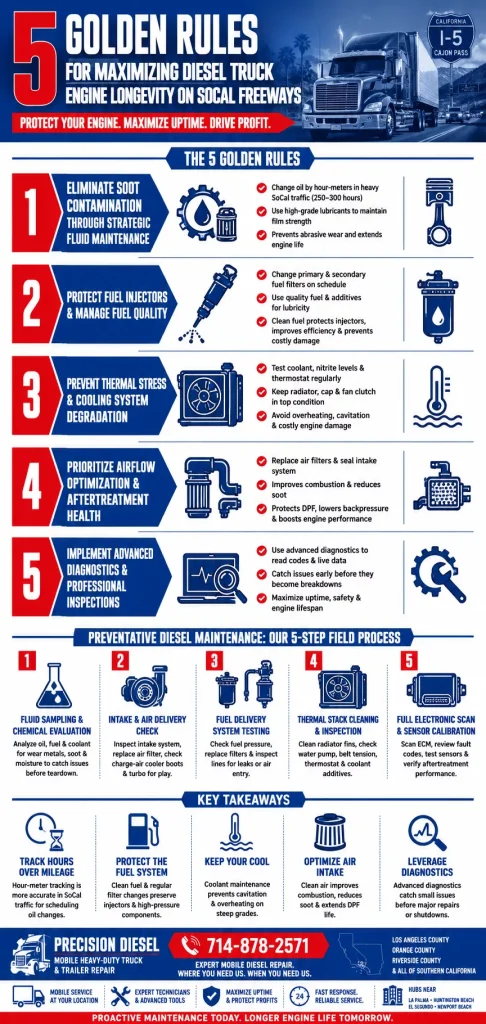
1. Eliminate Soot Contamination Through Strategic Fluid Maintenance
The foundation of diesel truck engine longevity rests on the quality and frequency of your lubrication routines. Because a commercial powerplant operates under immense pressure, the internal environment generates high thermal loads and specific combustion byproducts. Chief among these is soot. When engine oil becomes saturated with soot particles, it loses its viscosity and transforms from a smooth lubricant into an abrasive polishing paste. This abrasive fluid accelerates internal component degradation, scraping away at cylinder liners and causing premature ring wear.
- Soot Saturated Oil
- Loss of Film Viscosity
- Abrasive Metal Contact
- Premature Ring & Liner Failure
Executing routine oil changes at precise intervals is the most effective way to achieve engine wear prevention. In the congested corridors of Southern California, counting miles alone is a dangerous metric for planning service. A truck trapped in gridlock near the Anaheim corridors or sitting in a distribution center queuing line in Fontana might only log 20 miles over several hours, yet the engine is still accumulating critical operational hours. For fleets operating in high-traffic zones, scheduling oil and filter service by hour-meter readings rather than linear mileage is an excellent way to prevent diesel engine damage.
Our team typically sees significant extensions in total diesel engine lifespan when operators combine strict drainage schedules with high-grade lubricants that preserve vital diesel fuel lubrication properties throughout the entire service cycle.
| Operating Condition | Recommended Service Metric |
| Heavy Port Haulage (Long Beach/LA) | Hour-Meter Based (250–300 Hours) |
| Long-Haul Interstate (I-5/I-10) | Mileage-Based (15,000–25,000 Miles) |
| Stop-and-Go Local Delivery (LAX) | Time-Based (Every 3–4 Months) |
2. Protect High-Pressure Fuel Injectors and Manage Fuel Quality
Modern heavy-duty diesel engines rely on common-rail fuel systems that operate at astronomical pressures, frequently exceeding 30,000 PSI. At these extreme tolerances, even microscopic debris or trace water contamination can ruin expensive internal parts. The fuel injectors inside your engine are built to deliver atomized fuel with microscopic precision, but they require clean fluid to avoid friction-induced scoring and spray-pattern distortion.
- Water/Debris in Fuel
- Microscopic Scoring of Injector Tips
- Distorted Spray Pattern
- Cylinder Thermal Overload
Comprehensive fuel system maintenance requires a multi-layered defense strategy. This starts with changing your primary and secondary fuel filters strictly according to your manufacturer maintenance schedule. The primary filter acts as a water separator, dropping heavier moisture out of the fuel line before it reaches the lift pump. The secondary filter catches the ultra-fine particulates that would otherwise erode the tight clearances inside the injection pump.
Using the best fuel additives for diesel engines is highly recommended during regular fill-ups to stabilize the fuel, improve lubricity, and keep internal deposits from building up. When a truck experiences poor diesel fuel quality, the engine will suffer from drop-offs in overall diesel engine efficiency, increased smoke production, and rough idling. If you begin noticing hard starting or a noticeable drop in fuel efficiency, these are clear signs your diesel engine needs repair. Catching these symptoms early protects your fuel system and prevents unburnt fuel from washing down the cylinder walls, which destroys the oil film and shortens diesel engine durability.
3. Prevent Thermal Stress and Cooling System Degradation
Managing your operating temperature is critical when pulling heavy loads up steep regional grades. Towing a fully loaded trailer up the Cajon Pass or moving through the Irvine Spectrum area during an Inland Empire summer puts an incredible burden on your cooling system. If your radiator, water pump, or thermostat fails to shed heat efficiently, the resulting engine temperature spike can crack cylinder heads, warp blocks, and cause devastating internal seizures.
To maximize diesel engine reliability, you must perform regular cooling system maintenance. This involves more than just verifying the coolant level in the reservoir; it requires testing the chemical balance of the fluid itself. Over time, heavy-duty antifreeze loses its corrosion inhibitors, leading to scale buildup inside the radiator cores and cavitation erosion around the cylinder liners. Cavitation occurs when tiny vapor bubbles collapse against the liner walls with enough force to pit the metal, eventually letting coolant leak directly into the combustion chamber.
Our technicians always inspect the following areas during a professional cooling audit:
- Coolant Nitrite Levels: Prevents liner pitting and internal cavitation.
- Thermostat Operation: Ensures rapid opening when hitting steep climbs under load.
- Radiator Cap Seal: Maintains system pressure to raise the boiling point of the fluid.
- Fan Clutch Engagement: Vital for keeping air moving through the cooling stack in stop-and-go LA traffic.
If you want to know how to avoid diesel engine overheating when ambient temperatures cross into the triple digits, the answer is simple: never defer cooling system flushes. Ensuring your heat-exchange components are free from scale and debris is the single best way to protect your engine from terminal thermal stress.
4. Prioritize Airflow Optimization and Aftertreatment Health
A diesel engine is essentially a giant air pump. To achieve peak diesel engine performance, the intake system must provide unrestricted, clean air to the combustion chambers. Proper airflow optimization ensures complete combustion, which keeps power up and lowers the volume of unburnt particulate matter traveling into your exhaust system.
- Clogged Air Filter
- Choked Intake Airflow
- Incomplete Combustion
- Heavy Soot Loading in DPF
Neglecting your intake system by skipping an air filter replacement triggers a costly domino effect. When the engine is starved of oxygen, the air-to-fuel ratio drops out of balance, resulting in excessive carbon buildup and heavy soot contamination. This extra soot quickly overloads your Diesel Particulate Filter (DPF), leading to frequent regenerations, higher exhaust backpressure, and premature component failures.
To achieve long-term diesel truck engine longevity, you cannot separate intake health from exhaust health. Maintaining a clean intake path directly reduces the workload on your aftertreatment systems, protecting your components while helping you maintain a high vehicle resale value when it is time to upgrade your fleet.
5. Implement Advanced Diagnostics and Professional Inspections
Modern fleet management requires moving away from reactive “break-fix” habits and adopting high-precision data monitoring. Utilizing advanced performance monitoring systems allows you to track engine parameters in real time, catching minor faults before they trigger a full dashboard shutdown. When your check engine light flashes on the dashboard while navigating the busy I-405 or SR-91 corridors, you don’t have to guess what’s wrong.
By hooking up state-of-the-art diagnostic tools, a skilled diesel technician can read specific fault codes, look at live sensor data, and run targeted system tests. These precise engine inspections take the guesswork out of troubleshooting, letting you pin down the root cause of an issue immediately.
- Dash Warning Light
- Diagnostic Tool Connection
- Live Sensor Data Analysis
- Targeted Component Fix
| Inspection Focal Area | Diagnostic Value Provided |
| Live Sensor Stream Monitoring | Evaluates EGR flow, turbo boost, and fuel rail pressure |
| Comprehensive Visual Inspection | Catches hidden fluid leaks, chafing wires, and loose mounts |
| Exhaust Backpressure Evaluation | Identifies early DPF restriction before a forced derate |
Investing in regular professional diesel inspections from an expert diesel specialist is the ultimate way to safeguard your investment. A professional technician knows exactly how to look past the surface, checking critical wear points and identifying hidden exhaust leaks or cooling drops that standard electronic monitors might miss.
How Long Do Diesel Truck Engines Last?
Diesel truck engines typically last between 300,000 and 500,000 miles before needing a major rebuild, far exceeding the lifespan of standard gas engines. Their durability stems from heavier internal components, natural fuel lubrication, and lower operating RPMs. However, modern systems require specific care.
Key Engine Platforms
- Cummins (5.9L & 6.7L): Legendary for their inline-six design and heavy-duty blocks, these engines routinely pass the 300,000-mile mark in Ram trucks.
- Duramax (6.6L): Known for robust performance and used in Chevrolet and GMC trucks. With routine service, they frequently cross the 300,000-mile threshold.
- Power Stroke (7.3L & 6.7L): Modern 6.7L Ford Power Stroke engines offer strong durability and capability.
Factors Affecting Lifespan
- Maintenance: Strict adherence to oil changes, fuel filter replacements, and cooling system maintenance is critical to reaching high mileage.
- Driving Habits: Diesels thrive on long highway hauls and towing. Short, stop-and-go trips increase wear and can cause issues with emissions systems.
- Emissions Components: Modern diesel engines utilize complex emissions equipment (like DPFs and EGR valves). While necessary, these systems can require costly repairs or maintenance as mileage climbs.
Top Tips for Maximizing Engine Life
- Monitor Fluids: Change oil at the manufacturer’s recommended intervals and use high-quality filters.
- Keep Fuel Clean: Change fuel filters regularly to prevent damage to the high-pressure fuel pump and injectors.
- Proper Warm-Up/Cool-Down: Allow the engine oil pressure to stabilize before putting it under heavy load, and let the turbocharger cool down after heavy towing.
Why Diesels Last Longer
- Fuel Lubrication: Unlike gasoline, which acts as a solvent, diesel fuel naturally contains lubricating properties that protect pumps and injectors.
- Sturdier Engineering: Diesel blocks feature thicker cast-iron, heavier crankshafts, and reinforced pistons made to handle extreme compression and load.
- Lower Operating RPM: Diesels produce peak torque at low RPMs, meaning the engine completes fewer cycles and experiences less mechanical stress over time.
A Field Guide to Preventative Diesel Engine Maintenance
To make things practical, here is a breakdown of the specific steps our field teams take when conducting comprehensive preventative diesel engine maintenance. Following a structured diesel engine maintenance checklist ensures no critical system is overlooked.
1. Comprehensive Fluid Sampling and Chemical Evaluation
- Initial Assessment: Our technician pulls samples of your engine oil, fuel, and cooling fluid. We analyze these samples to look for trace wear metals, soot percentages, and moisture levels, identifying internal component wear before tearing down any metal.
2. High-Precision Intake and Air Delivery Check
- Airflow Optimization: The technician inspects the complete air induction system. This step includes an air filter replacement if needed, verifying all charge-air cooler boots are sealed tightly, and checking the turbocharger compressor wheel for play or damage.
3. Fuel Delivery System Testing
- Cooling System Maintenance: The technician cleans external road debris out of the radiator cooling fins, checks the water pump belt tension, tests the thermostat operation, and measures anti-cavitation additive levels in the coolant.
4. Thermal Stack Cleaning and Component Inspection
- Initial Assessment: Our technician pulls samples of your engine oil, fuel, and cooling fluid. We analyze these samples to look for trace wear metals, soot percentages, and moisture levels, identifying internal component wear before tearing down any metal.
5. Full Electronic Scan and Sensor Calibration
- Performance Tuning: Using diagnostic tools, we connect to the engine control module to read historic and active fault codes, evaluate exhaust aftertreatment sensors, and verify the EGR system is operating correctly.
Common Diesel Engine Longevity Challenges
How Often Should Diesel Engines Be Serviced?
For commercial trucks operating in the heavy traffic of Los Angeles County and Orange County, a standard service interval is every 15,000 miles for long-haul routes, or every 250 to 300 hours for vehicles stuck in heavy idling and port operations. Adhering to a strict preventative maintenance plan prevents common issues caused by short, high-stress city trips.
What are the Benefits of Proper Diesel Engine Warm-Up Procedures?
Allowing your engine to idle for 3 to 5 minutes before pulling a heavy load ensures that engine oil reaches its ideal operating temperature and coats every critical surface, including the turbocharger bearings. Skipping this step leads to metal-on-metal friction and accelerates overall engine wear.
How Does Lower RPM Operation Impact Diesel Durability?
Operating your truck within its optimal RPM band (the “sweet spot” on your tachometer) keeps torque high while reducing internal heat generation. Running at excessively high RPMs places unnecessary stress on your valvetrain, reducing overall diesel engine lifespan.
Maximizing Uptime on Southern California Commercial Routes
When you are dealing with a critical mechanical issue on the road, you don’t want to waste time searching for a diesel repair shop or trying to coordinate a costly tow. That is where a reliable, professional truck diesel mechanic makes all the difference. Having a team that can bring shop-level diagnostic capabilities and tools straight to your location changes the game for your fleet’s efficiency.
If you are stranded with an aftertreatment failure or a sudden coolant leak near the Commerce business district or the busy Ontario logistics corridor, you need an expert local diesel mechanic who understands the urgency of your schedule. Getting a highly trained diesel mechanic out to your vehicle quickly minimizes your downtime, protects your freight commitments, and ensures you don’t face steep fines for blocking traffic or violating regional idling laws.
Whether you manage an entire fleet based in Riverside County or operate as an independent owner-operator running freight through Santa Ana, Long Beach, Fontana, or Anaheim, keeping your trucks moving safely is our top priority. Our experienced professional mechanic crews handle everything from emergency roadside diagnostics to complete diesel maintenance services. We provide expert commercial diesel repair and high-quality diesel engine repair services directly on-site, saving you time and keeping your business moving forward.
Schedule you Maintenance with us Today
When your truck or fleet needs expert care on the road, you can rely on Precision Diesel Mobile Heavy-Duty Truck and Trailer Repair. Our certified heavy-duty diesel repair technicians deliver professional mobile service directly to your location, bringing years of practical field experience straight to your vehicle. Whether you are dealing with an unexpected breakdown or scheduling routine preventative diesel maintenance tips, our team is fully equipped to handle all your heavy-duty truck repair needs on-site.
You can reach our dispatch line at 714-878-2571 to get a professional diesel repair expert headed your way. We proudly serve owner-operators and logistics fleets across Los Angeles County, Orange County, Riverside County, and all of Southern California. With convenient mobile service hubs supporting drivers near La Palma, Huntington Beach, El Segundo, and Newport Beach, we make sure top-tier diesel expertise is always nearby whenever you need it most.
