

TL;DR
Diesel turbo problems, especially in Variable Geometry Turbos (VGTs), can quickly lead to power loss, smoke, oil issues, and engine damage if ignored. Common causes include oil system failures, mechanical wear, and electrical actuator faults. Early diagnosis and regular maintenance are key to preventing expensive repairs.
Key Takeaways
- Loss of power, smoke, whining noises, and check engine light are early warning signs of turbo trouble
- Oil issues (leaks, consumption, contamination) are a major cause of turbo failure but are often preventable
- Mechanical failures include stuck vanes, damaged blades, and carbon buildup restricting movement
- Electrical actuator problems can mimic mechanical failure and require proper diagnostics
- VGT turbos improve efficiency and performance but require consistent maintenance
- Preventive care includes regular oil checks, clean air intake, proper warm-up and cool-down, and monitoring boost performance
- Professional diagnostics are often needed because many turbo issues overlap with EGR, oil, and electrical systems
- Ignoring symptoms can lead to costly turbo or engine damage
Does your diesel engine stall? Problems with your Variable Geometry Turbo (VGT) happen more often than most people realize. These turbo issues can significantly affect your vehicle’s performance, from oil consumption to mechanical failure and electrical issues. We at Precision Diesel stress the need to fix turbo issues immediately. We have encountered numerous instances where early detection of the symptoms would have saved our customers costly repair bills. This is why we are publishing our experience on common diesel turbo issues and their symptoms.
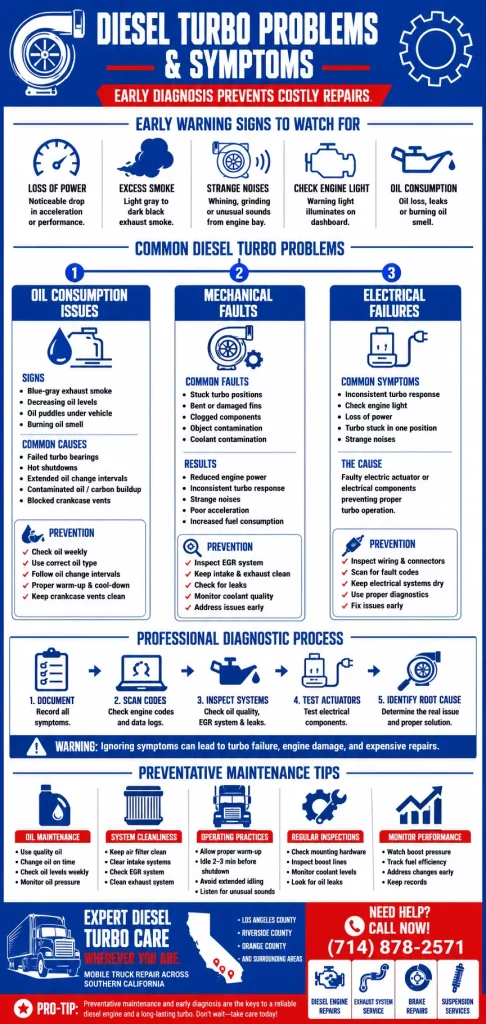
Common Diesel Turbo Issues
The following are some of the common issues that diesel turbochargers may face:
1. Oil Consumption Problems: High oil consumption in your diesel engine might be a sign of a failing turbocharger. The turbo might leak oil into the exhaust or intake systems, leading to performance loss.
2. Mechanical Issues: Mechanical faults, including faulty turbine blades or oiled bearings, will decrease the power output and increase the noise level. They can result from inadequate maintenance or damage from foreign objects.
3. Electrical Issues: Most modern turbos are electric-based to function effectively. Any fault in the electrical systems will result in distorted boost rates and poor engine performance.
Symptoms That Suggest Finding Turbo Faults
If you do observe some warning signs when your diesel turbo is running, they could be symptoms of underlying issues:
– One of the initial signs that something is amiss with your turbocharger system is a palpable loss of power output.
– Exhaust smoke that ranges from light gray to dark black is another indication of a potential issue.
– Strange noises from the engine bay, especially grinding or whining, cannot be ignored as they could signify major turbocharger problems.
– Also, if your check engine light suddenly goes on, chances are that it has something to do with turbocharger performance problems that should be taken care of at once.
If you experience any of these symptoms, you should seek professional attention as soon as possible.
Get Expert Help for Your VGT Turbo Concerns
Our expert technicians offer highly-rated mobile truck repair across Southern California. Whether you’re experiencing enigmatic engine symptoms or need expert maintenance, we can keep your diesel engine running smoothly.
Don’t let turbo issues bring you to a standstill—call today!
Learning about Variable Geometry Turbochargers (VGT)
Variable Geometry Turbochargers are a big step forward in diesel engine technology. These advanced systems adapt the way they work depending on your engine’s requirements, delivering maximum performance under various driving conditions.
How VGTs Work
A VGT accomplishes this through adjustable vanes for exhaust flow control and pressure boosting. It has two turbos in a single package – the capability of functioning like a small turbo to react fast at lower speeds and a large one to provide the best power at high speeds.
Principal Advantages of VGTs
Variable Geometry Turbochargers have a number of important benefits for diesel engines. They enable faster engine response, with faster acceleration and overall performance. Improved fuel efficiency cuts operating costs as well as emissions, making them cleaner for the environment. VGTs also provide improved low-end torque, with excellent pulling power at low speeds, and improved power delivery through the range of the engine.
Where You’ll Find VGTs
They have become increasingly prevalent in most types of diesel-powered equipment and vehicles. They are extensively employed in heavy trucks, where they are highly preferable for long drives. Commercial trucks extensively use VGT technology in their fleets for maximum performance and efficiency. The latest pickup trucks usually employ the use of VGTs in order to support their functions better, and they have been deployed in many categories of industrial machines, where ongoing performance and efficiency are absolutely critical.
These turbochargers are today an optional standard in diesel engines because of their efficiency and performance advantages. Although they provide enhanced performance, they contain a sophisticated design that should be well taken care of and maintained so that no issue comes about.
Symptoms of VGT Turbo Malfunction
Identifying the VGT turbo trouble signs can save you from expensive repairs and possible engine damage. From our experience at Precision Diesel, we’ve categorized three primary groups of VGT turbo problems you should be aware of.
1. Oil Consumption Issues
Your turbo’s oil consumption patterns can tell you a lot about its health. Here’s what you should look for:
Signs of Excessive Oil Consumption:
- Blue-gray exhaust smoke
- Decreasing oil levels between changes
- Oil puddles under your vehicle
- Burning oil smell from the engine
Common Causes:
- Failed turbo bearings
- Hot engine shutdowns
- Extended oil change intervals
- Contaminated oil from carbon buildup
- Blocked crankcase filters create excess pressure
Critical Oil-Related Factors:
- Using incorrect oil types
- Dirty oil contaminated with carbon
- Excessive crankcase pressure pushing oil through the turbo
It’s important to note that many oil consumption issues aren’t actually the turbo’s fault. External factors often create conditions that lead to turbo failure. Regular monitoring of your oil quality and maintaining proper service intervals can prevent many of these problems.
Prevention Tips:
- Check oil levels weekly
- Use manufacturer-recommended oil types
- Follow recommended oil change intervals
- Allow proper engine cool-down before shutdown
- Keep crankcase ventilation system clean
These oil-related symptoms often appear gradually, giving you time to address the underlying issues before catastrophic failure occurs. If you notice any of these signs, it’s essential to investigate the root cause rather than just treating the symptoms.
2. Mechanical Faults
Your VGT turbo system has several moving parts that can develop mechanical problems over time. One important part to keep an eye on is the EGR valve and cooler system. When these components don’t work properly, they can greatly affect your turbo’s performance and efficiency.
Common mechanical problems include:
- Stuck turbo positions – Your turbo might get locked between small and large turbo settings
- Bent fins – Physical damage to the turbocharger’s delicate components
- Clogged components – Build-up of coolant and carbon mixture restricting movement
- Object contamination – Foreign materials entering the system
- Coolant contamination – Mixing of coolant with other system fluids
These mechanical faults often lead to:
- Reduced engine power
- Inconsistent turbo response
- Strange noises during operation
- Poor acceleration
- Increased fuel consumption
Regularly checking the mechanical parts of your turbo system can help you find these problems early on. Pay close attention to any unusual sounds or changes in performance, as these often indicate developing mechanical issues.
3. Electrical Failures
Your VGT turbo relies on sophisticated electronic components to function properly. A critical part of this system is the electric actuator, which controls the turbo’s variable geometry mechanism. When these electronic components fail, your turbo can’t shift between different power modes effectively.
Common electrical failure symptoms include:
- Inconsistent turbo response
- Check engine light activation
- Loss of power during acceleration
- Turbo stuck in a single position
- Strange noises during turbo operation
These electrical problems are difficult to diagnose without diagnostic equipment and expertise. Electrical turbo problems are frequently misdiagnosed by operators as mechanical problems, with redundant repair or replacement.
We’ve had many cases at Precision Diesel where a basic electrical component replacement solved what seemed to be a costly turbo problem. Our diagnostic tools can isolate the precise electrical flaw plaguing your VGT turbo, saving you time and money on repair.
Quick Tip: When your turbo function suddenly becomes erratic or non-responsive, it’s worth checking the electrical components first before wondering if you need a whole turbo replacement.
Diagnosing Turbo Issues
Proper turbo trouble diagnosis involves a serious process. The following are the most critical factors to consider:
Professional Diagnostic Tools
Professional turbo diagnosis entails having ample access to factory service manuals, specialty diagnostic tools, and sophisticated service bulletins and technical reports. They form a basic requirement for correct fault troubleshooting and repair plan.
Critical Diagnostic Steps
The diagnostic procedure starts with complete documentation of all the symptoms, followed by an examination of engine codes and an analysis of operational data. The level of oil should be tested by the technicians, along with contamination searching and inspection of the components of the EGR system and electrical actuator testing. Dealers hide diagnostic data, and it’s not easy for DIY repair. We at Precision Diesel have unrestricted access to manufacturer service parts subject matter, bulletins, and technical information not available to the general public.
Warning Signs to Look Out For
Drivers should be on the lookout for several key warning signs, including unusual engine sounds, color variation in the exhaust, loss of power, and excessive oil consumption. An inappropriate turbo response is also a major issue that must be addressed immediately. These are typically signs of emerging issues that must be addressed early enough to prevent extensive damage.
A proper diagnosis will determine if the problem is with the turbo or with other associated components, such as the EGR system, oil supply, or electrical controls. This specific method avoids wasteful part replacement and gets the root of the problem solved.
Preventative Maintenance Tips for Diesel Turbos
Maintenance of your diesel turbo in good condition involves constant checks on areas of maintenance. These are what you should check out:
Oil Maintenance
- Use high-quality oil specifically designed for turbocharged engines
- Stick to recommended oil change intervals
- Check oil levels weekly
- Monitor oil pressure gauges for unusual readings
System Cleanliness
- Keep air filters clean and replace as needed
- Clear intake systems of debris and blockages
- Check EGR system components regularly
- Clean exhaust systems to prevent carbon buildup
Operating Practices
- Allow proper warm-up time before heavy acceleration
- Let engine idle for 2-3 minutes before shutdown
- Avoid extended idling periods
- Pay attention to unusual sounds or performance changes
Regular Inspections
- Check turbo mounting hardware
- Inspect boost lines for leaks or damage
- Monitor coolant levels and quality
- Look for signs of oil leaks around turbo housing
These preventative steps help avoid the common problems we see with VGT turbos, from bearing failures to mechanical faults. A well-maintained turbo system significantly reduces the risk of expensive repairs and extends your engine’s life.
How to know if diesel turbo is working
A diesel turbo that is working properly will build noticeable engine power when you accelerate, especially at higher speeds or when climbing hills. You may hear a soft whistling sound as the turbo spools up, and the engine should feel responsive without delay or heavy smoke from the exhaust. If the turbo is failing, you may notice weak acceleration, reduced fuel efficiency, excessive black smoke, or unusual whining noises.
A quick way to check performance is to observe how the vehicle responds under load and whether boost pressure builds consistently. For a proper diagnosis in Southern California, Precision Diesel Services can inspect the turbo system, check boost levels, and identify any issues affecting performance.
When to Seek Professional Help
Complex turbo issues require expert diagnosis and specialized tools that aren’t readily available to most DIY mechanics. You’ll want to contact professional diesel repair services when you notice persistent oil consumption despite regular maintenance or mechanical faults that affect turbo shifting. Additionally, electrical actuator malfunctions and unexplained loss of engine power are clear indicators that professional intervention is needed.
Unusual noises from your turbo system should never be ignored, as they often signal developing problems that require immediate attention. These symptoms typically indicate issues beyond the scope of routine maintenance and require professional diagnostic equipment and expertise to properly address.
Professional diesel mechanics have access to manufacturer service bulletins, diagnostic tools, and repair information that dealers typically reserve for their shops. At Precision Diesel, we understand the intricacies of VGT systems and can accurately diagnose the root cause of your turbo problems – whether it’s failed bearings, contaminated oil, or electrical component issues.
Our expert technicians can determine if your turbo issues stem from external factors like EGR valve problems, coolant contamination, or clogged components. We’ll provide comprehensive solutions that address both the symptoms and underlying causes of your turbo system troubles.
Choose Precision Diesel Repair
Diesel turbo problems can be complex, but they don’t have to derail your operations. You can better protect your diesel engine investment by knowing common VGT turbo symptoms and proper maintenance practices.
Ready for Expert Diesel Turbo Care?
Precision Diesel brings professional solutions right to your location across Southern California. Our mobile service covers Los Angeles County, Riverside County, Orange County, and surrounding areas.
We specialize in diesel engine repairs, exhaust system maintenance, brake repairs, and suspension services.
Professional Turbo Diagnostics
Don’t let turbo issues slow you down. Our experienced technicians are ready to diagnose and fix your diesel engine problems precisely and carefully. We understand the importance of keeping your truck running at peak performance.
Need immediate assistance?
Call us at (714) 878-2571 for top-rated mobile truck repair services. Trust Precision Diesel to get you back on the road with confidence.
Your diesel engine deserves expert care – let’s keep it running strong together.
