
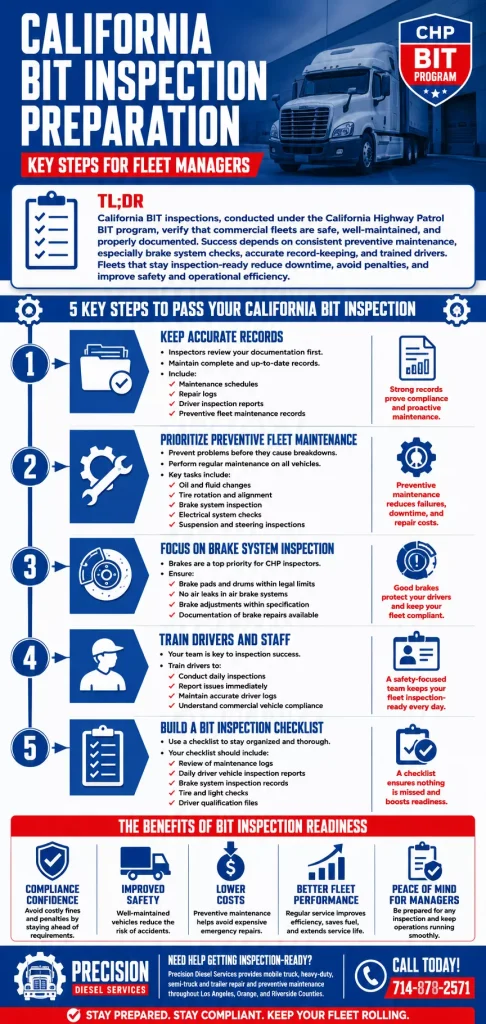
TL;DR
California BIT inspections, conducted under the California Highway Patrol BIT program, verify that commercial fleets are safe, well-maintained, and properly documented. Success depends on consistent preventive maintenance, especially brake system checks, accurate record-keeping, and trained drivers. Fleets that stay inspection-ready reduce downtime, avoid penalties, and improve safety and operational efficiency.
Key Takeaways
- BIT inspections review vehicle condition, maintenance records, driver files, and terminal safety practices.
- Compliance is enforced by the California Highway Patrol under the BIT program for commercial carriers.
- Preventive fleet maintenance is essential to avoid breakdowns and inspection failures.
- Brake system condition is a top priority during inspections and must be regularly checked and documented.
- Accurate records (maintenance logs, repairs, driver reports) are critical for passing inspections.
- Drivers should perform daily inspections and report issues immediately to maintain compliance.
- A structured BIT inspection checklist helps ensure nothing is missed before audits.
- Proper preparation reduces fines, downtime, and repair costs while improving fleet safety and performance.
If you manage commercial trucks in California, you’re already familiar with the Basic Inspection of Terminals (BIT) program, mandated by the California Highway Patrol (CHP). The program exists to ensure vehicles are properly maintained, safe for the road, and in full compliance with state law.
For many fleet managers and drivers, preparing for a California BIT inspection can feel overwhelming. A failed inspection can lead to penalties, downtime, and serious operational setbacks. On the other hand, a successful BIT inspection not only keeps your business compliant but also improves vehicle safety and reduces costly repairs in the long run.
This guide walks through essential steps to prepare for a BIT inspection in California, including preventive fleet maintenance practices, brake system inspections, and how to build a BIT inspection checklist that keeps your fleet inspection-ready at all times.
What is a BIT Inspection?
A BIT inspection in California is a review conducted under the BIT program, created by the CHP. The purpose is to confirm that commercial carriers properly maintain vehicles and follow safety standards.
The inspection typically covers:
- Vehicle records and maintenance logs
- Brake system inspection and other safety components
- Driver records and qualifications
- Terminal safety practices
Understanding what the inspection involves is the first step toward BIT inspection readiness.
California BIT Program Compliance, Forms, and Inspection Standards
The bit program California highway patrol establishes the foundation for how commercial fleets are monitored across the state, especially in high-traffic regions like Southern California where enforcement is strict and ongoing. These rules align closely with California dot inspection requirements, which guide how safety, maintenance, and operational compliance must be documented for commercial vehicles. At the core of this system is understanding what is a bit inspection, which goes beyond a basic check and ties directly into long-term fleet safety accountability. Proper bit inspection certification reflects that a fleet is consistently meeting CHP expectations through documented maintenance and inspection history.
In practice, fleets will encounter different levels of enforcement depending on location, including California bit inspection processes that apply to terminals operating within state jurisdiction. Many carriers also refer to this as bit inspection California, especially when dealing with compliance audits tied to maintenance records and safety reviews. These are commonly grouped under bit inspections, which focus on both vehicle condition and operational documentation. In some regions, you may also hear the term bit inspections ca, which reflects the same enforcement structure but is used informally within local fleet operations.
Documentation plays a major role in compliance, especially when completing a bit inspection form that records vehicle condition and maintenance activity. Fleets are also required to maintain bit inspection forms that support ongoing tracking of repairs, inspections, and safety checks. For larger carriers operating on stricter schedules, bit 90 day inspection forms help standardize recurring compliance reporting across all units. In more detailed maintenance environments, the bit 90 day mechanical inspection form is used to document deeper mechanical evaluations that support long-term vehicle reliability.
To stay consistently prepared, inspectors often rely on structured guides like the chp bit inspection checklist, which outlines every required safety and compliance point in a clear format. Fleet managers typically mirror this with their internal bit inspection checklist to ensure nothing is missed during routine evaluations. In many cases, this same bit inspection checklist is reused across departments to maintain consistency in inspection readiness, especially when reviewing california bit inspections across multiple terminals. A structured approach to 90 day bit inspection cycles helps fleets stay ahead of compliance issues, and working with Precision Diesel Services ensures these requirements are met through professional maintenance support that keeps vehicles inspection-ready without downtime interruptions.
Key Steps for a Successful BIT Inspection
1. Keep Accurate Records
Documentation is one of the first things inspectors look at. Records should show regular servicing, inspections, and repairs. Make sure you keep:
- Maintenance schedules
- Repair logs
- Driver inspection reports
- Preventive fleet maintenance records
A detailed paper trail demonstrates a proactive approach to safety and compliance.
2. Prioritize Preventive Fleet Maintenance
One of the easiest ways to pass a California BIT inspection is through preventive maintenance. Instead of waiting for breakdowns, schedule regular servicing for all vehicles in your fleet.
Preventive fleet maintenance tasks includes:
- Oil and fluid changes
- Tire rotation and alignment
- Brake system inspection
- Electrical system checks
- Suspension and steering inspections
By addressing minor issues early, you reduce the risk of bigger problems that could trigger inspection failures.
3. Focus on Brake System Inspection
The brake system inspection is one of the most critical parts of the process. Since brakes are essential for safety, inspectors pay close attention to them. Fleet managers should ensure:
- Brake pads and drums are within legal limits
- No air leaks are present in air brake systems
- Brake adjustments are within specification
- Proper documentation of brake repairs is available
Regular brake system checks not only satisfy inspection requirements but also protect drivers and cargo on California’s busy highways.
4. Train Drivers and Staff
Drivers play a big role in keeping fleets compliant. Train your team to:
- Conduct daily inspections before operating vehicles
- Report issues immediately
- Maintain accurate driver logs
- Understand their role in commercial vehicle compliance
Fleet managers who create a culture of safety are more likely to experience smooth inspections.
5. Build a BIT Inspection Checklist
Preparation becomes easier when you use a BIT inspection checklist. This should include:
- Review of maintenance logs
- Daily driver vehicle inspection reports
- Brake system inspection records
- Tire and light checks
- Driver qualification files
With a checklist, you can track inspection-readiness across your entire fleet and minimize surprises.
The Benefits of BIT Inspection Readiness
Proper preparation pays off in several ways:
- Compliance Confidence
Avoid costly fines and penalties by staying ahead of requirements. - Improved Safety
Well-maintained vehicles reduce the risk of accidents. - Lower Costs
Preventive fleet maintenance helps avoid expensive emergency repairs. - Better Fleet Performance
Vehicles that are regularly serviced perform more efficiently, saving fuel and extending service life. - Peace of Mind for Fleet Managers
Knowing your fleet is prepared for any BIT inspection reduces stress and supports smoother operations.
Commercial Vehicle Compliance in Southern California and Beyond
If your trucks operate in Los Angeles, Orange County, or Riverside County, staying compliant with California’s strict inspection rules is non-negotiable. The CHP’s BIT program applies to fleets of all sizes, and local enforcement makes preparation essential.
Working with a trusted service provider who understands commercial vehicle compliance in Southern California and surrounding areas is one of the best investments a fleet manager can make.
How Precision Diesel Services Supports Fleet Managers
At Precision Diesel Services, we know the challenges fleet managers face when preparing for the California BIT inspection. Our team provides professional mobile truck, heavy-duty, semi-truck and trailer repair and fleet maintenance throughout Los Angeles, Orange, and Riverside counties.
We help carriers build confidence for their next BIT inspection by:
- Performing thorough brake system inspections
- Scheduling preventive fleet maintenance to keep vehicles compliant
- Assisting with record-keeping and maintenance logs
- Ensuring trucks are road-ready at all times
Our mobile service means you don’t lose valuable time bringing vehicles into the shop — we come to you. For professional support with your fleet, call Precision Diesel Services at 714-878-2571.
Conclusion
The California BIT inspection doesn’t have to be intimidating. With the right preparation — from accurate record-keeping to preventive maintenance and brake system inspections — fleet managers can approach inspections with confidence.
Partnering with a professional maintenance provider like Precision Diesel Services ensures your vehicles are always ready for the road and fully compliant with CHP regulations. If your fleet operates in Los Angeles, Orange, or Riverside counties, call 714-878-2571 today to stay on top of your inspection readiness.
Frequently Asked Questions About California BIT Inspections
What is a BIT inspection?
A BIT inspection, part of the BIT program mandated by the CHP, is a review of commercial vehicles, maintenance records, and safety practices to ensure compliance with California law.
How often do BIT inspections occur?
The CHP schedules inspections every one to four years depending on a carrier’s safety record and past inspection performance.
What happens if I fail a BIT inspection in California?
A failed inspection may result in penalties, fines, or restricted operations until issues are corrected. It can also increase the frequency of future inspections.
What should be included in a BIT inspection checklist?
Your checklist should cover vehicle maintenance logs, brake inspections, daily driver reports, tire and light checks, and driver qualification files.
Why is preventive fleet maintenance important for BIT compliance?
Preventive maintenance helps address minor issues before they become major failures. It keeps your fleet reliable, reduces costs, and increases the likelihood of passing a California BIT inspection.
