

TL;DR
Failing a California BIT inspection is not the end of compliance, but a signal to fix safety, maintenance, and recordkeeping issues. By addressing violations, updating documentation, and using professional repairs when needed, fleets can pass reinspection and avoid future failures. Preventive maintenance is key to staying compliant long term.
Key Takeaways
- A failed BIT inspection identifies specific safety or maintenance problems that must be reviewed in the CHP report
- Common failure points include brakes, tires, lighting, fluid leaks, and missing maintenance records
- Critical safety issues should be repaired immediately before vehicles return to service
- Accurate and complete documentation is essential for passing reinspection
- A full internal reinspection helps confirm all issues are resolved before CHP review
- Mobile or professional fleet repair services can reduce downtime and improve compliance outcomes
- After repairs, fleets must reschedule the BIT inspection with updated records ready
- Preventive maintenance programs and regular inspections reduce the risk of future failures
- Long term compliance depends on consistent maintenance, tracking, and safety checks
For truck and fleet operators in California, the Basic Inspection of Terminals (BIT) program is a crucial part of staying compliant and keeping vehicles safe on the road. Conducted by the California Highway Patrol (CHP), a BIT inspection ensures that trucks, trailers, and fleets meet safety and maintenance standards.
But what happens when you fail your California BIT inspection? For many drivers and fleet managers, it’s a stressful experience. You may be worried about downtime, repair costs, or even fines. The good news is that a failed inspection is not the end of the road—it’s an opportunity to identify issues, make corrections, and get your fleet back in top condition.
This guide walks you through the steps you should take after failing a BIT inspection, how to avoid repeat issues, and why partnering with a trusted fleet maintenance provider can make all the difference.
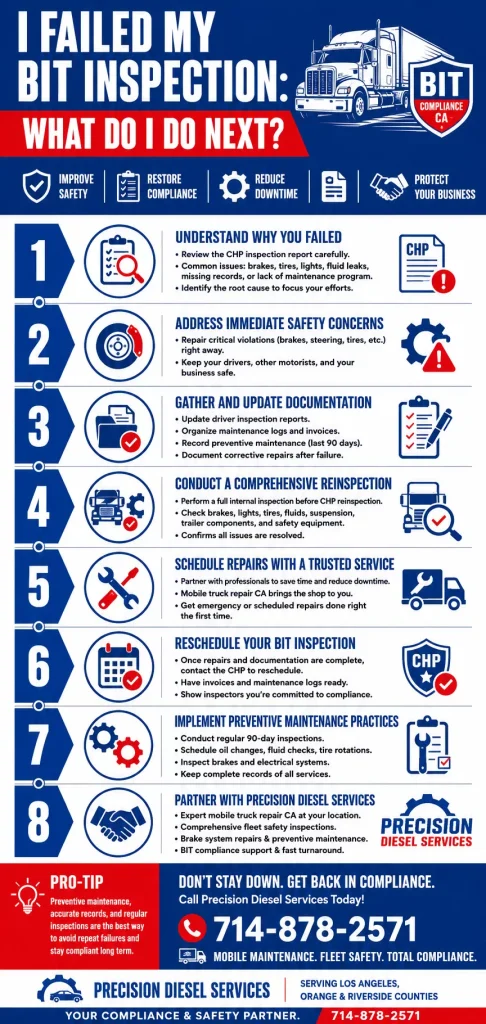
Understand Why You Failed
The first step after a failed BIT inspection is to carefully review the report provided by the California Highway Patrol. This documentation outlines the exact reasons for failure. Common issues include:
- Worn or faulty brake systems
- Lighting and electrical problems
- Missing or outdated maintenance records
- Tire wear beyond legal limits
- Leaks in fuel or fluid systems
- Lack of evidence of a preventive maintenance program
By pinpointing the root cause, you’ll know where to focus your immediate efforts.
What a Failed Inspection Status Means for Your Operation
Receiving a failed inspection notice from the California Highway Patrol places your fleet under immediate scrutiny. Officially, a failed inspection indicates that your terminal, maintenance documentation, or specific vehicles do not satisfy the minimum safety standards set by the state of California.
Depending on the severity of the findings, a failed inspection can trigger several consequences:
- Out of Service (OOS) Orders: Vehicles with critical defects, such as unsafe brake pushrod travel or severe tire degradation, are placed out of service immediately and cannot legally move until certified repairs are made.
- Increased CHP Oversight: A failed rating triggers follow-up terminal audits and increases the probability of targeted roadside inspections for your entire fleet.
- Impact on Safety Ratings: Repeated failure logs negatively impact your carrier profile and public safety record, which can affect commercial contracts, insurance rates, and customer trust.
Understanding that a failed inspection is an urgent operational priority allows fleet managers to mobilize corrective actions quickly and clear non-compliance records efficiently.
Address Immediate Safety Concerns
If the BIT inspection reveals critical safety violations, those issues must be your top priority. Problems with brakes, steering, or tires not only put you out of compliance but also create dangerous conditions on the road. Fleet safety repairs CA services should be scheduled right away to minimize downtime and restore safe operation.
Remember: a truck that’s unsafe to drive can put your drivers, other motorists, and your business reputation at risk.
Gather and Update Documentation
The CHP places heavy emphasis on recordkeeping during fleet safety inspections. Even if your trucks are mechanically sound, missing or incomplete paperwork can lead to a failed inspection. You’ll want to:
- Update driver inspection reports
- Organize maintenance logs and invoices
- Record all preventive maintenance completed in the last 90 days
- Document corrective repairs made after the failed inspection
Accurate documentation demonstrates your commitment to BIT compliance CA and helps ensure a smoother reinspection.
Conduct a Comprehensive Reinspection
Before contacting the CHP for a reinspection, perform your own thorough evaluation. A trusted provider of mobile maintenance services can complete a detailed fleet check, verifying that all repairs are done and no issues remain. This proactive step reduces the chance of another failure.
A professional reinspection should cover:
- Brake system repairs and adjustments
- Electrical systems and lighting
- Tires, wheels, and suspension
- Fluid leaks and engine systems
- Trailer components
- Safety equipment and decals
This process is an investment in fleet readiness and compliance.
Schedule Repairs with a Trusted Service
Attempting to handle repairs in-house is possible, but most fleets save time and frustration by working with experienced professionals. A company that provides mobile truck repair CA ensures your vehicles can be serviced wherever they are—reducing downtime and avoiding the hassle of transporting trucks to a shop.
Whether you need emergency brake system repairs or scheduled fleet maintenance, having a reliable partner accelerates your path back to compliance.
Reschedule Your BIT Inspection
Once repairs are complete and documentation is updated, it’s time to reschedule your BIT inspection with the California Highway Patrol. Being proactive shows inspectors you’ve addressed all concerns and taken compliance seriously.
It’s a good idea to keep your repair invoices and updated maintenance logs readily available during the reinspection. This builds trust with CHP officers and helps confirm that your fleet meets BIT compliance standards.
Implement Preventive Maintenance Practices
While fixing immediate problems is important, long-term success depends on having a preventive maintenance program in place. Preventive maintenance is the backbone of fleet compliance and helps avoid unexpected breakdowns, costly repairs, and repeat inspection failures.
A well-structured program should include:
- Regular 90-day inspections for all vehicles
- Scheduled oil changes, fluid checks, and tire rotations
- Brake system inspections and replacements as needed
- Electrical and lighting system checks
- Recordkeeping for all services performed
With mobile maintenance services, you can keep vehicles compliant without disrupting daily operations.
Benefits of Partnering with Precision Diesel Services
Working with a professional fleet maintenance provider gives you peace of mind that your vehicles will always be inspection-ready. Precision Diesel Services supports fleets across Los Angeles, Orange, and Riverside counties with a full range of truck inspection solutions and fleet safety repairs CA.
By partnering with our team, you can expect:
- Expert mobile truck repair CA at your location
- Comprehensive fleet safety inspections
- Brake system repairs and preventive maintenance programs
- Assistance with BIT compliance and documentation
- Fast turnaround to minimize downtime
Precision Diesel Services is more than just a repair company—we’re your compliance and safety partner. If you’ve failed a BIT inspection or want to avoid failing one in the future, call us today at 714-878-2571 to schedule service.
Conclusion: Turning a Setback into an Opportunity
Failing a BIT inspection may feel overwhelming, but it’s also a chance to strengthen your fleet’s safety and compliance practices. By understanding why you failed, addressing safety concerns, keeping documentation updated, and implementing preventive maintenance, you can turn the experience into a positive outcome.
With support from Precision Diesel Services, drivers and fleet managers across Los Angeles, Orange, and Riverside counties can stay compliant, reduce downtime, and keep trucks safely on the road. Call 714-878-2571 today to schedule mobile maintenance services or fleet safety repairs.
Frequently Asked Questions (FAQ)
What is a BIT inspection?
A BIT inspection is part of California’s Basic Inspection of Terminals program, overseen by the California Highway Patrol. It ensures fleets operate safely and maintain proper records.
How often are BIT inspections required?
The CHP conducts BIT inspections at least once every 90 days for certain fleets, depending on their size and safety record.
Can I still drive my truck after failing a BIT inspection?
It depends on the severity of the violations. Serious safety issues such as faulty brakes or tires must be repaired before the vehicle can be legally operated.
What’s the fastest way to pass a reinspection?
Address all safety concerns immediately, update your documentation, and schedule a professional reinspection with a trusted service provider before calling the CHP.
How can I prevent failing again?
The best strategy is to implement a preventive maintenance program, schedule regular fleet safety inspections, and partner with a company like Precision Diesel Services that specializes in keeping fleets compliant.
