

TL;DR
BIT inspections in California commonly fail due to preventable maintenance issues, especially brake system problems, worn tires, faulty lighting, fluid leaks, and suspension or steering defects. Most failures can be avoided with routine pre-trip inspections, regular maintenance, and proper documentation. Staying compliant with the 90-day inspection cycle reduces breakdowns, fines, and downtime.
Key Takeaways
- Brake system issues are the top cause of BIT inspection failures, including leaks, wear, and improper adjustment.
- Tire problems like low tread depth, cuts, or mismatched sizes frequently lead to violations.
- Lighting failures (burned-out bulbs, faulty signals) can result in immediate inspection failure.
- Fluid leaks from oil, coolant, or fuel systems are treated as serious safety risks.
- Suspension and steering defects affect safety and are heavily inspected.
- BIT inspections are required every 90 days for many commercial vehicles in California to ensure ongoing compliance.
- Preventive maintenance, daily inspections, and recordkeeping are the most effective ways to pass.
- Fleet operators can reduce downtime and violations by working with providers like Precision Diesel Services for mobile inspections and maintenance support.
If you own or manage commercial vehicles in California, you already know how important BIT inspections are. The Basic Inspection of Terminals (BIT) program is designed to make sure that trucks, trailers, and commercial fleets meet safety regulations, preventing accidents and keeping roads safe.
But here’s the problem: many fleets still struggle to pass. In fact, BIT inspection failures often happen because of overlooked, preventable issues. And when you fail, it doesn’t just mean fines or downtime—it also puts your drivers and the public at risk.
So, what fails car inspection under the BIT program? Let’s walk through the five most common reasons and how you can avoid them.
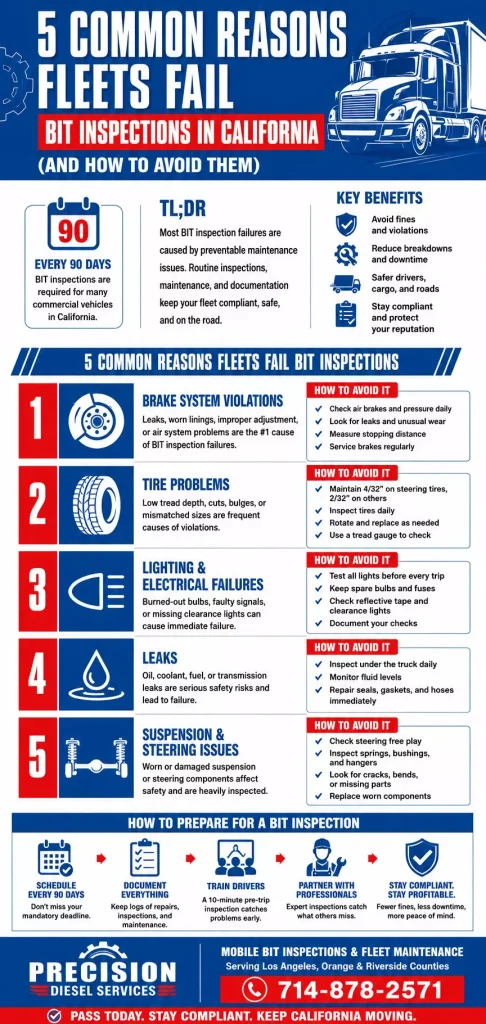
1. Brake System Violations
DOT brake system violations are the leading cause of BIT inspection failures. Inspectors look closely at air brakes, hydraulic systems, and every related component. If there’s a leak, imbalance, or excessive wear, your truck will fail.
Common brake-related violations include:
- Brake chamber leaks in trucks
- Cracked, worn, or missing brake linings
- Improper brake adjustment
- Air suspension problems in semis
How to avoid this failure:
- Follow a pre-trip inspection checklist for BIT that includes air brakes.
- Measure stopping distances and check pressure loss.
- Schedule regular maintenance for both tractors and trailers.
2. Tire Problems
Another major reason fleets fail BIT inspections is bad tires. It doesn’t take much—a worn tread or sidewall damage can get you flagged. California inspectors check for:
- Truck tire tread depth requirements (4/32” on steering tires, 2/32” on others)
- Cuts, bulges, or exposed cords
- Mismatched tire sizes
How to avoid this failure:
- Rotate and replace tires regularly.
- Carry a tread gauge to confirm compliance.
- Don’t wait for a blowout—inspect daily.
3. Lighting and Electrical Failures
A simple burned-out light can fail your California BIT inspection. Inspectors look for fully functioning headlights, taillights, brake lights, and turn signals. Even reflective tape and clearance lamps are checked.
How to avoid this failure:
- Test every light during pre-trip inspections.
- Keep spare bulbs and fuses in every truck.
- Document checks to show inspectors you’re proactive.
4. Leaks
BIT inspectors hate leaks—whether it’s oil, coolant, transmission fluid, or fuel. Even a small drip can be grounds for failure. Beyond inspections, leaks also increase the risk of breakdowns and fires.
How to avoid this failure:
- Regularly check under the truck before moving.
- Monitor fluid levels closely.
- Repair seals, gaskets, and hoses at the first sign of trouble.
5. Suspension and Steering Issues
Loose, broken, or missing suspension components are another top reason for inspection failures. Problems here affect handling, braking, and overall safety. Inspectors will check:
- Springs, hangers, and bushings
- Steering linkage
- Air suspension bags in semis
How to avoid this failure:
- Inspect steering free play.
- Look for cracked, bent, or missing parts.
- Replace worn components immediately.
What is a BIT Inspection in California
A BIT inspection in California is a safety evaluation required for commercial vehicles operating under state regulations. A what is a bit inspection refers to the structured review of a truck or fleet to ensure compliance with safety standards and prevent mechanical failures.
A bit inspection focuses on verifying that essential vehicle systems are functioning properly before the vehicle is allowed to continue operating on California roads.
California BIT Inspection Requirements Overview
A california bit inspection is required for many commercial fleets operating within the state and must be completed on a regular schedule to maintain compliance.
Inspectors evaluate key safety systems, maintenance records, and vehicle condition to ensure all commercial units meet California safety expectations.
Common Results from California BIT Inspections
A california bit inspections process often reveals issues related to wear and maintenance neglect in commercial vehicles.
Fleets that fail to stay ahead of maintenance typically face corrective actions, re-inspections, or downtime after these evaluations.
Why BIT Inspections Matter for Fleet Compliance
Bit inspections are essential for maintaining operational safety and reducing the risk of roadside breakdowns or violations.
They also help fleet operators identify small mechanical problems before they become costly repairs or compliance issues.
Truck BIT Inspection Explained for Drivers and Fleets
A truck bit inspection focuses specifically on commercial trucks and their ability to meet California safety standards during routine enforcement checks.
This process ensures that trucks operating in high-demand environments remain safe, reliable, and legally compliant.
California Fleet Safety and Inspection Standards
A bit inspection california process supports ongoing fleet safety by enforcing consistent maintenance and regulatory compliance across commercial vehicles.
It plays a key role in reducing preventable accidents and ensuring trucks remain roadworthy under state inspection guidelines.
How to Prepare for a BIT Inspection
Knowing the common pitfalls is one thing, but building a routine to stay compliant is just as important. Here are steps every fleet should follow:
- Schedule inspections every 90 days. California requires BIT inspections mandatory every 90 days, so don’t miss deadlines.
- Document everything. Keep logs of repairs, pre-trip inspections, and maintenance.
- Train your drivers. A 10 minute state inspection routine before each trip can catch problems early.
- Partner with professionals. Sometimes small issues aren’t obvious until a mechanic gets under the truck.
If you’ve ever searched BIT inspection near me in California, you know the value of working with a trusted provider. Mobile inspections make compliance easier, especially for busy fleets.
Benefits of Staying Compliant
Passing your BIT inspections doesn’t just keep you legal. It also means:
- Lower risk of roadside breakdowns and costly towing.
- Safer drivers, safer cargo, and safer roads.
- Fewer citations and financial penalties.
- Better reputation with clients and regulators.
For fleets in California, compliance isn’t optional—it’s the foundation of your business.
How Precision Diesel Services Can Help
At Precision Diesel Services, we help fleets across Los Angeles, Orange, and Riverside counties stay compliant with California BIT inspection requirements. Whether you need a mobile BIT inspection, truck BIT inspection, or full fleet maintenance, our certified technicians keep your vehicles in top shape.
From addressing brake system violations to preventing common BIT inspection violations, we understand what inspectors look for and how to prevent failures. Our team makes sure you’re always ready for your next California 90 day BIT inspection, with accurate documentation and quality repairs.
If you’re looking for California BIT inspection certification or need help meeting California BIT inspection requirements, call Precision Diesel Services today at 714-878-2571.
Frequently Asked Questions (FAQ)
What is a BIT inspection?
The Basic Inspection of Terminals (BIT) is California’s mandatory program requiring inspections of commercial vehicles every 90 days. It ensures vehicles meet state safety standards.
What fails car inspection in California under the BIT program?
The most common failures are brake system violations, bad tires, lighting issues, leaks, and suspension problems.
How to pass a BIT inspection?
Perform pre-trip inspections, schedule maintenance, repair issues immediately, and work with certified mechanics.
What are the California BIT inspection requirements?
All commercial vehicles operating in California must undergo a BIT inspection every 90 days, maintain records, and meet safety standards.
Where can I find a BIT inspection near me in California?
Precision Diesel Services provides mobile BIT inspections, serving fleets across Los Angeles, Orange, and Riverside counties.
What about BIT inspection stickers?
Vehicles that pass receive BIT inspection stickers as proof of compliance with state requirements.