

TL;DR
Lift gate problems in commercial trucks are most often caused by hydraulic leaks, electrical issues, worn locking systems, inconsistent lift performance, structural damage, and faulty control switches. Most problems are preventable with routine inspections and maintenance, which reduce downtime, repair costs, and safety risks. Neglecting small issues is the main reason equipment breaks down and disrupts operations.
Key Takeaways
- Regular preventive maintenance and inspections are the most effective way to avoid costly breakdowns
- Hydraulic leaks are common and usually stem from worn hoses, seals, or fittings
- Electrical issues like bad wiring, weak batteries, and corroded connections can stop lift gates from working
- Locking mechanism failures create safety risks during transport and loading
- Slow or uneven lift performance often signals hydraulic or electrical system problems
- Structural damage from overload or heavy use can compromise safety and efficiency
- Control switch malfunctions can fully halt lift gate operation
For commercial truck drivers and fleet managers across Southern California, efficiency is everything. A reliable lift gate keeps cargo moving safely and quickly, but when something goes wrong, even a small malfunction can cause major delays. Lift gate problems are among the most common issues faced in the trucking and freight industry, especially for vehicles that handle frequent cargo loading and unloading.
Understanding the causes of these issues, along with practical lift gate repair tips and preventive steps, can save you from downtime, costly repairs, and potential safety hazards. Below, we’ll explore the most common lift gate problems, how to avoid them, and why professional support is critical for long-term reliability.
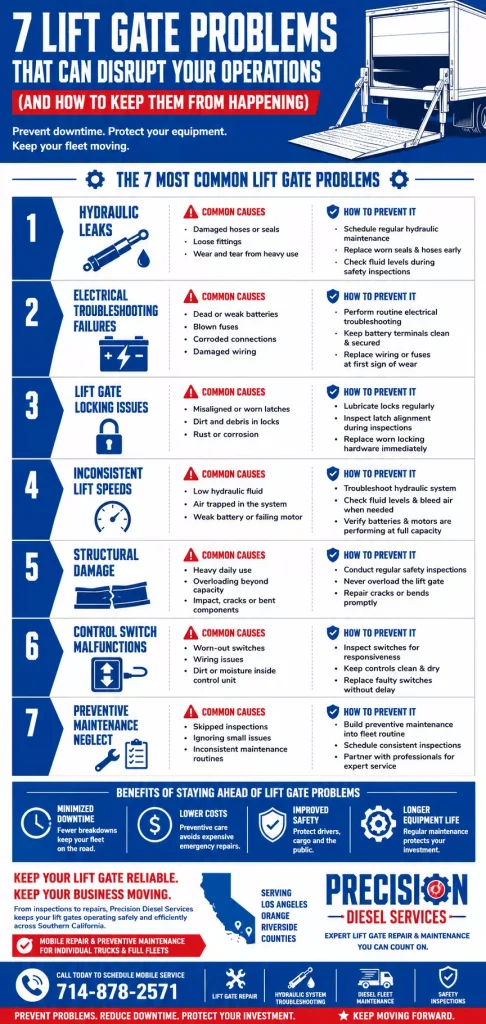
1. Hydraulic Leaks
One of the most frequent issues with commercial vehicle lift gates is hydraulic fluid leaks. Without sufficient hydraulic pressure, the lift gate won’t be able to raise or lower properly, causing unsafe and unreliable performance.
Causes of hydraulic leaks:
- Damaged hoses or seals
- Loose fittings
- Wear and tear from heavy use
How to avoid it:
- Schedule regular hydraulic system maintenance to catch small leaks early
- Replace worn seals and hoses before they fail
- Conduct periodic lift gate safety checks to ensure fluid levels are stable
Why prevention matters: Preventing hydraulic leaks not only extends the life of your equipment but also reduces the risk of sudden breakdowns while loading cargo.
2. Electrical Troubleshooting Failures
A lift gate relies on a strong electrical system to function properly. From faulty switches to corroded wiring, electrical issues are a top cause of downtime.
Common electrical problems:
- Dead or weak batteries
- Blown fuses
- Corroded connections
- Damaged wiring
How to avoid it:
- Perform electrical troubleshooting as part of routine checks
- Keep battery terminals clean and secured
- Replace old wiring or fuses at the first sign of wear
Pro tip: A slow or unresponsive lift gate often signals electrical trouble, so don’t wait until it completely stops working.
3. Lift Gate Locking Issues
Locks and latches are critical for both safety and proper operation. When these fail, the lift gate may not stay securely in place, creating hazards during transit.
Causes of locking problems:
- Misaligned or worn latch mechanisms
- Dirt and debris interfering with locks
- Rust or corrosion
How to avoid it:
- Lubricate locks regularly
- Inspect latch alignment during lift gate safety inspections
- Replace worn or damaged locking hardware immediately
Why prevention matters: Keeping locking systems in good shape ensures safe transport and protects both drivers and cargo.
4. Inconsistent Lift Speeds
If a lift gate moves slower than usual or shows uneven performance, it often indicates a deeper problem with the hydraulic or electrical system.
Possible causes:
- Low hydraulic fluid
- Air trapped in the hydraulic system
- Weak battery or failing motor
How to avoid it:
- Incorporate hydraulic system troubleshooting into regular maintenance
- Check fluid levels and bleed air when needed
- Verify that batteries and motors are performing at full capacity
5. Structural Damage
Because lift gates are exposed to heavy daily use, bent platforms, cracked welds, or damaged hinges are common problems. Structural issues not only reduce efficiency but can also compromise safety.
How to avoid it:
- Conduct regular lift gate safety inspections
- Avoid overloading the lift gate beyond its rated capacity
- Repair cracks or bends quickly before they worsen
6. Control Switch Malfunctions
When control switches stop responding, it can halt operations completely. Often, this problem is linked to worn-out switches, wiring issues, or dirt buildup inside the control unit.
How to avoid it:
- Inspect control switches regularly for responsiveness
- Keep controls clean and dry to prevent contamination
- Replace faulty switches as part of repair and preventive maintenance services
7. General Preventive Maintenance Neglect
Most lift gate problems arise because of skipped maintenance schedules. Ignoring small issues often leads to big repairs later.
Key preventive steps:
- Build preventive maintenance for lift gates into your fleet routine
- Schedule consistent lift gate safety inspections
- Partner with professionals who understand the demands of diesel fleet maintenance and commercial truck maintenance
Benefit: By catching issues early, you can extend the lifespan of your cargo loading equipment and keep your fleet road-ready.
Lift Gate Inspection for Commercial Trucks in Southern California
Lift gate inspection is a structured process used to evaluate the safety and performance of cargo lifting systems on commercial vehicles. Regular lift gate inspection helps identify wear in hydraulic components, electrical connections, and safety mechanisms before they lead to downtime. In Southern California, where delivery schedules are tight and traffic conditions increase equipment strain, consistent lift gate inspection plays a key role in keeping fleets reliable and compliant.
Common Liftgate Problems Affecting Fleet Performance
Liftgate problems often develop gradually due to heavy daily use and inconsistent maintenance routines. In many Southern California fleets, liftgate problems can lead to delayed deliveries, unsafe loading conditions, and increased repair costs. Addressing liftgate problems early helps maintain consistent cargo flow and reduces pressure on hydraulic and electrical systems.
Liftgate Failures and Operational Downtime
Liftgate failures typically occur when multiple system issues are left unresolved over time, including hydraulic imbalance or electrical degradation. A single liftgate failure can halt loading operations and affect delivery timelines across an entire route. In high-demand freight environments, liftgate failures often result in emergency service calls and unexpected fleet downtime.
CTR focus: Early diagnostics significantly reduce the risk of complete system breakdowns.
High Lift Tailgate Dump Truck Safety and Load Control
A high lift tailgate dump truck requires reinforced lifting mechanisms to handle heavier and higher-discharge loads safely. Proper maintenance of a high lift tailgate dump truck ensures stable lifting performance and reduces the risk of structural stress during operation. In Southern California job sites, a high lift tailgate dump truck is often exposed to demanding terrain and frequent load cycles, making inspection essential for safety compliance.
CTR focus: Routine service checks improve load stability and extend equipment lifespan.
Benefits of Staying Ahead of Lift Gate Problems
- Minimized downtime: Fewer unexpected breakdowns mean trucks stay on the road.
- Lower costs: Preventive care avoids expensive emergency repairs.
- Improved safety: Properly maintained equipment keeps drivers and cargo safe.
- Longer equipment life: Regular maintenance protects your investment.
How Precision Diesel Services Supports Southern California Drivers
Drivers and fleet operators in Los Angeles, Orange, and Riverside counties trust Precision Diesel Services for reliable repair and preventive maintenance services. We also support operators dealing with truck liftgate rebuild Long Beach needs, especially those moving freight in and out of the Port of Long Beach and along the I-710 corridor where heavy stop-and-go cycles put extra stress on lift systems. With extensive experience in lift gate repair CA, hydraulic system troubleshooting, and diesel fleet maintenance, our mobile repair team helps you reduce downtime and keep your trucks operating safely.
If your lift gate is showing signs of wear, or you want to stay ahead with consistent inspections, Precision Diesel Services provides professional support for commercial vehicle lift gates, cargo loading equipment, and all aspects of commercial truck maintenance.
Contact Precision Diesel Services at 714-878-2571 to schedule mobile repair or maintenance for your fleet today.
FAQ: Lift Gate Problems and Maintenance
How often should lift gates be inspected?
Regular lift gate safety inspections should be performed at least every 90 days, or more frequently for fleets with heavy daily use.
Can I fix hydraulic leaks myself?
Small leaks might seem manageable, but improper repair can damage the entire hydraulic system. Professional service ensures lasting results.
What are the signs of electrical issues in a lift gate?
Slow movement, intermittent response, or total failure to lift are all signs of electrical problems. Immediate electrical troubleshooting can prevent complete breakdown.
Why is preventive maintenance so important?
Preventive care minimizes downtime, avoids emergency breakdowns, and extends the lifespan of both your lift gate and your truck.
Do mobile repair services cover large fleets?
Yes, professional mobile technicians can handle everything from individual trucks to full fleets, offering consistent repair and preventive maintenance services.