

TL;DR
Emission testing for diesel trucks in California ensures vehicles meet strict environmental standards by measuring pollutants like smoke, NOx, and particulate matter. Regular inspections help reduce air pollution, improve engine efficiency, extend vehicle life, and avoid fines. Compliance is required for most diesel vehicles, with testing frequency based on vehicle type and weight. Licensed facilities and proper maintenance are key to staying compliant and keeping fleets operating legally and efficiently.
Key Takeaways
- Diesel emission testing measures harmful pollutants to ensure compliance with California environmental regulations.
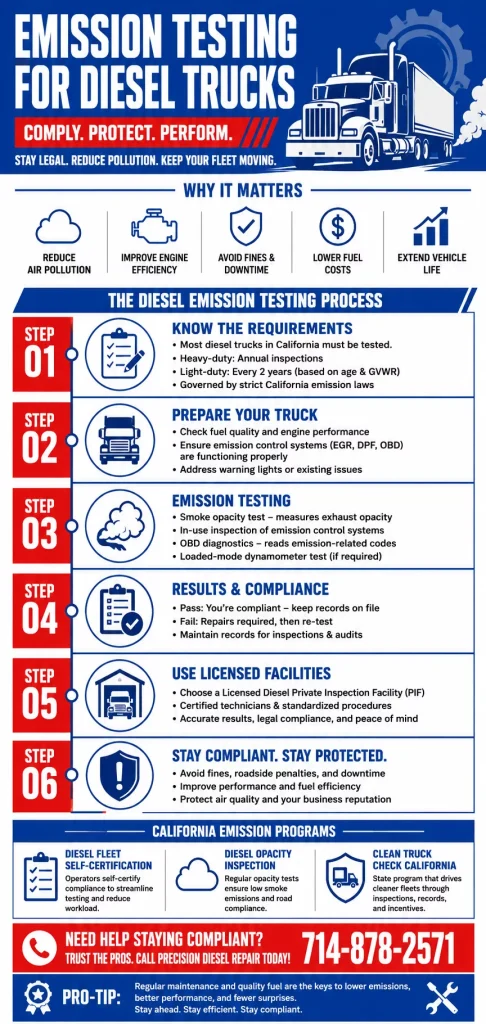
- Most diesel trucks, both heavy-duty and light-duty, must undergo regular inspections (annually or every two years depending on classification).
- Testing includes smoke opacity checks, OBD diagnostics, and inspection of systems like EGR and DPF.
- Proper compliance reduces air pollution, improves fuel efficiency, and helps prevent costly fines or downtime.
- Licensed inspection facilities use standardized procedures and certified technicians for accurate results.
- California has some of the strictest diesel emission laws, covering both commercial fleets and personal diesel vehicles.
- Poor maintenance or failed tests can lead to penalties, roadside enforcement actions, and operational disruptions.
- Regular maintenance and fuel quality checks help diesel engines run cleaner and more efficiently.
At Precision Diesel Repair, your best source for diesel repair and maintenance services here in Southern California, we’re very aware that with today’s environmentally conscious world, the importance of emission testing for diesel trucks has grown. Additionally, the state implements strict regulations, and knowing how to comply is very important.
Not only will it reduce the environmental consequences of diesel trucks, but it will also help keep Earth a healthier place. This means we will help you with your trucks so you remain focused on the smooth operation of your business.
What is Emission Testing, and Why Is It Important?
Emission testing is essential in diesel trucks to protect the environment and human health. This process involves analyzing the pollutant level emitted through a motor vehicle’s exhaust system against the state’s set standards, aiming to minimize or control harmful emissions.
Diesel emission tests are a critical part of this process. These tests specifically evaluate the amount of pollutants emitted by diesel engines and help ensure each vehicle complies with state and federal emission regulations. Staying on top of diesel emission tests not only keeps your fleet legal but also reduces environmental impact.
Whether you’re due for a diesel inspection or a comprehensive diesel emissions inspection, staying informed ensures your trucks remain compliant and efficient.
Key Purposes of Emission Testing:
State Standards Compliance: This helps ensure that every vehicle meets the state’s regulations to maintain a uniform air quality standard.
Reduction of Harmful Emissions: These tests help harness and improve air quality through reduction in harmful emissions.
Social Benefit: Since there is purer air, communities would experience more wholesome health with minimal respiratory complications and many other complications from poor air quality.
Understanding Diesel Inspection and Diesel Emissions in Southern California
A diesel inspection is a thorough examination of a diesel truck to ensure it meets safety, performance, and environmental standards. In Southern California, where air quality regulations are strict, diesel inspections are especially important to reduce pollutants and maintain compliance with state and federal laws.
Diesel trucks play a vital role in transportation and logistics across the region, from local deliveries to long-haul freight. However, their engines produce pollutants that contribute to air pollution if not properly maintained. That’s why diesel emissions tests are essential—they measure the levels of harmful gases and particulate matter released by the engine.
A diesel truck inspection often includes a diesel emission test, which evaluates the performance of exhaust systems, particulate filters, and emission control devices. These inspections ensure trucks meet California’s strict standards and help operators avoid fines while protecting community health.
Regular diesel emission tests and inspections not only verify compliance but also improve engine efficiency, reduce fuel costs, and extend the life of diesel trucks. In Southern California, where both urban traffic and environmental standards are high, these practices are crucial for keeping fleets running smoothly and cleanly.
How to check diesel quality
Diesel fuel in Southern California should look clean and clear, without cloudiness or visible particles. A quick way to check is by inspecting the fuel in a transparent container under good light to spot water separation, dirt, or discoloration. Good diesel also has a consistent smell and should not feel overly contaminated or “off” compared to normal fuel.
Another important sign is how the engine performs after fueling. Rough idling, hard starts, or excessive smoke can point to poor fuel quality. Regular fuel testing and inspection help prevent injector damage and long-term engine issues. Precision Diesel Services in Southern California can help evaluate fuel condition and support proper diesel system performance.
How to tell if a truck is diesel
A diesel truck usually has a deeper engine sound compared to gasoline engines, especially during startup and acceleration. Many diesel vehicles also have a visible badge or label near the fuel cap or on the body indicating diesel fuel use.
Another common sign is the fuel system design, including a larger fuel filler neck and a stronger exhaust smell during cold starts. Diesel engines also tend to produce higher torque at lower RPM, which is noticeable during towing or heavy load driving. Precision Diesel Services works with diesel trucks across Southern California and sees these engine traits regularly in diesel-powered vehicles.
California Diesel Emission Laws and Requirements for Trucks
California has some of the strictest diesel emission laws in the country, especially when it comes to diesel truck emissions California regulations. These rules are designed to control diesel engine emissions, reduce diesel exhaust emissions, and improve overall air quality across Southern California.
Under current California emissions laws for diesels, fleet operators must comply with California diesel emissions requirements, including routine diesel emissions testing, proper maintenance of diesel emission systems, and adherence to diesel emission standards. Programs like the state’s emissions compliance initiatives require regular diesel truck emissions testing and verification that all diesel emissions control components are functioning correctly.
For both light-duty and heavy-duty vehicles, emissions on diesel trucks are closely monitored. Whether it’s diesel pickup emissions or large fleet vehicles, maintaining compliance helps avoid penalties while supporting cleaner transportation across the region.
Types of Vehicles Subject to Emission Testing
Not all trucks are alike when it comes to emission testing. We have an excellent understanding of the classification between heavy-duty vehicles and light-duty diesel vehicles.
Heavy-Duty Vehicles
These are usually very large trucks or buses that can carry a great deal of weight or a large number of passengers. Because of their size, these generally fall into a category requiring more stringent environmental protection emission testing.
Semi truck emissions testing is a crucial component of compliance for heavy-duty vehicles operating across state lines, especially those in logistics and long-haul freight.
Do Diesel Vehicles Need Emissions Testing in California?
Many operators ask, do diesels need emissions, or do diesel trucks have to pass emissions in California? The answer is yes—most diesel vehicles are subject to emissions testing for diesels, especially under California smog regulations for diesels.
Both commercial and personal vehicles, including diesel car emissions and diesel vehicle emissions, must meet state guidelines. Questions like do diesel cars need emissions test or do diesels have emissions test are common, and requirements typically depend on vehicle type, weight, and usage.
In addition, emissions for diesel trucks are regulated more strictly than gasoline vehicles. Compliance includes routine diesel emission inspection, proper documentation, and passing a truck emission test when required.
Light-Duty Diesel Vehicles
These include lighter trucks and vans that you could use for personal transport or light commercial duties. They add to the emissions equally but a bit less than their heavy-duty cousins.
The Gross Vehicle Weight Rating plays a very important role in determining your vehicle’s classification and eligibility for emission testing.
Fundamentally, the GVWR describes the maximum safe weight of a vehicle, including its load, and may determine the testing requirements and types of tests applicable. Always verify the GVWR for a better understanding of your obligations to keep your diesel truck compliant with the standard emissions.
Frequency of Emission Inspections
Understanding the frequency of the emission inspections for diesel trucks is important for compliance with state regulations. The frequency of inspection is different, given it depends on the various factors of vehicle type and age.
Annual Inspections: Most heavy-duty vehicles are subjected yearly to meet their state standard criteria for emissions.
Two-Year Inspections: Some light-duty vehicles, based on their age and emissions profile, may qualify for biennial inspections, minimizing the burden on the owners of these vehicles.
Newer vehicles come with special considerations. Often, new vehicles can be exempted from frequent checks due to their higher levels of technology and generally lower emissions compared to previous models. Stay up to date on your requirements and keep your diesel truck compliant to avoid unnecessary fines or penalties.
Procedures and Methods Used in Diesel Emission Testing
Diesel emission tests involve several procedures designed to measure a truck’s pollutant output and ensure compliance with regulatory standards.
A diesel emission test may involve both visual and mechanical inspections, depending on your truck’s class and emission history.
Emission testing for diesel trucks is an important process that ensures vehicles meet the state smoke opacity standards and function efficiently.
Whether it’s a simple truck emission test or a full diagnostic assessment, ensuring your diesel engine passes state regulations is key to operational success.
In such inspections, one usually follows a few key procedures, including:
Smoke Emissions Tests
These tests measure the smoke density emitted from your truck’s exhaust. This is done by checking the opacity or thickness of the smoke to see whether it is within acceptable limits or not. Doing so helps monitor the particulate matter that eventually causes air pollution.
In-Use Checks on Emissions Control Equipment
Inspectors will check the EGR system and DPF to ensure they are functioning properly. These systems need to work well for harmful emissions to come down.
Test methods range from one common approach, the loaded-mode dynamometer-based test. In it, your truck is run on a set of rollers that simulate driving conditions while measuring emissions output under load. It’s a good reflection of how well your vehicle controls emissions in typical driving conditions.
Newer models equipped with onboard diagnostics or OBD systems can quickly determine emission problems by linking them to the vehicle’s computer. An OBD system saves much effort in manual checks to maintain compliance by interpreting data from a variety of sensors.
How Diesel Emission Testing Works and What It Measures
A proper diesel emission test evaluates several factors, including emission from diesel engines, diesel fuel emissions levels, and visible exhaust output. These diesel testing procedures are designed to measure pollutants such as nitrogen oxides and particulate matter produced by diesel engines emissions.
During a standard emission test for diesel engine, technicians assess diesel particulate matter testing, perform diesel smoke test limits checks, and inspect critical diesel emission equipment. The process may also include a full diesel emissions evaluation program, ensuring that diesel emission control systems and diesel emissions systems are operating efficiently.
Modern diesel emissions technology allows for more accurate diagnostics, helping identify issues in diesel engine emission performance before they become costly repairs. Regular diesel emissions testing not only ensures compliance but also helps lower diesel emissions and improve engine longevity.
Licensed Facilities for Diesel Emission Inspections: What You Need to Know
When it comes to emission testing for diesel trucks, it would be essential to opt for licensed facilities. These are known as Diesel Private Inspection Facilities, PIF, or private inspection stations that would greatly assist in making your diesel truck functionally comply with the required emission standards.
Why Are Licensed Facilities Important?
Precise and Reliable Testing: With licensed facilities come the latest tools and technologies that guarantee accurate emission readings. This helps in keeping your vehicle compliant with the state regulations.
Certified Technicians: With trained professionals manning these stations, rest assured that your truck is being assessed by people who understand the nitty-gritty details of a diesel-powered motor and an emissions system.
How Do These Facilities Work?
Licensed inspection facilities operate under standardized practices while maintaining some flexibility in their pricing structure. The cost of inspection varies between facilities, making it prudent for businesses to inquire about fees upfront. Despite price differences, the quality of service remains consistent due to strict licensing requirements.
These facilities follow uniform practices in their inspection procedures, as mandated by regulatory bodies. Their standardized approach ensures all licensed facilities maintain the same level of thoroughness and professionalism, ultimately helping to keep diesel trucks within legal limits while contributing to environmental protection through reduced emissions.
Consequences of Failure to Comply with Emission Testing Requirements
- Fines for Non-Compliance: Operators face significant financial penalties for failing to meet testing requirements. These fines can accumulate rapidly and significantly impact operational costs.
- Roadside Inspections: These enforcement measures ensure trucks meet prescribed emissions levels. Violations may result in immediate fines or vehicles being taken out of service until they meet standards.
- Operational Efficiency and Environmental Responsibility: Beyond avoiding penalties, regular emission testing and maintenance protect against unexpected disruptions and demonstrate environmental stewardship.
Regulatory Programs Influencing Diesel Emissions: A Brief Overview
The Diesel Fleet Self-Certification Program enables fleet operators to manage their emission compliance independently. It streamlines testing processes and reduces workload by ensuring vehicles meet standards before audits, promoting industry accountability and efficiency.
The Diesel Opacity Inspection Program focuses on reducing visible smoke emissions through regular opacity testing. Vehicles must undergo repairs and receive clearance before returning to operation, ensuring only compliant trucks use the roads.
Clean Truck Check California is a comprehensive program that targets heavy-duty vehicle emissions through streamlined inspection processes and state incentives. Operators must maintain detailed records and follow strict testing schedules to remain compliant, promoting environmental stewardship while offering benefits like cost savings and enhanced public trust.
Improving and Managing Diesel Emissions for Better Performance
Managing emissions in diesel engines is not just about compliance-it’s also about performance. Reducing emissions from diesel systems can improve fuel efficiency and extend engine life.
Strategies to lower diesel emissions include maintaining diesel emission systems, upgrading diesel emissions technology, and ensuring all diesel emissions control components are functioning properly. Addressing issues in diesel exhaust emissions early can prevent larger mechanical failures and costly downtime.
Understanding diesel emissions requirements and staying proactive with diesel engine emissions testing procedure helps fleets stay efficient and compliant. Even simple checks, like monitoring fuel quality or learning how to check diesel quality, can make a noticeable difference in overall emissions output.
Professional Diesel Repair Services for Compliance with Emission Standards
Professional repair services, such as Precision Diesel Repair, have become highly instrumental in keeping the level of emissions up to standards. Equipped with experience in mobile truck emission testing and fleet management knowledge, our services help your diesel trucks run smoothly within legally acceptable limits.
Benefits of Using Professional Services
Competency: These are professional technicians who apply highly developed diagnostic equipment to identify emissions problems before they become major issues.
Convenience: The fact that services are mobile means that repairs and tests are available right at your location, further reducing potential downtime for your fleet.
Full-Service Care: It’s handled professionally, from the engine to exhaust system maintenance. Regular maintenance avoids expensive fines related to non-compliance.
Keep your fleets roadworthy and eco-friendly by maintaining scheduled inspections and immediately addressing mechanical issues. Your investment today in regular checks and expert care protects your business from unexpected penalties while positively contributing to air quality efforts.
With Precision Diesel Repair, the work gets done to keep your fleet compliant and on the road with no costly downtime. Their quality service commitment will ease you through the complexities of emissions standards.
Choose Precision Diesel Repair
Knowing the diesel emission testing requirements will help you keep your truck current and on the road. By choosing our professionals at Precision Diesel Repair, you will get the best service possible for your emission testing and maintenance.
Contact us here at Precision Diesel today at (714) 878-2571 for professional diesel repair and maintenance. We are here to have you back on the road, pronto!
