

TL;DR
Southern California drivers should prepare for fall and winter by inspecting tire tread, checking pressure regularly, rotating tires, and correcting alignment issues. Even mild seasonal changes like rain, colder nights, and mountain frost can reduce traction and increase accident risk. Consistent tire maintenance improves safety, fuel efficiency, and reliability while reducing roadside emergencies.
Key Takeaways
- Cooler temperatures and rain can reduce tire pressure and traction, even in Southern California.
- Inspect tires for cracks, uneven wear, bulges, and low tread before fall and winter driving.
- Proper tire pressure and tread depth help prevent hydroplaning and improve handling.
- Tire rotation, wheel alignment, and balancing extend tire life and improve safety.
- Winter or cold-weather tires may benefit drivers traveling through mountain or icy areas.
- Keep an emergency car kit with tire repair tools, blankets, and traction aids.
- Seasonal vehicle checks should also include brakes, lights, suspension, fluids, and battery health.
- Regular tire maintenance can lower repair costs, improve fuel efficiency, and reduce roadside breakdowns.
- Fleets using structured tire maintenance programs reported fewer tire-related incidents and safer operations.
Maintaining your vehicle’s tires is one of the most important steps drivers can take to ensure safety during seasonal weather changes. Even in Southern California, where winters are milder than other regions, rain, icy mountain passes, and temperature fluctuations can create dangerous driving conditions. Throughout my years working in mobile truck, heavy-duty, and trailer repair, I’ve witnessed firsthand how proper tire maintenance can prevent accidents, reduce costly repairs, and keep fleets operating reliably.
Early in my career, a delivery driver called after losing control on a damp section of the Cajon Pass. His tires had worn unevenly, and a minor drop in temperature caused low grip. That day, I realized just how crucial it is to prepare tires for the fall and winter months. Today, I’ll share practical steps and insights for drivers in Los Angeles, Orange, Riverside counties, and throughout Southern California to ensure tire safety and vehicle readiness.
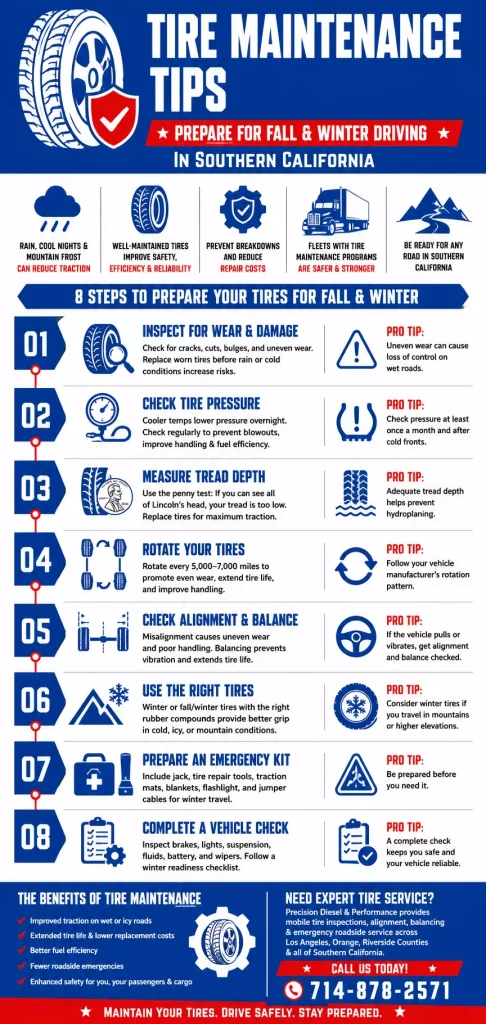
Understanding Seasonal Tire Risks in Southern California
Even though the region enjoys mostly mild weather, certain hazards appear during fall and winter:
- Sudden rainstorms causing slick roads
- Nighttime temperatures dropping enough to reduce tire pressure
- Coastal fog reducing visibility and traction
- Mountain passes experiencing frost or light snow
Drivers who neglect seasonal tire maintenance risk uneven wear, reduced traction, and even hydroplaning in sudden rain. My experience with fleet clients shows that proactive care reduces emergency service calls significantly.
Key Steps for Preparing Tires for Cooler Weather
Inspecting for Tire Wear and Damage
A comprehensive tire inspection is the first step. Look for cracks, cuts, or bulges in the sidewalls, and monitor tire wear and damage along the tread. I once helped a box-truck driver whose tread was barely above the minimum depth. By replacing the worn tires before winter, we prevented a potential accident on a rainy highway.
Checking Tire Pressure
Temperature changes affect tire pressure, often lowering it overnight. Knowing how to check tire pressure in cold weather can prevent blowouts and improve handling. I recall checking a fleet of refrigerated trucks in early November and noticing several had dangerously low pressure due to a sudden cold front. Adjusting it improved both safety and fuel efficiency.
Measuring Tread Depth
Proper tread depth is essential for traction. I often demonstrate how to check tire tread depth with a penny, a simple technique that avoids guesswork. Many drivers are surprised at how small differences in tread can impact performance on wet roads.
Rotating Tires
Following the benefits of rotating your tires regularly can extend tire life and promote even wear. For example, a local delivery company avoided uneven tread patterns by maintaining a seasonal rotation schedule, improving overall handling on wet roads.
Wheel Alignment and Tire Balancing
Misaligned wheels lead to uneven tire wear and can compromise traction and handling. Signs of misalignment include pulling to one side or steering wheel vibration. I’ve corrected several heavy-duty trucks where wheel vibration causes were traced to alignment issues. Similarly, proper tire balancing ensures smooth travel and reduces premature wear.
Selecting the Right Tires for Winter Driving
Winter Tires
While not always necessary for coastal areas, winter tires are invaluable for drivers traveling through higher elevations or areas prone to icy patches. I’ve assisted drivers in the San Bernardino Mountains who reported better stability and braking control after switching to winter tires.
Fall and Winter Tires
Some drivers prefer fall and winter tires, which are designed with rubber compounds that remain flexible in cooler temperatures. I once helped a fleet manager select appropriate tires for mixed terrain travel. The improvement in control on morning drives was immediate.
Rubber Compounds for Winter Tires
Different rubber compounds for winter tires are engineered to remain pliable in cold weather, providing better snow and ice traction. Selecting the right compound can make the difference between sliding on frost and safely navigating mountain roads.
Enhancing Vehicle Safety for Fall and Winter
Hydroplaning Prevention
Even light rainfall can cause accidents if tires lack sufficient grip. Maintaining proper tread depth and inflation supports hydroplaning prevention. I’ve seen drivers maintain full control during sudden storms simply by following basic tire care steps.
Icy and Snowy Road Safety
For areas prone to frost or snow, understanding icy road safety and snowy road safety is critical. Drivers should slow down, maintain spacing, and ensure tires are suitable for slick surfaces. During a winter visit to Big Bear, one client noticed a significant improvement in stopping distance after upgrading tires.
Emergency Car Kit
An emergency car kit is a must for fall and winter travel. Essentials include a jack, tire repair tools, traction mats, and blankets. I’ve helped stranded drivers avoid accidents by providing proper kits along with tire maintenance guidance.
Tips for Effective Cold Weather Tire Preparation
Preparing Tires for Winter
Preparing tires for winter involves inspecting, inflating, and possibly replacing worn tires before conditions worsen. I advise clients to do this well before the first heavy rainfall or cold snap.
Cold Weather Tire Preparation
Proper cold weather tire preparation includes checking tire pressure daily during cold fronts, confirming tread depth, and adjusting alignment. Seasonal temperature changes can subtly affect tire performance, especially on heavy-duty vehicles.
Low Tire Pressure in Cold Temperatures
A drop in air pressure during colder months can reduce handling and increase wear. Many drivers overlook low tire pressure in cold temperatures, leading to premature tire damage.
How to Ensure Your Tires Are Ready for Fall and Winter
From my experience, how to ensure your tires are ready for fall and winter starts with inspections and continues with regular maintenance. Incorporating a car and truck winter readiness checklist ensures no steps are missed.
Seasonal Maintenance Practices Beyond Tires
Vehicle Safety Checks
Vehicle safety extends beyond tires. Brakes, lights, and suspension systems should be inspected as part of seasonal car maintenance. I’ve helped fleet operators catch hidden issues that would have been dangerous on wet roads.
Winter Driving Tips
Sharing winter driving tips like reducing speed and maintaining safe following distance is essential. Even with perfect traction and handling, human reaction times must adjust to seasonal hazards.
How to Prepare Your Vehicle for Winter
Learning how to prepare your vehicle for winter includes checking battery health, fluid levels, and tire condition. I’ve guided many drivers through a pre-winter checklist that ensures their vehicles operate reliably across Southern California.
Benefits of Maintaining Tires During Fall and Winter
Regular tire maintenance offers measurable benefits:
- Improved traction on wet or icy roads
- Extended tire life and reduced replacement costs
- Better fuel efficiency
- Reduced risk of roadside emergencies
- Enhanced vehicle safety for drivers, passengers, and cargo
In my experience, clients who commit to seasonal tire care rarely call for emergency roadside assistance with tools. One delivery fleet in Orange County reported a 40% reduction in tire-related incidents after adopting a structured maintenance schedule.
How Precision Diesel Services Supports Tire Safety in Southern California
Drivers and fleets across Los Angeles, Orange, and Riverside counties, as well as throughout Southern California, rely on Precision Diesel & Performance for mobile truck, heavy-duty, and trailer support. Our team can assist with tire inspections, wheel alignment, tire balancing, and emergency roadside service. With on-site support, drivers receive personalized guidance on tire maintenance, winter readiness, and vehicle safety. Contact Precision Diesel Services at 714-878-2571 to ensure your tires are prepared for seasonal challenges and that your fleet operates safely and efficiently.
FAQs
How often should I inspect my tires during fall and winter?
Weekly visual inspections and monthly pressure checks are recommended, especially after temperature drops or rainfall.
Do I need winter tires in Southern California?
Coastal drivers may not need them, but anyone traveling through mountains or areas with frost should consider winter tires.
How do I know when to replace tires before winter?
Worn tread, visible damage, or uneven wear are signs to replace tires. Check tread depth regularly with a penny.
What else should I include in a car and truck winter readiness checklist?
Tire pressure, tread, alignment, brakes, fluids, lights, and an emergency car kit.
Can cold weather affect tire performance?
Yes, low tire pressure in cold temperatures and hardened rubber can reduce traction. Proper cold weather tire preparation mitigates these risks.
