

TL;DR
Winter tires are designed to stay flexible in cold weather and provide better grip on snow and ice, but they wear out quickly and perform poorly in warm temperatures above about 45°F. Drivers should switch to winter tires when temperatures drop below ~7°C and return to all-season or summer tires in spring. Proper pressure, lighter loads, and cautious winter driving significantly improve safety.
Key Takeaways
- Winter tires improve traction in snow and ice due to flexible rubber and deeper tread patterns
- Install winter tires when temperatures stay below about 7°C and remove them above 45°F
- Cold weather lowers tire pressure, so monthly checks are important
- Winter tires wear faster and reduce fuel efficiency in warm weather
- Keep vehicle loads lighter in winter to improve traction and control
- A TPMS helps monitor tire pressure and prevent unsafe driving conditions
- Safe winter driving includes slower speeds, longer following distance, and no cruise control on slippery roads
- Emergency kits, fuel awareness, and vehicle inspections are critical for winter travel safety
- Slippery tires often result from wet roads, cold conditions, poor pressure, or reduced tread performance
- In Southern California, oil buildup after dry spells can make wet roads especially slick
Winter tires, known as snow tires, would perform better in ice and snow since they are specifically designed for such areas. Special track tires will have a specific tread pattern for better grip. Unlike regular tires, winter tires provide performance that is much superior in cold weather conditions by staying flexible at temperatures below freezing and providing more grip.
When the temperature starts going up and sustains over 45°F, it is highly advisable to resume normal tires because winter tires may not work as well in hotter conditions. Knowing the advantages and limitations of winter tires will let drivers make proper choices for safe driving throughout the year.
Continue reading to explore some important winter tire tips along with all the important things you need to know about winter tires.
Let’s get started.
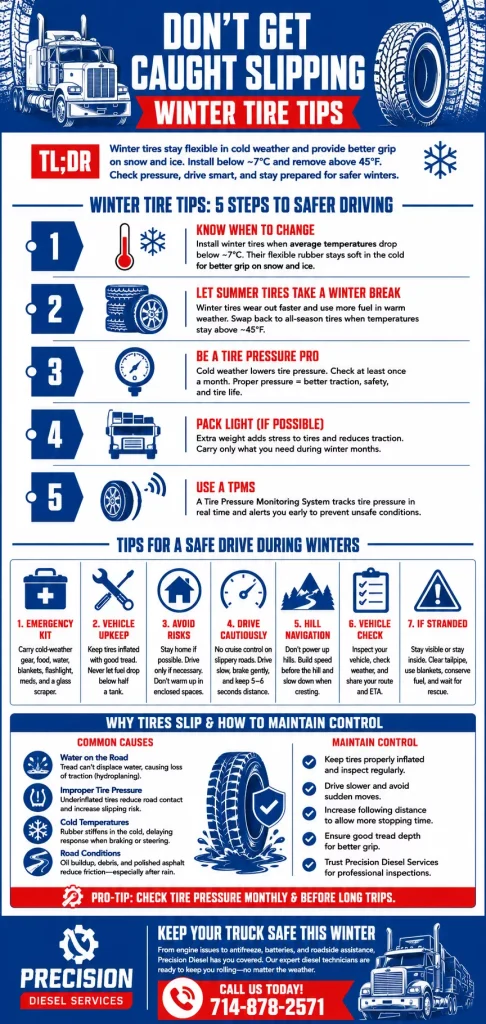
Winter Tire Tips to Keep You Safe
Here are some winter tire tips to keep you safe during the colder weather:
1. Know When to Change
There is a rule of thumb regarding winter tires the average temperature of 7°C! Remember to install your winter tires when temperatures ease below 7°C. A winter tire is made with an elastically engineered kind of rubber that retains its pliability during cold weather, thereby having a better grip on snow and ice. It means they grip well on slippery surfaces. This flexibility creates a better grip between the tires and ice or snow, keeping you in control when things get slippery.
2. Let the Summer Tires Take a Winter Break
You wouldn’t walk around in a winter coat all year. The same thing goes with tires. Not only will winter tires be less fuel-efficient during warmer weather, but they will also wear out faster. So, come spring, swap them out again for your all-season tires to work at their best.
3. Be a Tire Pressure Pro
Cold weather will let them down, while hot weather will get them overly inflated. This becomes very critical in winter. Check your tire pressure at least once a month. Remember to switch over to winter tires before the temperature drops to 7°C. Winter tires are made up of a special rubber compound that will not harden in colder temperatures and provides excellent grip in snow and ice.
4. Pack Light (If Possible)
Excess weight puts additional stress on tires, especially winter tires. If you can, avoid loading up your truck really heavy during winter months. The lighter the load, the more traction.
5. Consider a TPMS (Tire Pressure Monitoring System)
View the TPMS as your guardian angel looking over your tires. This device would be able to track your tire pressure at all times and warn you in case of a fall below a certain level of air pressure. The solution to this problem is early detection.
Tips for a Safe Drive During Winters
An annual average of 562,182 Americans get into winter weather-related car crashes.
So, following are some tips to keep you safe this winter season:
- Emergency Kit: Never drive a vehicle without an emergency kit with cold-weather gear, extra food, and water. It should also contain warm clothing, a flashlight, a glass scraper, blankets, and medicines.
- Vehicle Upkeep: Make sure your tires are inflated and have good tread. Never let your fuel level drop below half a tank.
- Avoid Risks: Stay home if possible. Only drive if necessary, and avoid warming up the vehicle in an enclosed space.
- Drive Cautiously: Avoid cruise control on slippery surfaces. Drive slowly, accelerate and decelerate gently, and increase the following distance to 5-6 seconds.
- Hill Navigation: Don’t power up hills; gain inertia before reaching a hill and reduce speed when cresting.
- Vehicle Check: Get your car inspected before travel. Check weather conditions and inform others of your route and ETA.
- If Stranded: Keep your car visible, otherwise, remain inside of it; do not overexert yourself—clear your tailpipe and wrap yourself in blankets to stay warm. Conserve fuel, if trapped, by running the engine to maintain warmth until rescued.
Understanding Slippery Tires on Southern California Roads
Slippery tires refer to a loss of traction that often occurs when road surfaces become wet, cold, or contaminated with debris. In Southern California, sudden rain after dry weather can make highways especially slick due to oil buildup on the pavement.
Slippery tires are more noticeable during early morning drives when temperatures drop and moisture lingers on the road surface. Even light rainfall can create conditions where tire grip becomes inconsistent, increasing stopping distance and reducing steering control.
Tires slipping on wet asphalt can happen even when tread depth looks acceptable. This is common on freeway ramps and shaded roads where water does not evaporate quickly. Drivers may feel a brief loss of stability when accelerating or braking too quickly.
Understanding how slippery tires behave helps reduce sudden traction loss and improves overall road safety during unpredictable weather shifts.
Why Tires Start Slipping and How to Maintain Control
Tires slipping often begin when tire tread cannot properly displace water from the road surface. This is commonly seen during rainstorms or when driving over polished asphalt areas with reduced friction.
Slipping tires can also occur when tire pressure is not properly maintained. Underinflated tires reduce contact with the road, making it easier to lose grip during turns or sudden stops. Regular inspection helps reduce this risk significantly.
In colder mornings, tires slipping becomes more noticeable because rubber compounds stiffen slightly, limiting flexibility. This can create delayed response when braking or steering, especially on downhill roads or freeway curves.
Precision Diesel Services helps drivers stay ahead of these issues by inspecting tire condition, pressure levels, and overall vehicle safety systems before road conditions worsen.
Book a professional inspection with Precision Diesel Services today and keep your vehicle prepared for safer traction and control across Southern California roads.
Keep Your Truck Safe from Winters with Precision Diesel!
Don’t let winter weather catch you off guard! Precision Diesel is at your service to help you with all your problems this winter season. Whether your truck has issues with the engine system due to snow, has antifreeze problems, or drained battery power due to cold, our diesel technicians are there at your service.
Contact Precision Diesel and get it all sorted out. In case your truck breaks down due to the snowy conditions, we are here to provide comfortable roadside assistance. You will not be disappointed.
For more information, call us at 714-878-2571.
FAQs
Why switch to winter tires?
Winter tires are designed to perform in the cold, so they grip snow and ice better. Summer tires operate best during warm weather; with stiffer rubbers and shallow grooves, handling is improved on dry and warm roads. Summer tires become too stiff and less grippy when driven in cold weather.
What’s the difference between a studless tire and a snow tire?
They are designed for operation on snow, slush, ice, and freezing rain—deep grooves with special treads to push snow away, due to which good grip is obtained.
You may want to use studded tires in areas with a great deal of ice and packed snow. These tires have metal or plastic studs that grip icy surfaces. However, studs can damage non-snowy roads, so check local laws before using them, as some places restrict or ban their use.
When should I remove my winter tires?
Experts advise against using winter tires year-round because they wear out faster and perform poorly on hot roads. Winter tires should be switched to summer tires once temperatures rise above 45°F, typically around late March or when Daylight Saving Time begins.
