
TL;DR
Semi-truck fleet maintenance is essential in Southern California due to heavy traffic, harsh climates, and strict emissions rules. Proactive maintenance improves safety, fuel efficiency, and uptime while reducing costly breakdowns and regulatory risk. Fleets that use preventive care and modern tools like telematics gain stronger performance and long-term cost savings.
Key Takeaways
- Preventive maintenance is critical to avoid breakdowns and reduce downtime
- Southern California conditions create unique stress from traffic, heat, and terrain
- Tire, brake, engine, and cooling system care are top priorities for fleet reliability
- Compliance with California emissions regulations (CARB) is mandatory and ongoing
- Good maintenance improves fuel efficiency, safety, and vehicle lifespan
- Telematics and predictive maintenance are transforming fleet operations
- Skilled technician shortages and high operating costs remain key challenges
- Mobile repairs and optimized scheduling help reduce operational delays
- Well-maintained fleets improve driver satisfaction and business reputation
In the bustling economic landscape of Southern California, the role of semi-truck fleets cannot be overstated. From the sprawling urban centers of Los Angeles County to the diverse terrain of Orange County and the expansive reaches of Riverside County, these powerful vehicles form the backbone of the region’s supply chain and logistics network. However, the efficiency and reliability of these fleets hinge on a critical factor often overlooked: comprehensive and proactive maintenance.
This article delves into the paramount importance of semi-truck fleet maintenance, specifically focusing on the unique challenges and opportunities in Los Angeles County, Orange County, and Riverside County. We’ll explore how proper maintenance ensures the longevity and performance of these vehicles and contributes to road safety, environmental sustainability, and the region’s overall economic health.
If you’re searching for mechanic shops for semi trucks near me or need a trusted mechanic that fix semi near me, finding a local expert who understands Southern California’s unique driving and environmental conditions is essential for keeping your fleet in top shape.
The Southern California Context
Before diving into the specifics of fleet maintenance, it’s crucial to understand the unique context of Southern California’s trucking industry:
- Geographic Diversity: From the coastal highways of Los Angeles and Orange Counties to the mountainous terrains and desert stretches of Riverside County, semi-trucks in this region face a wide array of environmental challenges.
- High Traffic Volume: The Greater Los Angeles area is notorious for its traffic congestion, putting additional stress on vehicles and increasing the importance of reliable performance.
- Strict Emissions Regulations: California leads the nation in environmental regulations, necessitating fleet operators to maintain their vehicles to the highest emissions control standards.
- Economic Significance: As major hubs for international trade, manufacturing, and distribution, these countries rely heavily on efficient trucking operations to sustain their economic growth.
If you’re searching for fleet maintenance near major logistics hubs like the Ports of LA or the I-10 corridor, localized services are essential for fast response and regulatory compliance.
Key Aspects of Semi Truck Fleet Maintenance
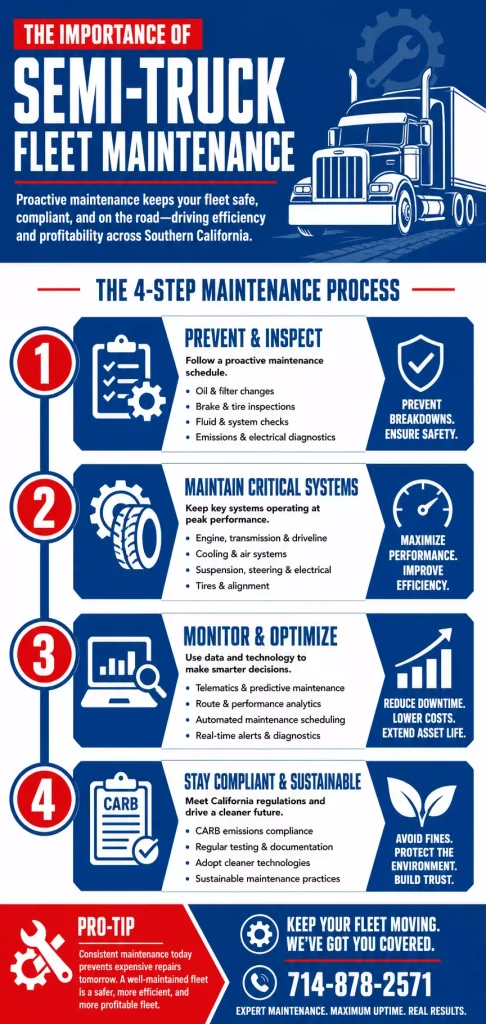
- Preventive Maintenance Schedules
Implementing a robust preventive maintenance schedule is the cornerstone of effective fleet management. This proactive approach involves regular inspections and servicing based on mileage, time intervals, or engine hours, rather than waiting for breakdowns.
In addition to routine upkeep, comprehensive fleet maintenance and repair ensures that any emerging mechanical issues are swiftly addressed, reducing the risk of unplanned breakdowns. Many fleet operators also rely on experienced mechanics for semi truck near me services to handle urgent repairs quickly and minimize downtime.
For fleets operating in Los Angeles County, with its dense urban environment, this might mean more frequent brake inspections due to stop-and-go traffic. In Riverside County, where trucks may cover long distances through varied terrains, tire rotations, and alignment checks become crucial.
Key components of a preventive maintenance schedule include:
- Oil and filter changes
- Brake system inspections
- Tire rotations and pressure checks
- Transmission fluid checks and changes
- Coolant system maintenance
- Electrical system checks
- Suspension and steering system inspections
- Tire Management
Tire maintenance is critical for both safety and fuel efficiency. In the diverse Southern California environment, tires face unique challenges:
- Coastal areas in Los Angeles and Orange Counties: Exposure to salt air can accelerate tire degradation.
- Inland areas of Riverside County: High temperatures can lead to increased tire wear and pressure fluctuations.
A comprehensive tire management program should include:
- Regular pressure checks and adjustments
- Tread depth monitoring
- Proper alignment and balancing
- Timely rotations and replacements
- Brake System Maintenance
Given the heavy traffic in urban areas and the mountainous terrain in parts of Riverside County, brake system maintenance is paramount. Regular inspections and timely replacements of brake pads, rotors, and other components are essential for safety and compliance with stringent California regulations.
- Engine Maintenance
The heart of any semi-truck is its engine. Proper engine maintenance not only ensures reliability but also plays a crucial role in meeting California’s strict emissions standards. This is particularly important in areas like the Port of Los Angeles, where trucks must comply with specific environmental regulations.
Key aspects of engine maintenance include:
- Regular oil and filter changes
- Fuel system cleaning and maintenance
- Turbocharger inspections
- Exhaust system checks and repairs
- Engine diagnostic scans to catch issues early
- Electrical System Care
Modern semi-trucks rely heavily on complex electrical systems. In the tech-forward environment of Southern California, where many fleets are adopting advanced telematics and electric auxiliaries, maintaining these systems is crucial. This includes regular checks of your truck batteries, alternators, starters, and all electronic control modules.
- Transmission and Driveline Maintenance
The diverse topography of Southern California, from the flat urban sprawl of Los Angeles to the hilly terrain of parts of Orange and Riverside Counties, puts varying stresses on transmission systems. Regular fluid checks, filter changes, and inspections of driveshafts and universal joints are essential.
- Cooling System Upkeep
With temperatures often soaring, especially in inland areas of Riverside County, maintaining an efficient cooling system is vital. This involves regular coolant flushes, radiator inspections, and thermostat checks to prevent overheating and potential engine damage.
- Air System Maintenance
The air system in semi-trucks is crucial for braking and other pneumatic functions. Regular draining of air tanks, replacement of air dryers, and inspection of airlines are necessary to ensure safe and efficient operation.
- Suspension and Steering Maintenance
The quality of roads can vary significantly across the three counties, from well-maintained highways to rougher rural roads. This makes suspension and steering maintenance critical for both driver comfort and vehicle control. Regular inspections of shock absorbers, springs, and steering components are essential.
- Compliance with California Air Resources Board (CARB) Regulations
California’s stringent environmental regulations, enforced by CARB, require fleets to maintain their vehicles to specific emissions standards.
This often involves:
- Regular emissions testing
- Maintenance of exhaust after-treatment systems
- Upgrades to newer, cleaner technologies when required
The Benefits of Proper Fleet Maintenance
- Enhanced Safety
Safety is paramount in the trucking industry, and nowhere is this more critical than in the heavily populated areas of Southern California. Well-maintained trucks are less likely to experience mechanical failures that could lead to accidents. This is particularly important on busy highways like the I-5, I-10, or the 91 Freeway, where a breakdown can quickly lead to traffic chaos and potential collisions.
- Improved Fuel Efficiency
With fuel costs being a significant portion of operational expenses, maintaining optimal fuel efficiency is crucial. Well-maintained engines, properly inflated tires, and efficient aerodynamics can lead to substantial fuel savings. This is especially important in California, where fuel prices are typically higher than the national average.
Effective truck fleet maintenance also contributes to optimized fuel consumption, especially during frequent starts and stops in urban corridors.
- Reduced Downtime
Unplanned downtime due to mechanical failures can be costly, especially in the fast-paced logistics environment of Southern California. Proactive maintenance helps prevent unexpected breakdowns, ensuring that trucks stay on the road and deliveries remain on schedule.
- Extended Vehicle Lifespan
Regular maintenance extends the operational life of semi-trucks. In a region where the cost of doing business is already high, maximizing the return on investment in fleet vehicles is crucial for long-term profitability.
- Environmental Compliance
Staying compliant with California’s strict environmental regulations is not just about avoiding fines; it’s about contributing to the state’s efforts to reduce air pollution. This is particularly relevant in areas like the Los Angeles Basin, which has historically struggled with air quality issues.
- Cost Savings
While regular maintenance involves ongoing costs, it ultimately leads to significant savings by preventing major repairs, improving fuel efficiency, and extending vehicle life. In the competitive markets of Los Angeles, Orange, and Riverside Counties, these savings can provide a crucial edge.
- Enhanced Driver Satisfaction and Retention
Well-maintained trucks are more comfortable and reliable, leading to higher driver satisfaction. In a region facing driver shortages, keeping skilled drivers happy and retained is a major benefit of a solid maintenance program.
- Improved Company Reputation
Reliable, clean, and well-maintained trucks contribute positively to a company’s image. This is particularly important in image-conscious Southern California, where brand perception can significantly impact business opportunities.
Challenges and Solutions in Southern California
- High Operating Costs
Challenge: The cost of operations in Southern California, particularly in Los Angeles and Orange Counties, is higher than in many other parts of the country.
Solution: Implement predictive maintenance techniques using data analytics to optimize maintenance schedules and reduce overall costs.
- Environmental Regulations
Challenge: Meeting and staying ahead of California’s evolving environmental standards.
Solution: Invest in newer, cleaner technologies and work closely with local regulatory bodies to ensure compliance and plan for future requirements.
- Traffic Congestion
Challenge: Heavy traffic, especially in Los Angeles County, leads to increased wear and tear on vehicles.
Solution: Utilize route optimization software to minimize time spent in heavy traffic and adjust maintenance schedules to account for stop-and-go driving conditions.
- Diverse Operating Conditions
Challenge: The varied geography from coast to desert requires adaptable maintenance strategies.
Solution: Develop flexible maintenance programs that account for different operating conditions across the three counties.
- Skilled Labor Shortage
Challenge: Finding and retaining skilled maintenance technicians in a competitive job market.
Solution: Invest in training programs, partner with local technical schools, and offer competitive compensation packages to attract and retain talent.
Whether you’re hiring in-house or outsourcing, searching for semi skilled mechanic jobs near me can connect you with talent ready to work on diverse fleet needs.
Emerging Trends and Technologies
- Telematics and Predictive Maintenance
The use of telematics systems is becoming increasingly common in Southern California’s trucking industry. These systems provide real-time data on vehicle performance, allowing for predictive maintenance based on actual usage rather than fixed schedules.
Fleets operating in remote or high-traffic areas can benefit from mobile fleet maintenance near their routes, minimizing downtime and boosting service efficiency.
Leveraging smart fleet maintenance truck repair systems allows fleets to use predictive analytics to prevent failures before they occur, based on real-time vehicle data.
- Electric and Hybrid Trucks
With California at the forefront of electric vehicle adoption, many fleets in Los Angeles, Orange, and Riverside Counties are beginning to incorporate electric and hybrid trucks. These vehicles require different maintenance approaches, focusing more on battery health and electrical systems.
- Automated Maintenance Scheduling
AI-driven software is being used to optimize maintenance schedules, taking into account factors like route data, vehicle age, and historical performance to determine the best times for servicing.
- Mobile Maintenance Units
To reduce downtime, some fleets are employing mobile maintenance units that can perform routine services and minor repairs on-site, particularly useful in sprawling areas like Riverside County.
- 3D Printing for Parts
Some forward-thinking maintenance facilities in tech-savvy Southern California are exploring the use of 3D printing for creating certain replacement parts, potentially reducing wait times and costs for specialized components.
Best Practices for Fleet Managers
- Develop a Comprehensive Maintenance Strategy
Create a detailed plan that covers all aspects of vehicle maintenance, tailored to the specific needs of operating in Southern California.
Choosing a trusted fleet maintenance service provider that understands Southern California’s operating conditions is critical to ensuring long-term vehicle reliability.
- Invest in Training
Ensure that both drivers and maintenance staff are well-trained in identifying potential issues and understanding the importance of timely reporting and servicing.
- Leverage Technology
Utilize fleet management software and telematics to track maintenance needs, vehicle performance, and driver behavior.
- Build Strong Vendor Relationships
Develop partnerships with reliable parts suppliers and service centers across Los Angeles, Orange, and Riverside Counties to ensure quick access to resources when needed.
Partnering with a reliable fleet maintenance shop in Los Angeles, Orange, or Riverside County ensures timely access to diagnostics and parts when major repairs are needed.
For businesses operating across state lines, using a semi truck mechanic near me USA directory can help locate certified technicians no matter where a breakdown occurs.
Some businesses may also benefit from fleet maintenance mobile truck repair solutions that bring certified technicians directly to the site, reducing transport and wait times.
- Regular Audits and Continuous Improvement
Conduct regular audits of maintenance practices and outcomes, using the data to continuously refine and improve maintenance strategies.
- Stay Informed of Regulations
Keep abreast of changing regulations, particularly those related to emissions and safety in California, and adjust maintenance practices accordingly.
- Focus on Sustainability
Incorporate sustainable practices in maintenance operations, aligning with California’s environmental goals and potentially benefiting from state incentives.
The importance of semi-truck fleet maintenance in Los Angeles County, Orange County, and Riverside County cannot be overstated. In this dynamic and challenging region, where the demands on trucking are as diverse as the landscape itself, a well-maintained fleet is not just an operational necessity—it’s a competitive advantage.
From ensuring compliance with California’s stringent environmental regulations to maximizing efficiency in the face of notorious traffic congestion, proper maintenance touches every aspect of fleet operations. It enhances safety on busy highways, extends the life of valuable assets, improves fuel efficiency in a high-cost fuel market, and contributes to the overall reliability of the supply chain that is so crucial to the region’s economy.
As the trucking industry in Southern California continues to evolve, embracing new technologies and facing new challenges, the fundamental importance of thorough and proactive maintenance remains constant. Fleet managers who prioritize and innovate in their maintenance practices will find themselves well-positioned to navigate the complexities of operating in this unique and vital economic landscape.
Investing in comprehensive fleet maintenance is not just about keeping trucks on the road—it’s about driving success in one of the most dynamic and competitive markets in the world. As Southern California continues to grow and change, the fleets that prioritize maintenance will be the ones leading the way into a more efficient, safe, and sustainable future for the region’s trucking industry.
FAQs
How often should semi-trucks undergo routine maintenance in Southern California’s climate?
A: While specific intervals can vary based on the make and model of the truck, as well as its usage patterns, a general rule of thumb is to perform basic maintenance every 10,000 to 15,000 miles or every 3-4 months, whichever comes first. However, in Southern California’s diverse climate, from coastal to desert areas, it’s advisable to consult with local maintenance experts to tailor the schedule to your specific operating conditions.
What are the key differences in maintaining a fleet in Los Angeles County versus Riverside County?
A: The main differences stem from the operating environments. In Los Angeles County, with its heavy urban traffic, there’s more emphasis on brake system maintenance and emissions control due to frequent stops and stringent air quality regulations. In Riverside County, where trucks may travel longer distances through varied terrains, there’s a greater focus on tire maintenance, cooling system efficiency, and dust protection for engine components.
How can I ensure my fleet complies with California’s emissions regulations?
A: To comply with California Air Resources Board (CARB) regulations:
- Regularly inspect and maintain emissions control systems
- Implement a smoke opacity testing program
- Consider upgrading to newer, cleaner technologies when possible
- Stay informed about current and upcoming CARB regulations
- Maintain detailed records of all emissions-related maintenance and testing
What are the benefits of using telematics for fleet maintenance in Southern California?
A: Telematics can offer several benefits:
- Real-time monitoring of vehicle health and performance
- Early detection of potential issues, reducing the risk of breakdowns in high-traffic areas
- Optimized maintenance scheduling based on actual usage and conditions
- Improved route planning to reduce wear and tear
- Enhanced compliance with local regulations through better record-keeping
- Q: How can I address the challenge of finding skilled maintenance technicians in the competitive Southern California job market? A: To attract and retain skilled technicians:
- Offer competitive salaries and benefits packages
- Provide ongoing training and professional development opportunities
- Partner with local technical schools for internship and recruitment programs
- Create a positive work environment with opportunities for career advancement
- Consider implementing apprenticeship programs to develop talent in-house
- Q: What special considerations should be made for maintaining semi-trucks that frequently operate in the ports of Los Angeles and Long Beach? A: For trucks operating in port areas:
- Pay extra attention to corrosion prevention due to the salt air
- Ensure compliance with port-specific emissions regulations
- Implement more frequent brake inspections due to the stop-and-go nature of port operations
- Consider upgrading to cleaner technologies to meet port environmental requirements
- Q: How does the maintenance of electric or hybrid semi-trucks differ from traditional diesel trucks? A: Maintaining electric or hybrid trucks involves:
- Regular battery health checks and maintenance
- More focus on electrical system diagnostics
- Less frequent oil changes and fewer fluid replacements
- Different safety protocols for high-voltage components
- Specialized training for technicians to work on these advanced systems
- Whether diesel or electric, efficient semi truck fleet repair practices are essential for minimizing downtime and maintaining compliance in regulated areas like the LA Basin.
- Q: What are some cost-effective ways to improve fleet maintenance practices in Southern California? A: To optimize maintenance costs:
- Implement a robust preventive maintenance program
- Utilize fleet management software for better tracking and scheduling
- Train drivers in basic vehicle inspection and maintenance practices
- Consider mobile maintenance units for on-site servicing
- Bulk purchase of commonly used parts and supplies
- Regularly analyze maintenance data to identify trends and areas for improvement
- Consider combining fleet maintenance truck repair services to streamline scheduling and reduce vendor fragmentation.
- Q: How can I prepare my fleet for the extreme heat often experienced in parts of Southern California, especially Riverside County? A: To prepare for high temperatures:
- Ensure cooling systems are in top condition with regular inspections and coolant changes
- Check and replace air conditioning systems as needed for driver comfort
- Pay extra attention to tire pressure and condition, as heat can affect tire performance
- Use high-quality engine oils suitable for high-temperature operations
- Consider adding extra insulation to critical components to protect against heat damage
- Q: What role does driver training play in fleet maintenance in Southern California? A: Driver training is crucial for maintenance because:
- Well-trained drivers can identify potential issues early
- Proper driving techniques can reduce wear and tear on vehicles
- Drivers can perform basic maintenance tasks, reducing downtime
- Training on local traffic patterns and regulations can help optimize vehicle performance
- Educated drivers are more likely to comply with maintenance schedules and reporting procedures
By addressing these frequently asked questions, fleet managers in Los Angeles County, Orange County, and Riverside County can better navigate the unique challenges of maintaining semi-truck fleets in Southern California. Remember that while these answers provide general guidance, it’s always best to consult with local experts and tailor your maintenance strategies to your specific fleet needs and operating conditions.
