

TL;DR
The article explains four warning signs that your fleet service provider is underperforming: frequent breakdowns, poor communication, regulatory non-compliance, and a lack of long-term maintenance strategy. These issues can lead to higher costs, downtime, and compliance risks. A strong provider should focus on preventive maintenance, transparency, and California fleet compliance.
Key Takeaways
- Frequent vehicle breakdowns often signal weak preventive maintenance or low-quality repairs.
- Poor communication (unclear invoices, missing reports, slow updates) reduces trust and planning ability.
- Non-compliance with California regulations like CARB standards can result in fines and operational risk.
- A reactive, “fix-it-only” approach shows a lack of long-term fleet strategy and planning.
- Strong fleet providers emphasize preventive maintenance, data-driven planning, and compliance support.
- Working with a reliable partner improves uptime, safety, cost efficiency, and driver satisfaction.
- Companies like Precision Diesel Services position themselves as full-service partners focused on reliability, compliance, and reduced downtime.
Managing fleets in Southern California is no small task. Between long-haul routes, busy ports, strict state emissions requirements, and tight delivery schedules, fleet managers face enormous pressure to keep vehicles safe, efficient, and compliant. A reliable fleet service provider can make all the difference. Unfortunately, not all providers live up to expectations.
When service shops cut corners, fail to communicate, or don’t understand the realities of California’s fleet regulations, it puts your drivers, equipment, and bottom line at risk. That’s why knowing when it’s time to move on to a more dependable Fleet Service Specialist is critical.
Below are four major warning signs that your current provider may not be delivering the level of support your fleet deserves.
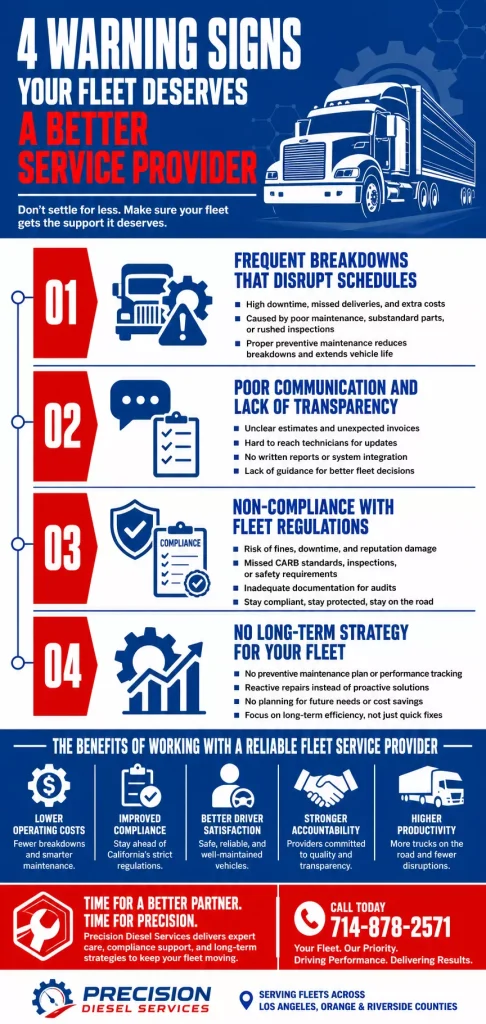
1. Frequent Breakdowns That Disrupt Schedules
The most obvious sign that your fleet is not getting the right care is when trucks and trailers keep breaking down.
Every hour a truck sits on the side of the freeway is costly — missed deliveries, frustrated clients, and extra expenses from towing or emergency repairs. Fleets that are maintained properly should experience fewer breakdowns and longer intervals between major repairs.
If breakdowns have become routine, it may be because your current fleet service provider is:
- Skipping preventive maintenance tasks
- Using substandard parts
- Rushing through inspections without addressing underlying issues
A skilled Fleet Maintenance Manager knows the value of planning. By working with a service shop that takes the time to set up strong preventive schedules, fleets remain productive and drivers feel confident behind the wheel.
2. Poor Communication and Lack of Transparency
Fleet managers need clear updates and accurate timelines to make decisions. Unfortunately, many service providers leave customers in the dark, making it difficult to plan around downtime.
Warning signs of poor communication include:
- Unclear estimates or unexpected invoices
- Difficulty reaching technicians when updates are needed
- No written reports documenting services performed
- A lack of guidance on how repairs align with fleet management systems
Fleet service providers accountable to their customers know how to communicate clearly. They’ll provide straightforward cost breakdowns, digital records tied into fleet management systems, and proactive updates when repairs take longer than expected.
When communication breaks down, trust erodes. A fleet service provider should feel like a partner, not an obstacle.
3. Non-Compliance With Fleet Regulations
California has some of the strictest fleet regulations in the country, particularly around emissions, inspections, and driver safety. A provider that ignores or misunderstands these rules is putting your fleet at risk of fines, downtime, and reputation damage.
Examples of compliance gaps include:
- Failing to keep vehicles up to California Air Resources Board (CARB) standards
- Missing legally required inspections or paperwork
- Overlooking safety checks on brakes, lights, or weight restrictions
- Not documenting service in a way that satisfies regulatory audits
A qualified Fleet Service Specialist will stay ahead of changing fleet regulations and advise fleet managers about compliance deadlines. This guidance not only prevents penalties but also keeps drivers and the public safe.
4. No Long-Term Strategy for Your Fleet
If your service provider only fixes problems as they arise, they are not invested in the long-term health of your fleet. Fleets need more than reactive repairs — they need strategies that extend the lifespan of vehicles, reduce costs, and maximize uptime.
Signs of a short-sighted approach:
- No tailored preventive maintenance plan
- Ignoring data from fleet management systems
- Limited discussion about future needs like upgrades or replacements
- A “quick fix” mentality that doesn’t address root causes
When a Fleet Maintenance Tasks Manager partners with the right shop, the focus shifts to long-term efficiency. This includes building a maintenance calendar, monitoring performance trends, and creating solutions that prevent recurring issues.
A forward-thinking fleet service provider should feel like an extension of your business — committed to growth, compliance, and reliability.
The Benefits of Working With a Reliable Fleet Service Provider
When fleets choose to work with the right partner, the difference is measurable. The benefits include:
- Lower operating costs thanks to fewer breakdowns and smarter maintenance scheduling.
- Improved compliance with California’s strict fleet regulations.
- Better driver satisfaction since vehicles are safe, reliable, and well-maintained.
- Stronger accountability from fleet service providers willing to guarantee quality service.
- Higher productivity with more trucks on the road and fewer disruptions to schedules.
Fleet managers don’t just need repairs — they need peace of mind that their fleet is in good hands.
How Precision Diesel Services Can Help Fleets Across Southern California
Precision Diesel Services has built its reputation by keeping fleets reliable, safe, and compliant throughout Los Angeles, Orange, and Riverside counties. From mobile truck repair to preventive fleet maintenance programs, the company works closely with fleet managers to create tailored solutions that reduce downtime and control costs.
Every client benefits from a service team that understands both the mechanical and regulatory challenges of operating in California. By holding fleet service providers accountable, Precision Diesel Services ensures that fleets stay road-ready and compliant with fleet regulations.
If you’re a Fleet Maintenance Manager or fleet operator looking for a trusted partner, Precision Diesel Services can provide the expertise and support your business needs. Call today at 714-878-2571 to learn how a dedicated Fleet Service Specialist can help keep your fleet moving.
Frequently Asked Questions
What should I expect from a good fleet service provider?
A dependable provider will offer transparent communication, preventive maintenance planning, compliance support, and detailed reporting that integrates with fleet management systems.
How often should fleet maintenance be performed?
The frequency depends on mileage, duty cycles, and regulatory requirements. A qualified Fleet Service Specialist will build a customized schedule for your specific fleet.
Why are fleet regulations in California so strict?
California enforces regulations to reduce emissions, improve road safety, and protect the public. Compliance ensures your fleet avoids fines and costly downtime.
What’s the difference between a regular mechanic and a fleet service provider?
A regular shop might fix one truck at a time, while a dedicated fleet service provider focuses on the big picture — managing multiple vehicles, long-term costs, and compliance obligations.
How do I know it’s time to switch providers?
If you’re experiencing frequent breakdowns, poor communication, non-compliance issues, or a lack of preventive planning, it’s a strong indication that your fleet deserves better support.
