

TL;DR
The article explains how a structured a fleet maintenance schedule in Southern California helps reduce breakdowns, lower costs, and improve DOT compliance. It emphasizes preventive maintenance, digital fleet management tools, and onsite/mobile repair services to minimize downtime. Overall, proactive scheduling and data-driven tracking turn fleet upkeep into a cost-saving strategy instead of a reactive expense.
Key Takeaways
- Preventive maintenance reduces breakdowns, emergency repairs, and downtime costs
- Key services include oil changes, brake inspections, tire rotations, transmission checks, and coolant flushes
- Maintenance intervals should be adjusted based on vehicle type and operating conditions
- Fleet maintenance software improves scheduling, tracking, compliance, and cost analysis
- Onsite/mobile maintenance reduces downtime by eliminating shop delays
- Drivers should actively report early warning signs of vehicle issues
- Digital records help prevent missed DOT inspections and compliance penalties
- Proper maintenance improves safety, fuel efficiency, and vehicle lifespan
- Structured scheduling turns maintenance into long-term cost savings and reliability gains
- Companies like Precision Diesel Services provide onsite fleet maintenance to support faster repairs and reduced operational disruption
Running a fleet in Southern California is no small task. Between heavy traffic on the I-5 and the wear-and-tear of long-haul routes, trucks and trailers endure constant stress. Without a reliable fleet maintenance schedule, a poorly maintained vehicle in your fleet can lead to unexpected breakdowns, costly repairs, and downtime that quickly cuts into your bottom line.
That’s where a solid fleet maintenance scheduling plan makes all the difference. With the right preventive approach, you not only extend the life of your vehicles but also avoid fines for missed DOT regulations and keep drivers safe on the road.
In this guide, you’ll learn how to create a fleet maintenance plan that saves money, what services to prioritize, and why investing in fleet maintenance software and professional onsite fleet maintenance tasks services is critical for long-term success.
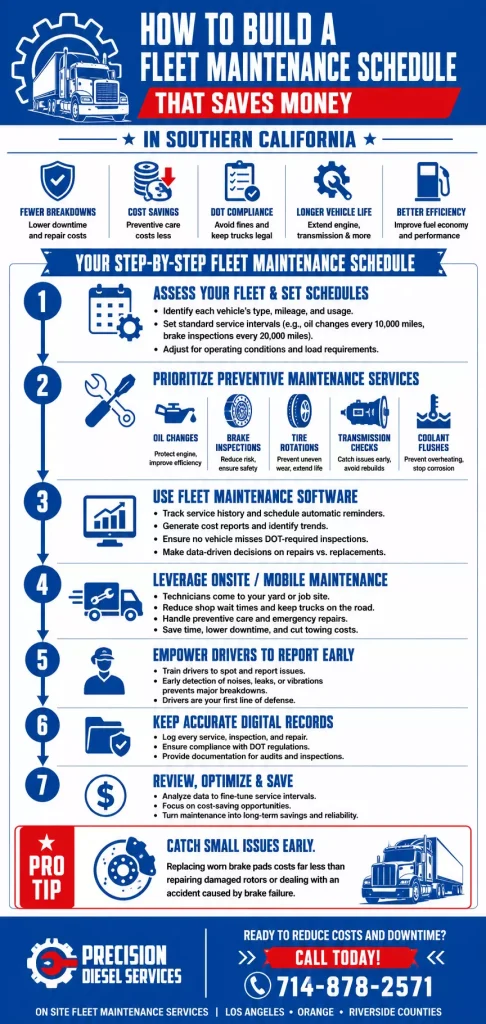
Why Fleet Maintenance Scheduling Matters
Many businesses think of maintenance as an expense, but the reality is that it’s an investment. Consider the cost of one semi truck breaking down on the freeway: towing fees, emergency repairs, missed deliveries, and potential penalties if you’re not compliant with DOT regulations. Now multiply that risk across every vehicle in your fleet.
Fleet maintenance scheduling provides:
- Predictability – You know when vehicles are due for service, minimizing surprise breakdowns.
- Safety – Regular brake inspections, tire rotations, and oil changes keep drivers and cargo secure.
- Compliance – Staying ahead of DOT regulations avoids fines and keeps your trucks road-legal.
- Cost savings – Preventive repairs are always less expensive than reactive ones.
Core Elements of a Preventive Fleet Maintenance Plan
A good preventive maintenance plan covers both routine and condition-based service. Your fleet’s preventive maintenance plan should include scheduled inspections and essential services such as:
- Oil changes – Fresh oil protects engines, prevents overheating, and improves fuel efficiency.
- Brake inspections – Worn brakes increase stopping distance and risk accidents.
- Tire rotations – Regular rotations prevent uneven wear and extend tire life.
- Transmission checks – Catching issues early avoids expensive rebuilds.
- Coolant system flushes – Prevents overheating and protects against corrosion.
For instance, heavy-duty trucks or vehicles under constant load may need more frequent service intervals compared to lighter delivery vehicles. Building flexibility into your fleet maintenance schedule ensures each unit gets the attention it needs.
Using Fleet Maintenance Software to Stay Organized
Manually tracking maintenance schedules on paper or spreadsheets may work for small operations, but once your fleet grows, it becomes overwhelming. This is where technology makes a difference.
When you invest in fleet management software or mobile fleet maintenance and services software, you gain the ability to:
- Track service history for each vehicle in your fleet
- Schedule automatic reminders for oil changes, brake inspections, and other preventive tasks
- Generate reports to analyze costs and spot trends
- Ensure no vehicle misses DOT-required inspections
For delivery businesses, choosing the best fleet maintenance software for delivery services can improve reliability and customer satisfaction by minimizing late shipments.
Fleet maintenance and services software also allows managers to make data-driven decisions, such as determining which vehicles should be replaced versus repaired.
Onsite Fleet Maintenance Services: Saving Time and Money
Downtime is one of the most expensive parts of running a fleet. Every hour a truck is off the road means lost revenue. Onsite fleet maintenance services eliminate the need to send vehicles to a shop and wait in line.
With mobile fleet maintenance and services software integrated into the process, technicians come to your lot or job site, handle inspections and repairs, and get your trucks back in service faster. This flexibility is especially valuable for companies operating across Los Angeles, Orange, and Riverside counties where traffic and long shop wait times can cause delays.
Semi truck fleet maintenance service delivered onsite can cover everything from preventive checks to emergency breakdowns, giving fleet managers peace of mind.
Cost-Saving Tips for Your Fleet’s Preventive Maintenance Plan
Creating a maintenance schedule is the first step, but optimizing it for cost savings is where you’ll see real results. Here are practical tips:
1. Standardize Your Service Intervals
Instead of handling maintenance reactively, set standard service intervals for your vehicles. For example, schedule oil changes every 10,000 miles and brake inspections every 20,000 miles, adjusted for usage.
2. Adjust for Operating Conditions
A vehicle used mostly for local deliveries may not require the same frequency of transmission checks as one hauling heavy loads across mountain passes. Tailor intervals based on operating conditions.
3. Train Drivers to Report Issues
Your drivers are the first line of defense. Encourage them to report unusual noises, vibrations, or performance changes before small issues become costly breakdowns.
4. Keep a Digital Record
Relying on paper logs creates room for error. Fleet maintenance software ensures every oil change, tire rotation, and inspection is logged and accessible.
5. Use Onsite Services Strategically
Schedule mobile technicians during off-hours to avoid disrupting your delivery schedules. This reduces downtime and keeps vehicles earning money.
Benefits of a Strong Fleet Maintenance Scheduling Plan
Companies that prioritize maintenance see long-term savings and performance benefits, including:
- Reduced roadside breakdowns and towing costs
- Extended engine and transmission lifespan
- Improved fuel economy from properly tuned vehicles
- Safer operations, lowering liability risks
- Stronger compliance with DOT regulations
- Higher resale value when it’s time to replace a vehicle
These benefits compound over time, turning your fleet into a reliable, cost-efficient asset rather than a constant source of stress.
How Precision Diesel Services Can Help
Creating a fleet maintenance schedule is only the beginning. The execution is what keeps your trucks on the road. Precision Diesel Services provides professional mobile truck, heavy-duty, trailer repair, and semi truck fleet maintenance service throughout Los Angeles, Orange, and Riverside counties.
Our team brings onsite fleet maintenance services directly to your yard or job site, saving you time and money. From oil changes and brake inspections to advanced transmission checks and coolant system flushes, we help businesses stay compliant with DOT regulations and keep vehicles road-ready.
If you’re ready to invest in a preventive maintenance plan that reduces costs and downtime, contact Precision Diesel Services at 714-878-2571 today.
Frequently Asked Questions
How often should I schedule fleet maintenance?
It depends on vehicle type, mileage, and operating conditions. As a rule of thumb, oil changes and inspections should occur every 10,000–15,000 miles, but heavy-duty trucks may require shorter intervals.
What happens if I miss DOT-required inspections?
Missed inspections can lead to fines, violations, and trucks being pulled from service. Staying compliant through regular scheduling avoids costly setbacks.
Is fleet maintenance software really worth the investment?
Yes. Fleet maintenance and services software reduces human error, improves scheduling, and provides valuable insights into operating costs. For delivery services, it can directly improve customer satisfaction.
Can onsite fleet maintenance cover emergency repairs?
Yes. Mobile services can handle both preventive care and unexpected breakdowns, minimizing downtime and towing expenses.
What’s the biggest cost-saving benefit of preventive fleet maintenance?
Catching small issues early. For example, replacing worn brake pads costs far less than repairing a damaged rotor or dealing with an accident caused by brake failure.
