
TL;DR
Preventative maintenance for 18-wheelers focuses on regular inspections and scheduled servicing to prevent breakdowns, improve safety, and extend vehicle life. Key areas include engine, brakes, transmission, tires, and fluid checks. Seasonal adjustments and pre-trip/post-trip inspections help maintain performance year-round. Consistent maintenance also reduces long-term repair costs and downtime.
Key Takeaways
- Preventative maintenance is proactive care designed to catch issues before they become costly repairs
- Regular checks of engine fluids, brakes, transmission, and tires are essential for safety and performance
- Pre-trip and post-trip inspections help identify leaks, wear, and mechanical issues early
- Routine maintenance lowers repair costs and reduces unexpected downtime
- Seasonal conditions require adjustments such as coolant checks in summer and battery care in winter
- Brake system maintenance is critical due to high wear and major safety risks
- Choosing a qualified repair shop with industry experience improves reliability and service quality
- Mobile repair services like Precision Diesel help keep trucks serviced efficiently on the road in Southern California
Keeping your 18-wheeler in good condition is essential for your safety and its longevity! Preventive maintenance is definitely going to keep your truck reliable and efficient. Regular checks and services allow one to avoid those unexpected breakdowns that no one wants to deal with.
We here at Precision Diesel stand apart as a leader in mobile truck repair services in Southern California. From diesel engine repair to brake maintenance, we bring expert knowledge to your truck’s doorstep to make sure it receives the care it needs. From navigating the busy streets of Los Angeles County to trucking across Riverside County, having an expert like Precision Diesel by your side assures you that your rig will keep on running with ease.
Understanding Preventative Maintenance
Preventive maintenance for heavy-duty trucks generally deals with a well-planned process to keep your 18-wheeler at its best and reduce the possibility of sudden breakdowns. It is all about periodic systematic inspections and all types of programmed checkups that ensure every part of your truck is performing excellently.
What It Entails
Preventive maintenance is a scheduled maintenance program whose purpose is to locate and rectify defects before they develop into costly repairs or safety hazards.
The duty of any commercial vehicle operator is simply to follow federal regulations. These are regulations that state what to check and when. This enables your truck to run smoothly and within the legal context of the law.
Importance of Regular Maintenance
Regular maintenance could be your best defense against major repairs. Most small concerns—like tightening a loose bolt or replacing worn-out parts—can be prevented from building up into something serious if addressed in time. It helps you reduce downtime and keeps your truck running smoothly by being proactive. Developing a sense of prevention regarding your truck maintenance needs will make all the difference in extending the life of your 18-wheeler.
In this regard, there are several key areas on which to focus your preventive care.
Key Components of Preventive Care
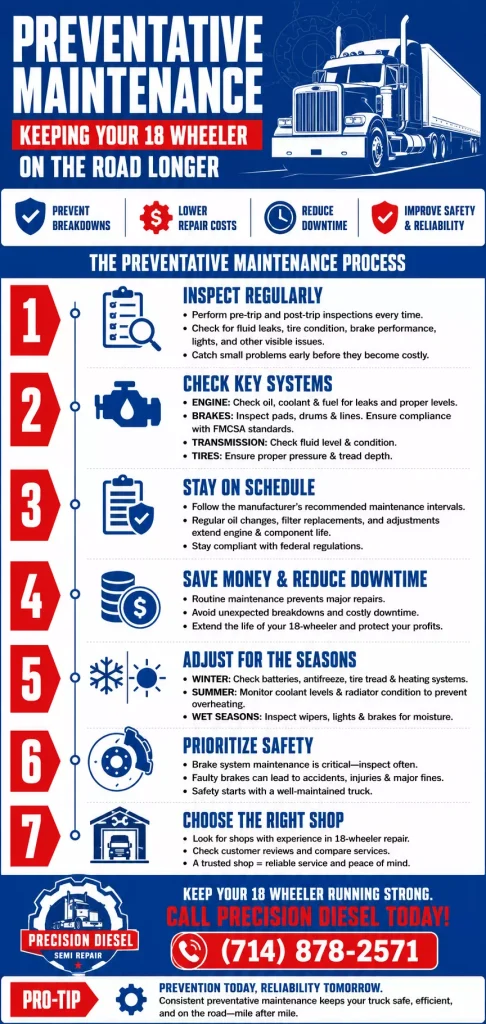
As you continue to maintain your 18-wheeler in top condition, a full maintenance checklist will put you on course every time you hit the road to ensure your journey is sound and safe. Here’s everything you should be paying attention to:
Engine Inspection
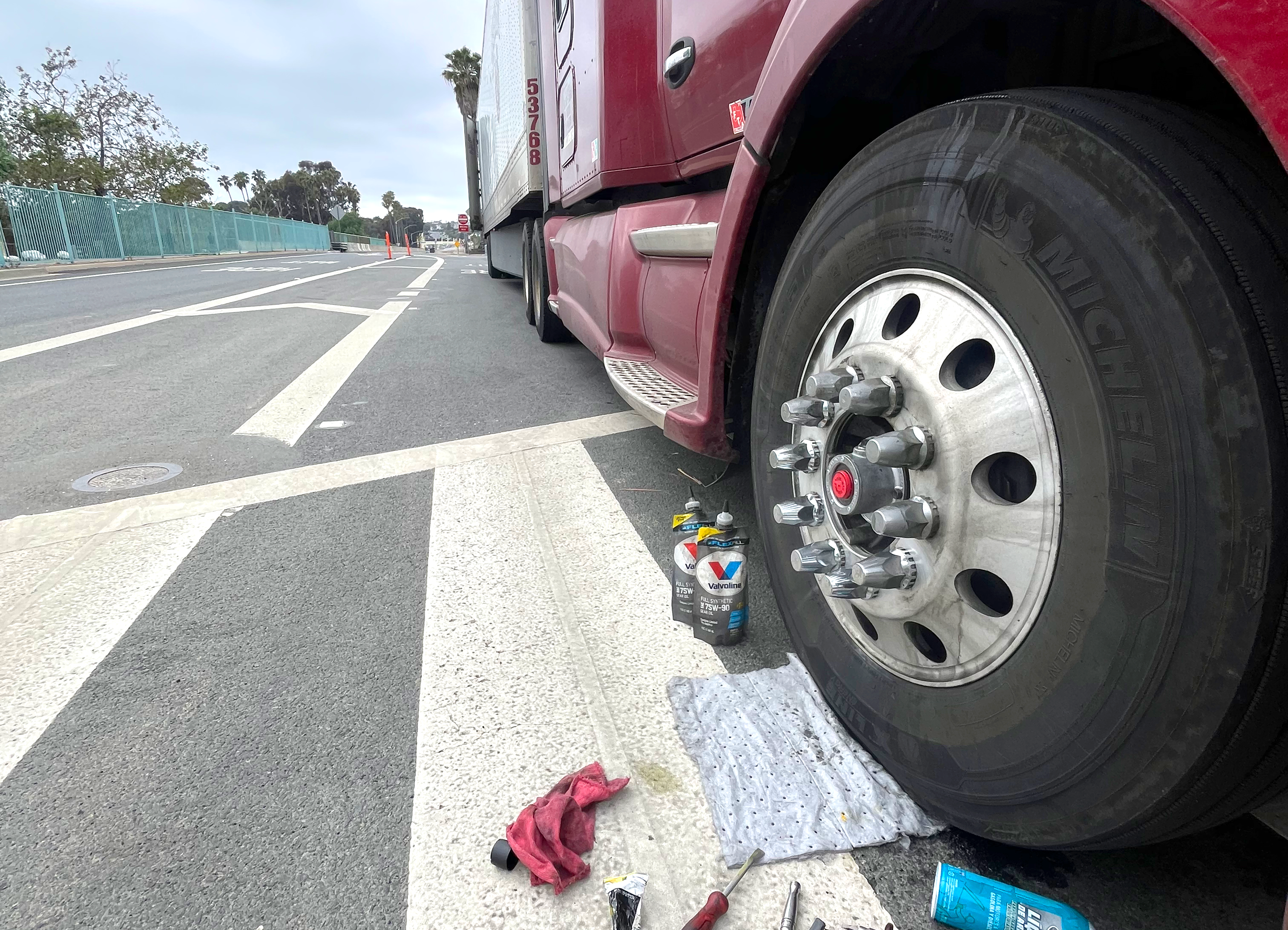
It is very important to check on fluid leaks regularly. Search for oil, coolant, and fuel leaks that could indicate wear or damage. By ensuring that your engine does not leak, you are guaranteeing better vehicle performance and preventing expensive repairs in the future.
Brake Check
FMCSA standards impose very strict and heavy brake compliance checks. Daily wear and tear can affect brake performance, and there is a need for regular checks to prevent road accidents.
Transmission Service
Check the transmission fluid level and condition. The transmission fluid should be clear in color and not smell burnt. Anything different from these signs could mean a problem that ought to be checked right away.
Pre-trip and post-trip inspections are also very important. Always, at regular intervals, drivers should check for the following:
- Leaks in Fluids: Early detection of leakage will save one from turning a small problem into a big one.
- Tire Conditions: Good tire pressure and proper tread depth maintain stability and fuel efficiency.
- Brake Performance: Testing brakes before taking to the road can alert you to any immediate concerns.
Such inspections are not about just being in compliance but also about keeping you safe and minimizing downtime on the road.
Cost Efficiency by Way of Routine Maintenance
Servicing an 18-wheeler isn’t only about safety; it’s also about cost control. The average annual maintenance cost for semi-trucks can account for a very hefty chunk of a trucking business’s income. By incorporating routine preventative maintenance, on the other hand, you can surely cut major repair costs and keep your rig rolling longer without sudden hiccups.
Professional preventative measures include frequent inspection and timely repair to nip minor problems in the bud before they blow out of proportion and become major repairs in 18-wheeler repair. For example, regular oil changes prevent wear and tear from setting in an engine and add a few more years to its life. Brake system checks save components from being worn out much earlier than they are supposed to.
Tire inspections avoid blowouts that may lead to costly downtime or accidents. By investing consistently in these small tasks, you adhere to regulations, avoiding possible large-scale repairs that could cause disruptions and inflated operation costs.
Seasonal Variations in Maintenance Schedules
The need for change with the seasons trickles right down to truck maintenance schedules. Seasonal maintenance plans are very significant in ensuring that your 18-wheeler performs at its best regardless of what the weather system throws at it. Each season has its various challenges:
Winter Driving Conditions
Cold temperatures affect everything from battery performance to the viscosity of fluids. It is important to check antifreeze levels, ensure proper tire tread for ice, and verify that your heating systems are working correctly.
Summer Heat
High temperatures can cause overheating engines and additional wear on cooling systems. Regular checks of coolant levels and radiator integrity can help avoid breakdowns during the hottest months of the year.
Wet Seasons
Rainy weather requires particular attention to wiper blades and lighting visibility systems, whereas brake inspections are required to avoid malfunction due to moisture exposure.
In fact, tailoring your routine according to these seasonal changes will help your truck stay on the road for a large part of the year.
Safety Considerations in Truck Maintenance
As for safety measures for keeping an 18-wheeler on the road, regular inspection of brakes is one of the top priorities during truck maintenance. Since it deals with a great amount of wear and tear on a daily basis, its condition is very important and needs to be checked routinely. Inattention to this essential element could mean serious safety risks such as brake failure or lowering the capability of stopping, which may result in an accident or can also be very costly.
Finding a Good Shop
Do you need to have the perfect heavy-duty truck repairs for your 18-wheeler? You surely need a team that is confident in its work and can immediately and safely get your truck back onto the highway. Here is how to find a good shop:
- Check for Customer Reviews: These are worth their weight in gold. See what others are saying about the quality of service. If you notice a pattern of positive feedback, that is usually a good sign.
- Look for Industry Knowledge: Find shops that deal with 18-wheeler repair only. Their expertise ensures they understand the complexities of heavy-duty vehicles.
- Compare Services: Take some time out to compare different truck repair services, noting what they offer, their response time, and their prices to make your decision.
By finding a trustworthy shop, you can be at ease knowing that your truck will be well taken care of for any journey.
Choose Precision Diesel Repair
After all, it takes a lot more than a tank full of diesel to keep that 18-wheeler purring down the highway. Preventative maintenance is truly the backbone of years of safety on the road. Paying attention to routine checkups and adhering to a good maintenance plan can save one from costly repairs and sudden breakdowns.
Precision Diesel is outstanding in on-site truck repair, dominating the competitive market in Southern California. From diesel engine tune-ups down to brake overhauls, our crew promises to give you the best experience for getting your rig back on the road. Be it a ride through Los Angeles County or the busy roads through Riverside and Orange County, we give quality care to your needs right at your doorstep with our mobile service.
With Precision Diesel, you are choosing reliability, efficiency, and peace of mind. Our expert technicians understand the specific needs and requirements that come with 18-wheeler repair to make sure each part of your vehicle is running correctly.
Need help? We’re only a phone call away. Call us now at (714) 878-2571 as we keep your wheels turning into the future. Your journey deserves the best support, and that means Precision Diesel for all of your truck maintenance needs!