

TL;DR
Engine oil contamination is one of the biggest threats to heavy-duty diesel trucks, especially in Southern California where heat, traffic, idling, and dust put extra stress on engines. Fuel dilution, coolant leaks, soot buildup, moisture, and dirt can quickly damage bearings, turbochargers, and internal engine components if ignored. Regular inspections, oil analysis testing, and preventive maintenance help fleets catch problems early, reduce downtime, and avoid expensive engine repairs.
Key Takeaways
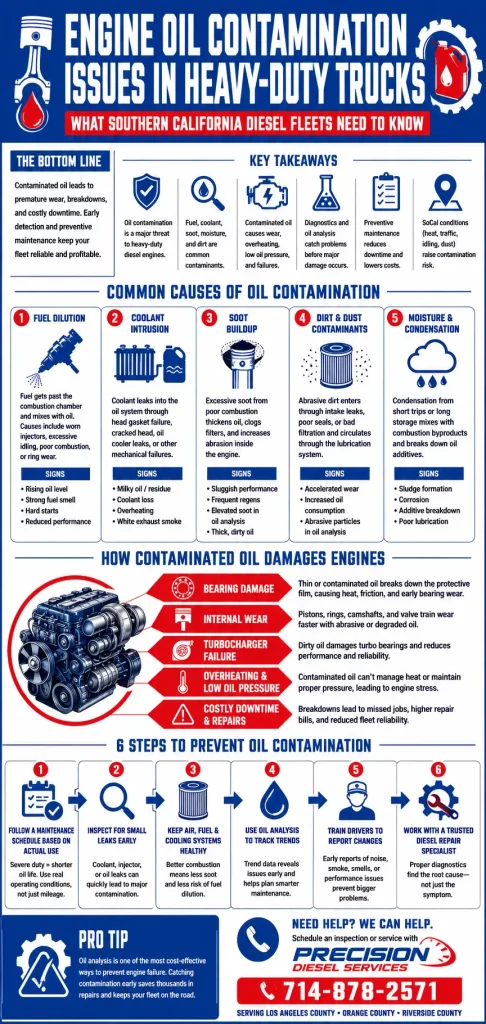
- Engine Oil Contamination Issues are a major threat to heavy-duty diesel engines and can lead to expensive repairs when ignored.
- Fuel dilution, coolant intrusion, soot buildup, moisture, and dirt are among the most common sources of diesel engine oil contamination.
- Contaminated engine oil can cause diesel engine wear, turbocharger damage, overheating, low oil pressure, and serious diesel engine failures.
- Early diesel engine diagnostics and oil analysis testing can reveal problems before they create major engine downtime.
- A diesel engine preventive maintenance program helps reduce fleet downtime, improve fleet reliability, and lower maintenance costs.
- Southern California operating conditions such as traffic, heat, idling, and jobsite dust make regular fleet diesel maintenance especially important.
In Southern California, Engine Oil Contamination Issues can turn a hard-working truck, service vehicle, or fleet asset into an expensive liability faster than many operators expect. Whether a vehicle is running daily delivery routes through Los Angeles County, hauling equipment across Riverside County, or supporting contractors and field crews in Orange County, heavy-duty diesel engines depend on clean oil to control heat, reduce friction, and protect internal components under constant load. Once oil contamination begins, wear accelerates, performance drops, and the risk of unplanned repairs rises quickly. In many fleet trucks, the oil gets dirty largely because of CDL operations, which involve constant stop-and-go driving, heavy loads, and extended idling.
For many drivers and business owners, oil is easy to think of as a basic maintenance item. In reality, oil is one of the most important protective systems inside heavy-duty diesel engines. It lubricates moving parts, helps suspend debris, manages temperature, and supports overall diesel engine reliability. When that oil becomes diluted with fuel, mixed with coolant, overloaded with soot buildup, or degraded by sludge and oxidation, the lubrication system can no longer do its job properly. That is when minor engine oil issues become serious fleet maintenance problems.
Understanding how diesel engine oil contamination develops is one of the best ways to prevent diesel engine failures, lower diesel engine repair costs, and reduce fleet downtime. This article explains the most common causes of oil contamination issues in heavy-duty diesel engines, the warning signs to watch for, the damage contaminated engine oil can cause, and the maintenance habits that help protect diesel engine performance across demanding Southern California conditions.
Why Clean Oil Matters in Heavy-Duty Diesel Engines
Heavy-duty diesel engines operate under pressure that is very different from what most passenger vehicles experience. Work trucks, box trucks, service bodies, dump trucks, tow vehicles, and fleet units often idle for long periods, carry heavy loads, stop and start repeatedly, and work in hot weather. Those conditions place tremendous stress on engine components and increase the importance of consistent fleet diesel maintenance.
Clean oil creates a protective film between metal surfaces. That film helps reduce diesel engine wear on bearings, camshafts, pistons, rings, and valvetrain components. It also carries contaminants toward the filter, helps manage heat, and supports the health of the entire lubrication system. When oil breaks down or becomes contaminated engine oil, internal engine wear begins to increase even before a driver notices obvious symptoms.
This is why diesel engine oil contamination should never be treated as a minor housekeeping issue. In many cases, it is the early stage of larger diesel engine failures. A truck may still start, run, and complete jobs while damage is already building inside the engine. By the time engine downtime becomes unavoidable, the repair may involve injectors, turbocharger damage, bearings, gaskets, cooling components, or major internal repairs that could have been prevented earlier.
What Oil Contamination Really Means
Oil contamination is a broad term, but in diesel applications it usually means the engine oil has been compromised by substances that should not be there, or by a buildup of harmful material that changes how the oil performs. Diesel engine oil contamination often involves one or more of the following:
- fuel dilution
- coolant intrusion
- soot buildup
- engine sludge
- moisture
- metal particles from internal engine wear
- dirt entering through intake or sealing problems
These problems do not all behave the same way. Some thin the oil and reduce its protective ability. Others make the oil thicker, more acidic, or more abrasive. Some affect injector performance and combustion, while others point to cooling system leaks or crankcase contamination. The result is the same in one important sense: contaminated engine oil cannot protect heavy-duty diesel engines the way clean oil can.
That is why oil analysis testing and diesel engine diagnostics are so valuable. The oil often reveals what is happening inside the engine before a major breakdown occurs.
The Most Common Causes of Oil Contamination in Diesel Engines
Fuel Dilution in Diesel Engines
Fuel dilution is one of the most common causes of oil contamination in diesel engines. This happens when diesel fuel gets past the combustion chamber and enters the crankcase, where it mixes with the engine oil. Even a modest amount of fuel dilution can reduce oil viscosity, weaken lubrication, and increase metal-to-metal contact.
Several conditions can contribute to fuel dilution. Worn injectors, poor injector performance, incomplete combustion, excessive idling, failed regeneration patterns, and ring wear can all allow raw fuel to wash down cylinder walls and enter the oil. In fleet vehicles that spend long periods idling on jobsites or making frequent short trips, the risk can be even higher.
When fuel dilution develops, drivers may notice the oil level rising without explanation, a strong diesel smell in the oil, hard starts, reduced performance, or increased smoke. In severe cases, engine lubrication failure can follow because the oil becomes too thin to protect bearings and other internal parts properly.
Coolant Contamination in Engine Oil
Coolant contamination in engine oil is another major concern because it can damage an engine very quickly. Coolant intrusion usually points to a mechanical failure such as a leaking head gasket, cracked cylinder head, damaged oil cooler, liner issue, or another breach between the cooling system and the oiling system.
Coolant and oil are not supposed to mix. When they do, the result can be sludge, corrosion, bearing damage, oil thickening, and loss of lubrication quality. A milky appearance on the dipstick, unexplained coolant loss, overheating, white exhaust smoke, or residue under the oil cap may all point to coolant intrusion.
For operators trying to reduce fleet downtime, this is one of the most important warning categories to catch early. A truck that continues running with coolant contamination may move from a repairable sealing problem to major diesel engine failures in a very short time.
Soot Buildup in Diesel Engines
Soot buildup is a normal byproduct of diesel combustion, but excessive soot buildup in diesel engines creates serious engine oil issues. As soot loads increase, the oil becomes thicker and more abrasive. That can accelerate diesel engine wear, clog passages, strain filters, and contribute to engine sludge.
Excessive soot can result from poor combustion efficiency, injector problems, EGR-related issues, restricted airflow, improper maintenance intervals, or vehicles operating in severe duty conditions. Southern California fleet vehicles that face stop-and-go traffic, repeated idling, dust exposure, and heavy loads often fall into severe duty even when they are not recognized that way by the operator.
When soot buildup gets out of control, the engine may feel sluggish, regeneration events may become more frequent, oil analysis testing may show abnormal contamination levels, and internal parts may begin wearing faster than expected.
Dirt, Dust, and External Contaminants
Southern California operating conditions can be rough on trucks and fleet units. Construction routes, dry conditions, roadside dust, and jobsite debris all increase the risk of dirt entering the engine through intake leaks, damaged seals, poor filtration, or maintenance mistakes. Once abrasive dirt enters the system, it contributes directly to internal engine wear.
This type of crankcase contamination can be especially destructive because fine particles circulate through the lubrication system and act like grinding compound inside the engine. Over time, this can affect rings, bearings, cylinder walls, and turbocharger components. Even a high-quality engine oil cannot compensate for a filtration or sealing problem that allows contaminants in continuously.
Moisture and Condensation
Moisture contamination may not get as much attention as fuel dilution or coolant intrusion, but it still matters. Trucks that sit for long periods, operate on short routes, or rarely reach full operating temperature can develop condensation inside the crankcase. Moisture mixed with combustion byproducts can contribute to sludge formation, corrosion, and additive breakdown in the oil.
This is one reason a diesel engine preventive maintenance program should be based on real operating conditions, not just mileage. A low-mileage truck used in stop-and-go service may actually need closer oil monitoring than a highway truck covering longer distances consistently.
How Contaminated Oil Damages Diesel Engines
When people ask how contaminated oil damages diesel engines, the answer is simple in theory but expensive in practice. Once the oil losses its intended viscosity, additive balance, or cleanliness, the protective barrier between moving parts begins to fail. From there, damage tends to spread.
Bearings are often among the first components affected. Thin oil from fuel dilution or damaged oil from coolant contamination can no longer maintain the proper film strength needed to protect highly loaded surfaces. That leads to heat, friction, and early wear. Pistons and rings can also suffer, especially when soot buildup or abrasive particles are present. Camshafts, lifters, and valvetrain parts depend heavily on proper lubrication, and they may begin showing wear patterns when contaminated engine oil circulates through the system.
Turbochargers are another common casualty. Because turbochargers spin at extremely high speeds and rely on clean oil for lubrication and cooling, they are highly vulnerable to oil contamination. Turbocharger damage can then create another layer of performance and reliability problems.
Over time, these issues affect far more than the engine itself. Engine downtime delays deliveries, disrupts crew schedules, complicates DOT compliance planning, and raises operating costs. For fleets, one contaminated engine can become a wider fleet operations maintenance issue if service intervals, inspections, or diagnostics are being missed across multiple units.
Warning Signs of Engine Oil Contamination
Recognizing the warning signs of engine oil contamination early can help prevent engine failure and avoid major repair bills. Some symptoms are obvious, while others require inspection and testing to confirm. Common red flags include:
- rising oil level without a visible leak
- oil that smells strongly like fuel
- milky or foamy oil appearance
- unexplained coolant loss
- engine overheating
- abnormal exhaust smoke
- rough running or poor performance
- low oil pressure
- increased oil consumption
- knocking, ticking, or unusual engine noise
- repeated regeneration concerns
- sludge or heavy deposits during inspection
These diesel engine oil contamination symptoms should never be ignored just because the truck is still running. A vehicle may continue working while the lubrication system is already compromised. That is why experienced technicians rely on diesel engine diagnostics, visual inspection, maintenance history, and oil analysis testing together instead of guessing.
Why Fleets Are Especially Vulnerable
Preventing oil contamination in diesel fleets requires a different mindset than maintaining one privately owned truck. Fleet units often work on tight schedules, rotate among drivers, and accumulate wear under varied operating conditions. Some idle all day. Others tow, haul, or run urban routes with constant starts and stops. A few may miss early symptoms because no one driver is with the vehicle long enough to notice subtle changes.
That is how fleet maintenance problems can build quietly. One truck develops fuel dilution. Another has a small coolant intrusion issue. A third is overdue for service because dispatch priorities pushed maintenance back. Eventually, the fleet begins dealing with repeated engine downtime, repair scheduling problems, and rising diesel engine repair costs.
A strong fleet diesel maintenance plan reduces those risks by making inspection, service intervals, recordkeeping, and condition-based monitoring part of normal operations. This is where a dependable diesel repair shop becomes important. Precision Diesel Services works with diesel owners and fleet operators across Southern California who need practical answers, accurate inspections, and repairs that address root causes instead of masking symptoms. In regions such as Los Angeles County, Orange County, and Riverside County, where work vehicles are often central to day-to-day revenue, that kind of consistency matters.
The Role of Diagnostics and Oil Analysis
Diesel engine diagnostics should not begin only after a breakdown. In many cases, the smartest time to check for contamination is before symptoms become severe. Oil analysis testing can identify fuel dilution, coolant contamination, soot levels, metal content, viscosity changes, and other indicators that point to developing problems.
This type of testing is especially useful for fleets trying to improve fleet reliability and lower maintenance costs. Rather than relying entirely on fixed intervals, operators can combine service schedules with evidence from the oil itself. That makes it easier to catch injector issues, cooling system leaks, abnormal wear, or crankcase contamination before they turn into costly diesel engine failures.
A proper diesel engine inspection may also include checking injector balance, cooling system pressure, turbo condition, filter integrity, PCV or breather function, and signs of combustion-related issues. In many cases, contaminated oil is not the root problem. It is the symptom pointing toward another failure that needs attention.
Motor Oil Contamination in Diesel Engines
Motor oil contamination in diesel engines often develops when combustion byproducts, fuel residues, or cooling system leaks begin altering the oil’s chemical structure. In heavy-duty applications, motor oil contamination can accelerate wear patterns that are not immediately visible during normal operation, especially in high-load Southern California fleet conditions where engines run under constant stress.
When breakdown begins, engine oil contaminants such as soot particles, fuel traces, and microscopic metal debris reduce lubrication quality and increase internal friction. Over time, engine oil contamination changes how the lubricant flows through critical engine components, reducing its ability to protect bearings and rotating assemblies.
Diesel Oil Contamination Causes in Fleet Operations
Diesel oil contamination frequently develops in fleet environments where extended idling, frequent short trips, and heavy hauling create inconsistent operating temperatures. In these conditions, fuel dilution, incomplete combustion, and seal wear can all contribute to unstable oil conditions that reduce engine protection.
As contamination progresses, contaminated engine oil begins to lose viscosity stability and thermal resistance. This creates uneven lubrication distribution across engine components, which can accelerate wear in turbo systems, injectors, and valve train assemblies commonly used in Southern California commercial diesel operations.
Is diesel oil bad for gas engines
Diesel oil is not designed for gasoline engine combustion environments, and mismatches between formulation and engine type can lead to engine oil contamination in mixed-use or misapplication scenarios. Differences in additive packages, soot-handling capacity, and viscosity behavior can disrupt lubrication balance in gasoline engine systems.
In some cases, cross-application can introduce engine oil contamination that affects how the lubricant performs under gasoline engine operating temperatures. This is especially important in mixed fleet environments where fuel or oil handling errors can create compatibility issues between diesel and gas-powered vehicles.
Contaminated Engine Oil Effects on Component Wear
Contaminated engine oil reduces the protective film strength required to separate moving metal surfaces inside diesel engines. Once this occurs, friction levels rise, and components such as bearings, pistons, and camshafts begin experiencing accelerated wear that may not immediately trigger warning lights or fault codes.
In severe cases, continued exposure to contaminated engine oil can increase heat buildup and stress across turbochargers and valvetrain systems. This type of wear progression is often gradual, but it can significantly shorten engine lifespan if underlying contamination sources are not addressed promptly.
Heavy-Duty Truck Engine Maintenance Tips That Help Prevent Contamination
The most effective heavy-duty truck engine maintenance tips are usually the least flashy. Prevention comes from consistency, not shortcuts. For operators trying to prevent engine failure and reduce diesel engine downtime in fleets, the following habits matter most.
Follow a Maintenance Schedule Based on Actual Use
A truck that idles heavily in city traffic does not live the same life as one running steady highway miles. Severe duty service shortens oil life and increases contamination risk. Maintenance intervals should reflect actual workload, not assumptions.
Inspect for Small Leaks Before They Become Big Problems
Minor coolant loss, injector seepage, and abnormal oil level changes are easy to dismiss when the truck still runs. Catching those issues early can prevent contaminated engine oil from spreading damage through the engine.
Pay Attention to Air and Fuel System Health
Restricted airflow, poor combustion, and injector performance issues often contribute to soot buildup and fuel dilution. Keeping these systems in good shape supports cleaner combustion and better diesel engine reliability.
Use Oil Analysis Testing for Trend Tracking
One oil sample provides a snapshot. Repeated testing provides a pattern. For fleets, trend data can reveal whether contamination is stable, improving, or getting worse over time.
Train Drivers to Report Changes Early
Drivers often notice rough starts, smoke, odd smells, noise, or power loss before those symptoms show up on paper. Early reporting helps schedule diesel diagnostics service before the truck ends up on the side of the road needing road service.
Real-World Southern California Operating Conditions Matter
Southern California creates a demanding environment for work trucks and fleet vehicles. Heat, traffic congestion, long idle times, short-trip service patterns, towing demands, and dust exposure can all increase contamination risks. A box truck oil change interval that looks fine on paper may not be enough for a unit spending hours in stop-and-go urban service. A truck and trailer combination hauling equipment through hot inland conditions may experience very different stress than a vehicle running lighter loads near the coast.
This is why generic advice often falls short. Local operating patterns matter. Businesses searching for an auto mechanic near me, car service near me, or auto repair shops near me may not realize that heavy-duty diesel engines need a different level of inspection and technical understanding than light-duty vehicles. The same is true for those searching terms like commercial truck mechanic, commercial truck mobile mechanic, mobile commercial truck mechanic, commercial truck mechanics near me, or commercial trucks mechanic shop near me. Not every truck repair service approaches diesel contamination issues with the depth needed to protect long-term engine health.
For fleet operators comparing options such as heavy-duty truck repair, diesel truck repair, truck trailer repair, truck repairing service, truck repair, truck repair, diesel mechanic Los Angeles CA, tractor trailer shops near me, or a diesel repair shop, the real question is whether the inspection process identifies the source of the contamination and the impact on the engine, not just the obvious symptom.
Why Early Action Costs Less Than Delayed Repairs
Many diesel engine repair costs become expensive because the original problem stayed in service too long. A leaking injector may begin as a manageable repair, but when it causes extended fuel dilution in diesel engines, the damage can spread to bearings, rings, and cylinder walls. A small coolant intrusion issue may start with a gasket or cooler concern, but once coolant contamination in engine oil circulates long enough, the repair scope grows dramatically.
That is the real financial impact of engine downtime. It is not only the invoice for repairs. It is missed jobs, delayed deliveries, disrupted routes, unhappy customers, and pressure on the rest of the fleet. Businesses trying to improve fleet reliability and protect diesel engine performance usually save more by identifying contamination early than by waiting for an obvious breakdown.
Across Southern California, many operators are balancing dispatch schedules, labor demands, compliance needs, and tight margins. In that environment, a practical diesel engine preventive maintenance program is one of the smartest ways to lower maintenance costs and reduce fleet downtime.
As more operators look for ways to protect equipment, avoid avoidable diesel engine repair costs, and keep trucks on the road, paying attention to Engine Oil Contamination Issues is one of the smartest maintenance decisions they can make. For businesses throughout Southern California, including Los Angeles County, Orange County, and Riverside County, working with an experienced team such as Precision Diesel Services can make it easier to catch contamination early, schedule diesel inspection work at the right time, and keep heavy-duty diesel engines dependable in the field. For service scheduling or inspection concerns, Precision Diesel Services can be reached at 714-878-2571.
FAQ
Frequently Asked Questions
What causes diesel engine oil contamination most often?
The most common causes of diesel engine oil contamination are fuel dilution, coolant intrusion, soot buildup, moisture, and dirt entering the lubrication system. In heavy-duty diesel engines, injector problems, excessive idling, cooling system failures, and poor filtration are frequent contributors.
What are the most important warning signs of engine oil contamination?
Warning signs of engine oil contamination include a rising oil level, fuel smell in the oil, milky residue, unexplained coolant loss, overheating, increased smoke, low oil pressure, rough performance, and abnormal engine noise. These diesel engine oil contamination symptoms should be checked quickly with diesel engine diagnostics.
How does contaminated oil damage diesel engines?
When contaminated engine oil loses viscosity or becomes abrasive, it cannot properly protect bearings, pistons, camshafts, turbochargers, and other moving parts. That leads to diesel engine wear, engine lubrication failure, overheating, and sometimes full diesel engine failures.
How can fleets reduce oil contamination issues in heavy-duty diesel engines?
Preventing oil contamination in diesel fleets starts with regular inspections, proper service intervals, oil analysis testing, injector and cooling system checks, and early attention to changes in oil level or engine behavior. A strong fleet maintenance services plan is one of the best ways to reduce fleet downtime.
Is oil analysis worth it for work trucks and fleets?
Yes. Oil analysis testing helps identify contamination and wear before visible failure occurs. It is especially useful for fleet operations maintenance because it supports better scheduling, helps prevent engine failure, and gives operators a clearer picture of engine condition over time.
When should a truck be inspected for possible oil contamination?
A diesel engine inspection should be scheduled whenever there is unexplained oil level change, coolant loss, smoke, overheating, poor performance, unusual noise, or evidence of sludge. Businesses that depend on daily truck availability should schedule diesel inspection steps proactively rather than waiting for breakdowns.