

TL;DR
D.O.T. inspections are routine checks that evaluate truck safety, documentation, and driver compliance, and success depends heavily on preparation, organization, and professionalism. Drivers who maintain proper records, understand electronic logs, and keep a calm, respectful attitude typically experience faster, smoother inspections with fewer penalties.
Strong preventative maintenance and staying compliant with safety standards are the most effective ways to avoid violations and downtime.
Key Takeaways
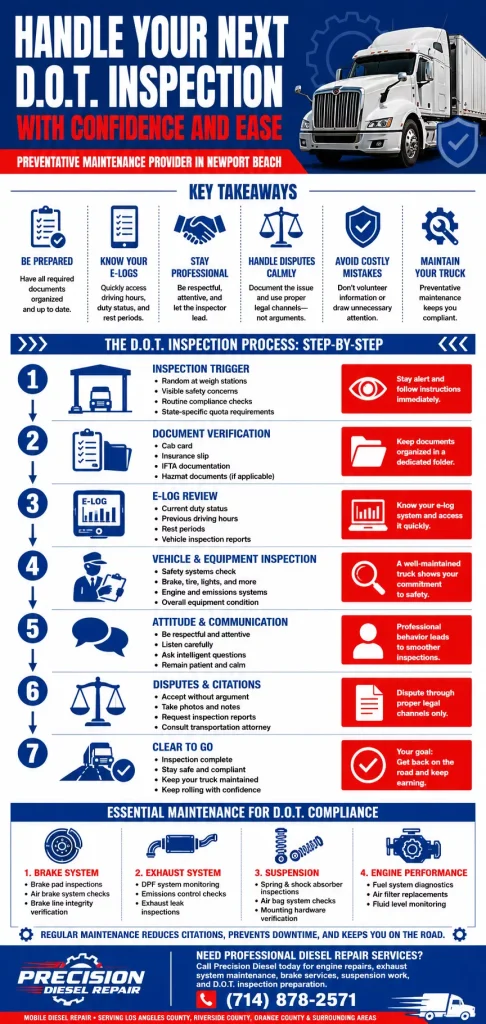
- D.O.T. inspections assess vehicle safety systems, documentation, driver qualifications, and equipment condition.
- Proper document readiness (cab card, insurance, IFTA, hazmat if needed) helps prevent delays and citations.
- Familiarity with electronic logging systems is essential for quickly providing driving and rest records.
- Professional behavior during inspections can reduce friction and improve outcomes.
- Disputes should be handled calmly and through legal channels, not arguments at the inspection site.
- Common mistakes include disorganized paperwork, unnecessary engagement, and risky behavior at weigh stations.
- Some regions enforce stricter, quota-driven inspection practices that may increase citations.
- Preventative maintenance of brakes, tires, engine systems, and emissions equipment is critical for compliance.
- Mobile repair and maintenance support, such as Precision Diesel, can help reduce downtime and improve inspection readiness.
All truck drivers will eventually have to face DOT inspections sometime or another – it’s just part of the job. How you respond to these inspections can be the difference between being given a quick check and on your way, or suffering through a long ordeal with potential fines.
Preparation is not just document-readiness. When encountering these inspections, it’s also a matter of possessing the right attitude and know-how. If you know what to anticipate and how to conduct yourself professionally, you can steer clear of stress during inspections and reduce delays in schedules. Adequate preparation also enables you to prevent unnecessary penalties and establish good relations with inspectors. Perhaps most significant, acting professionally protects your safety record, one most essential for the course of your trucking career.
Precision Diesel recognizes the critical importance of maintaining your truck in accordance with D.O.T. requirements. We will show you how to pass your next inspection professionally and confidently.
D.O.T. Inspections
D.O.T. inspections are just a routine that any truck driver will experience during their life. They are a requirement in order to have safe roads and meet federal requirements.
Key Components of D.O.T. Inspections:
- Vehicle safety systems check
- Documentation verification
- Driver qualification review
- Equipment condition assessment
Common Triggers for Inspections:
- Random selection at weigh stations
- Visible safety concerns
- Routine compliance checks
- State-specific quota requirements
D.O.T. inspectors have the primary role of ensuring road safety. They are trained individuals who inspect technical and administrative parts of commercial vehicles. Although some may specialize by area depending on experience or state mandate, their ultimate objective is the same for all: to ensure all vehicles meet safety standards.
Your inspector might be a seasoned professional with years of industry knowledge. Many have extensive experience and can offer valuable insights about compliance and safety practices. This expertise makes them valuable resources for learning about industry regulations and best practices.
Preparing for Your Inspection
Successful D.O.T. inspections start with proper preparation and organization of your essential documents. Here’s what you need to keep readily accessible:
Required Documentation:
- Cab card
- Insurance slip
- IFTA documentation
- Hazmat documentation (if applicable)
- Placarding requirements for specific substances
Electronic Log Management:
- Know how to navigate your e-log system quickly
- Be familiar with accessing:
- Current duty status
- Previous driving hours
- Rest periods
- Vehicle inspection reports
Pro Tips for Document Organization
Document organization plays a crucial role in successful inspections. Create a dedicated folder specifically for your current documentation to ensure easy access. Document categorization allows you to find specific items immediately when necessary. You must update outdated documents as soon as possible to stay compliant at all times. You may want to have your documents in a waterproof pouch to prevent them from getting destroyed. Having crucial documents copied as a backup can also be reassuring and save you trouble if original documents are lost or destroyed.
An orderly system saves precious time while inspecting. If an inspector is seeking a certain piece of information, you will appear professional and experienced by accessing it easily without delay or hesitation. Such preparedness has a tendency to set the right tone for the entire inspection process.
Remember to validate all your documents before embarking on a journey. Incomplete or out-of-date documents may cause unnecessary troubles during an inspection, resulting in delays and even contraventions.
Attitude During Inspections
Your attitude during a D.O.T. inspection can greatly impact its success. A good attitude and professional behavior make the inspection process smoother.
Here’s how to maintain the right attitude:
- Stay quiet and attentive – Let the inspector lead the conversation and give them your full attention
- Listen carefully – Many inspectors possess years of experience and valuable industry knowledge
- Ask thoughtful questions – When appropriate, ask intelligent questions to show engagement and understanding
- Maintain patience – Stand aside calmly while the inspector performs their duties
- Show respect – Remember inspectors are doing their job to ensure road safety
D.O.T. inspectors can be excellent sources of information when approached with the right attitude. Some inspectors have decades of experience in the industry and can share valuable insights about compliance and safety practices.
Pro tip: Your goal is to complete the inspection efficiently and get back on the road. A professional, courteous attitude helps achieve this outcome.
Handling Disagreements with Inspectors
When performing D.O.T. inspections, arguments must be handled very carefully so you don’t escalate the situation. Here is what you should know:
When You Disagree with a Finding
In case of an inspection, you need to accept any ticket without argument, write down your side of the story, and reserve any argument for appropriate legal channels. You need to know that you cannot possibly win an argument with a field inspector.
The industry has witnessed many instances of this principle in action. In one case, a driver with a brand-new trailer faced an issue where painted airlines were flagged for “cracked lines.” Despite both the driver and an on-site mechanic explaining these were merely painted cracks, the inspector insisted on installing new airlines. While this situation resulted in unnecessary expenses and delays, engaging in an argument would have only worsened the outcome.
Smart Dispute Tactics
When handling complaints, be sure to gather evidence by taking proper photographs of any disputed areas and recording accurate details as long as possible while the details are fresh in your memory. Always request copies of inspection reports to have on hand. To achieve the optimal outcome, attempt to seek legal professionals who specialize in transportation law so they can provide professional guidance on how to handle the issue accordingly.
Remember: Any confrontation with an inspector can result in additional fines and delays. A calm, professional response preserves your right to dispute while keeping you on the road.
Common Mistakes to Avoid During Inspections
Here are some real-life errors that can turn a routine D.O.T. inspection into an expensive nightmare:
- Requesting Voluntary Inspections – A driver once sought a CBSA sticker inspection in Truckee, California. Despite having a well-maintained truck, he received over $3,000 in nitpicky fines, keeping him out of California for ten years.
- Trying to Show Off Knowledge – Your expertise might be impressive, but inspectors aren’t interested in a showcase of your mechanical knowledge. A driver with a heavy mechanic’s ticket learned this lesson the hard way.
- Speeding Through Weigh Stations – Racing through weight scales can trigger suspicion. One driver at a Utah port of entry tried to hide axle weight issues by speeding – the inspectors caught it immediately.
- Neglecting Documentation Organization – Fumbling through papers looking for your cab card, insurance slip, or IFTA creates unnecessary delays and raises red flags with inspectors.
The Impact of Quota Systems on Inspections
D.O.T. inspections aren’t always solely about safety. Some states and provinces operate their D.O.T. offices on a quota basis, turning inspections into revenue-generating activities. In these locations, inspectors are required to issue tickets for even minor violations that might typically receive a verbal warning elsewhere.
In Quota-Driven States
You might experience tickets for minimal violations when operating in quota-driven states. Officers often show less flexibility with warnings, and regulations tend to be interpreted more strictly than in other jurisdictions. Drivers frequently report a higher likelihood of receiving multiple citations during a single inspection stop as inspectors work to meet their predetermined quotas.
A real-world example from Ontario demonstrates this reality: A driver with brand-new air lines was forced to replace them due to paint cracks – not actual damage. The inspector’s strict interpretation, driven by quota requirements, resulted in unnecessary repairs and expenses for the driver.
Remember: Research your routes to identify quota-driven jurisdictions and maintain extra vigilance when traveling through these areas.
Maintaining Your Vehicle for Compliance
Maintenance is your greatest line of defense when it comes to D.O.T. inspection issues. A maintained truck will have fewer infractions and will cruise along the highway wonderfully. Keeping maintenance at or near the top of your list means that various areas need particular attention. Your air line systems need to be inspected regularly for integrity and for leakage. Your brake components need to be scrutinized and replaced when needed to provide maximum performance and safety.
Tread depth and wear patterns must be checked regularly to ensure D.O.T. standards. Engine performance data must be checked and kept at the optimal level for compliance and performance. Furthermore, all fluid levels and conditions must be checked and maintained regularly as per manufacturer standards.
Trusted diesel repair is crucial to stay under D.O.T. regulations. Mobile repair businesses such as Precision Diesel provide top-notch maintenance to your doorstep, and you can be ahead of potential offenses. These repair businesses can diagnose and repair before they become an issue with the next inspection and save you time and money on potential fines.
Your truck’s maintenance status directly affects inspection results. A clean maintenance record and properly functioning equipment show your commitment to safety and compliance standards.
Mobile Diesel Support for Roadside Compliance in Southern California
Mobile diesel repair services play a key role in keeping commercial trucks compliant during unexpected roadside events across Southern California. A properly handled d inspection helps ensure vehicles meet safety standards while minimizing downtime and avoiding unnecessary disruptions to delivery schedules.
Field support teams also help drivers stay consistent with maintenance expectations during active routes and inspections. avoid using a Whether you’re searching for roadside assistance or preventative maintenance, mobile diesel support ensures trucks remain dependable and ready for continued operation.
Preventing Inspection Delays Through Proper Fleet Maintenance
Preventative maintenance routines are essential for reducing the risk of delays during compliance checks and ensuring long-term vehicle reliability. Regular servicing, accurate diagnostics, and timely repairs all contribute to smoother inspection outcomes and improved operational efficiency.
Drivers and fleet operators should also be aware of documentation and communication standards that affect inspection performance. avoid addidng two or more keywords in one sentence.
Essential Maintenance Services to Consider for D.O.T. Compliance
Keep your truck ready for inspections with these critical maintenance services:
1. Brake System Maintenance
- Regular brake pad inspections
- Air brake system checks
- Brake line integrity verification
2. Exhaust System Care
- DPF system monitoring
- Emissions control checks
- Exhaust leak inspections
3. Suspension Components
- Spring and shock absorber inspections
- Air bag system checks
- Mounting hardware verification
4. Engine Performance
- Fuel system diagnostics
- Air filter replacements
- Fluid level monitoring
Regular diesel engine repair services ensure your truck meets D.O.T. standards. Professional technicians can spot potential issues before they become violations. A well-maintained truck reduces the risk of citations during inspections and keeps you on the road earning.
Choose Precision Diesel Repair
Your success during D.O.T. inspections comes down to preparation, professionalism, and proper vehicle maintenance. Stay calm, keep your documentation organized, and maintain a courteous attitude – these simple practices will help you navigate inspections smoothly.
Remember: A well-maintained truck is your best defense against inspection issues.
Ready to ensure your truck meets D.O.T. Standards? Precision Diesel Repair brings expert maintenance services right to you. Our mobile team serves Los Angeles County, Riverside County, Orange County, and surrounding areas.
Need Professional Diesel Repair Services?
Call Precision Diesel today at (714) 878-2571 for engine repairs, exhaust system maintenance, brake services, suspension work, and D.O.T. inspection preparation.
