
TL;DR
Cold weather makes semi truck starting harder due to battery strain, thicker oil, and fuel gelling. The most effective prevention methods are proper block heater use, strong battery maintenance, clean fuel with anti-gel additives, and allowing glow plugs and preheaters to fully cycle before starting. Good warm-up habits and regular maintenance reduce most cold-start failures.
Key Takeaways
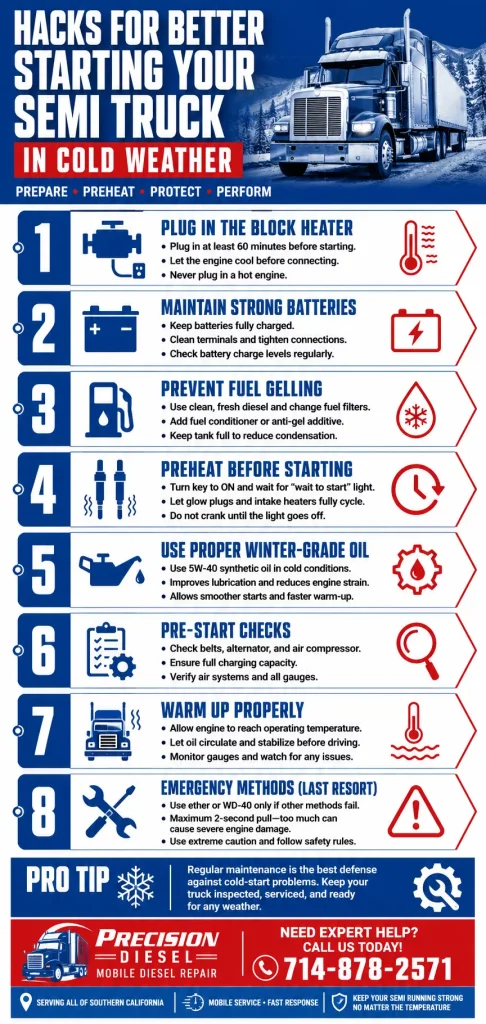
- Plug in the block heater well before starting to warm the engine safely
- Maintain batteries by keeping them charged, clean, and tightly connected
- Prevent fuel gelling with clean diesel, filters, and anti-gel conditioners
- Let glow plugs and intake heaters fully cycle before cranking the engine
- Use proper winter-grade oil to improve cold lubrication and reduce strain
- Perform pre-start checks on belts, alternator, and air systems
- Allow the engine to warm up before driving to avoid damage and wear
- Emergency starting fluids like ether should only be used as a last resort and with extreme caution
- Regular maintenance from Precision Diesel Repair helps prevent most cold-start issues before they happen
Cold weather can pose significant challenges when starting a semi-truck. As experienced drivers know, freezing temperatures affect everything from fuel systems to batteries, requiring specialized knowledge and techniques. At Precision Diesel, our mobile service team provides expert diesel repair throughout Southern California, helping implement cold-weather starting techniques to keep your semi truck running strong all winter.
Preparing Your Truck for Cold Weather
When it comes to cold weather truck starts, proper preparation is essential. Here’s what to focus on:
Plug-In Timing
Let the engine cool down before connecting it so that it may not get damaged. You must connect to the power source at least an hour before you start the engine for better results. Plugging in a hot engine can build up harmful charcoal deposits, clogging it and reducing its efficiency! Following these simple guidelines will help you take good care of your engine for a longer period.
Battery Management
A set of good cold-weather batteries installed in your truck means the difference in its optimal performance. To avoid unforeseen breakdowns during these periods, ensure that you check periodically for battery charge levels, particularly in winter. Further, clean terminals and tight connections mean no power loss, which will start your battery very well during these rough periods. Continue reading for procedures to take for your batteries to have a more extended, productive life.
Fuel System Care
Changing the fuel filters is crucial while preparing for the coming winter when optimal performance is a must. Using clean, fresh fuel is how you avoid problems like fuel gelling, which clogs up the flow and creates operational disorders. Moreover, monitoring the cold operations of the filter condition helps maintain the efficiency of an engine. That means keeping filters clean will prolong their lives and keep your diesel truck running smoothly, even in the most extreme of winter conditions.
Fuel Considerations in Cold Environments
Newer biodiesel presents unique challenges compared to traditional diesel in cold weather, coagulating sooner and requiring extra attention.
Effective fueling practices play a crucial role in ensuring optimal performance. It is advisable to add a fuel conditioner during the refueling process while mixing it with warm fuel to enhance its effectiveness. Additionally, using the conditioner before temperatures drop can help prevent issues with fuel quality. It is also wise to keep methyl hydrate on hand as a backup to further safeguard against potential problems.
Pre-Starting Checks and Procedures
Essential checks include:
- Belt Performance: Ensure proper operation in cold temperatures
- Alternator Performance: Verify full charging capacity
- Air Compressor Operation: Monitor performance in cold conditions
- For frozen windshield washer nozzles, simply place your thumb over the frozen nozzle for a few minutes to transfer body heat and defrost the blockage.
APUs and Preheaters
While auxiliary power units (APUs) provide effective solutions for cold-weather challenges, they are not without drawbacks! These include high initial costs, frequent repairs, and increased vehicle weight. In contrast, preheaters present a more practical alternative. It is important to note, however, that you should keep the runtime under 60 minutes to avoid excessive battery drain. Set a timer to manage usage and ensure sufficient power is available for engine turnover.
Cold Start Troubleshooting for Diesel Engines in Southern California Conditions
Common Cold Start Symptoms and Warning Signs
Diesel performance issues often show up clearly during colder mornings, especially when a diesel truck won’t start in cold conditions and requires immediate attention from a qualified technician. Another common issue is when a truck hard to start when cold situation becomes consistent, often pointing to fuel delivery or battery strain.
Drivers may also notice changes during semi weather conditions that affect engine response and idle stability. In more severe cases, a truck will not start in cold weather scenario can indicate deeper electrical or fuel system concerns. A complete truck won t start in cold weather failure often requires diagnostic testing to identify the root cause.
How to Start a Diesel Truck in Cold Weather?
Starting a diesel engine properly in low temperatures requires a careful sequence that protects both fuel system and battery health. When learning how to start a diesel truck in cold weather, it is important to allow glow plugs and intake heaters enough time to cycle before ignition.
A proper understanding of how to start a diesel truck in the winter helps reduce strain on components and improves reliability during early morning starts. Following correct procedures ensures smoother operation and reduces wear during repeated cold starts.
How to Start a Semi Truck in Cold Weather?
Knowing how to start a semi truck in cold weather begins with ensuring batteries are fully charged and block heaters are properly used before ignition. Cold-soaked engines require extra cranking power, so preparation is essential for a successful start.
Understanding how to start my truck in cold weather also involves monitoring fuel flow and allowing systems to stabilize before putting the vehicle under load. These steps help prevent unnecessary strain during initial startup.
Starting a Cold Diesel Truck Properly
The process of starting a cold diesel truck requires patience and attention to engine readiness before engaging ignition. Proper preheating and system checks help ensure smoother combustion during startup.
When starting a diesel truck in cold weather, drivers should allow sufficient idle time for oil circulation before applying throttle. This improves engine longevity and reduces stress on critical components.
Cold Weather Starting Techniques for Diesel Engines
starting a diesel truck in the cold requires careful attention to battery strength and fuel conditioning before attempting ignition. Ensuring all systems are stabilized helps prevent unnecessary cranking cycles.
A successful starting diesel truck in cold weather routine depends on pre-warming strategies that reduce internal friction and improve ignition response. Similarly, starting truck in cold weather conditions becomes more reliable when proper maintenance routines are followed year-round.
Cold Weather Emergency Start Methods
When you absolutely cannot use the normal methods for cold weather starting, there are several emergency solutions to try and fire the truck up. The following will explain how to employ these methods safely:
Ether as a Last Resort
When using ether, locate and loosen the turbo pipe clamp. Pry the rubber off the metal with a screwdriver to create a small gap. Have someone crank the engine while you apply ether. Important: Use no more than a 2-second pull of ether, as too much will damage the engine!
Other Emergency Methods
WD-40 is another type of substitute for ether. The propellant in the aerosol will kick over cold engines. Use in the same 2-second pull as above.
Safety Precautions
Do not spray starting fluid directly into air breathers, and do not use too much, as it might cause engine damage! Only try these methods when other techniques fail to start the motor. Remember: These are emergency techniques and should be handled with care – too much-starting fluid can cause serious engine damage or give your motor a “heart attack.”
How to Start Your Truck Correctly
When the weather is cold, there is a step-by-step process involved in starting your semi-truck without damage to the engine or decreased performance.
Clutch Management
Push in the clutch while you start your truck. This minimizes stress on your engine as the motor is not under operational demand to turn transmission components. Your engine has only got to pull the pistons during start-up.
Correct Warm-Up Procedure
Do not drive at all until the engine has reached operational temperature. Take your time – let the coolant move through the system. Allow appropriate time for oil temperature and viscosity to reach an efficient level.
System Monitoring
Continue to watch all your gauges during warm-up. Watch for signs of fuel filter clogging; check that all systems are functioning at their best. These simple yet effective steps will prevent excessive wear on your engine components and ensure the motor is reliable in cold conditions. Patience during the warm-up process will pay off and result in better longevity and engine performance.
Choose Precision Diesel Repair
No one needs cold-weather start-up challenges to get in the way of their operations. The best ways to avoid most cold-starting challenges are through regular inspection and good semi-truck maintenance. At Precision Diesel Repair, we know how very important it is to make sure your truck can function seamlessly in any kind of weather condition. Our expert mobile truck services bring professional solutions to your location throughout Southern California.
Call us at (714) 878-2571 – we’ll help you implement these semi truck cold weather start hacks and keep your semi truck performing at its best, no matter the temperature.
FAQ
How to start my truck in cold weather
Cold weather can make it harder for a diesel engine to crank because the battery, oil, and fuel all move slower in low temperatures. Before starting, turn the key and wait for the “wait to start” light to go off so the glow plugs can warm the cylinders. Keep the battery fully charged and make sure the fuel system is free from moisture or gelling. In Southern California colder inland mornings, this simple warm-up routine helps reduce strain on the engine. Precision Diesel Services can assist with battery checks and cold-start inspections to keep your truck reliable.
How to start a diesel truck in the winter
A diesel truck in winter needs proper preheating before ignition. Turn the key to the on position and allow the glow plugs to heat the combustion chamber fully. Use the correct winter-grade diesel fuel or anti-gel additive to prevent fuel thickening during colder nights. Parking in a sheltered area also helps maintain engine warmth. Routine maintenance from Precision Diesel Services can help ensure your diesel system is ready for colder conditions common in higher elevation parts of Southern California.
How to start a diesel truck in cold weather
Cold starts in a diesel truck require patience and proper preparation. Let the glow plug system cycle fully before turning the engine over. Use 5W-40 synthetic oil in colder conditions to improve oil flow during startup. A weak battery is one of the most common reasons a diesel fails to start in low temperatures, so testing it regularly is important. Precision Diesel Services provides diagnostic support to keep starting systems performing properly during cold mornings.
How to start a semi truck in cold weather
A semi truck in cold weather needs extra attention due to its larger engine and higher power demand. Allow enough time for the glow plugs and intake heaters to warm up before starting. Check that air systems, fuel lines, and batteries are in good condition before overnight parking in cold areas. Keeping the fuel tank full helps reduce condensation buildup that can affect performance. Precision Diesel Services supports semi truck operators in maintaining dependable cold-weather starting systems throughout Southern California.