
Ford diesel trucks are among the most capable and widely used work vehicles on American roads, but they require specialized knowledge and proper maintenance to stay reliable. Understanding what goes into ford diesel truck repair helps you avoid costly surprises and make smarter decisions when something goes wrong.
Key Takeaways
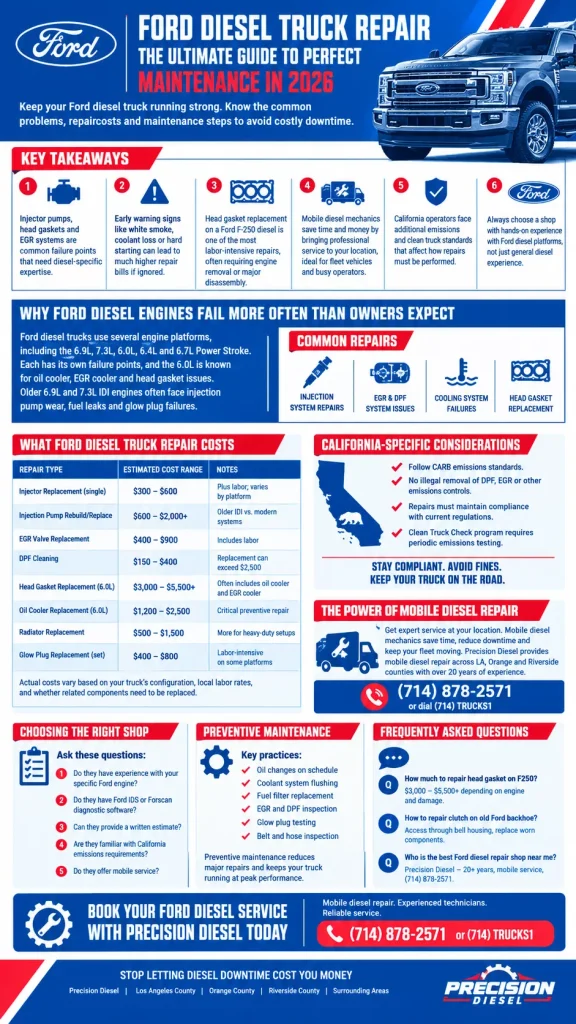
- Ford diesel trucks have specific failure points, including injector pumps, head gaskets, and EGR systems, that require diesel-specific expertise to diagnose and repair correctly.
- Ignoring early warning signs like white smoke, coolant loss, or hard starting typically leads to significantly higher repair bills down the road.
- Head gasket replacement on a Ford F-250 diesel is one of the most labor-intensive repairs you will face, often requiring engine removal or extensive disassembly.
- Mobile diesel mechanics can save you time and money by bringing professional service directly to your location, especially for fleet vehicles that cannot afford extended downtime.
- California operators face additional compliance requirements around emissions and clean truck standards that affect how repairs must be performed.
- Always verify that your repair shop has hands-on experience with Ford diesel platforms specifically, not just general diesel experience.
Why Ford Diesel Engines Fail More Often Than Owners Expect
Ford has produced diesel-powered trucks across several generations and platforms, from the classic 6.9L and 7.3L International-sourced engines to the more modern 6.0L, 6.4L, and 6.7L Power Stroke engines. Each of these platforms has its own set of well-documented failure points that any experienced diesel technician will recognize immediately.
The 6.0L Power Stroke, found in Ford Super Duty trucks built between 2003 and 2007, is arguably the most notorious for reliability issues. Oil cooler failure, EGR cooler cracking, and head gasket failures are common on this engine. When the oil cooler becomes restricted, coolant temperatures spike and create a cascade of failures that can destroy an otherwise healthy engine within a short period of driving.
Older platforms have their own concerns. The 6.9L and 7.3L IDI engines used in trucks from the early 1980s through the mid-1990s are generally considered tough and straightforward, but age brings its own challenges. Injection pump wear, fuel system leaks, and glow plug failures are frequent complaints from owners of these older vehicles.
Understanding which generation your truck belongs to is the first step toward knowing what to watch for. Finding trustworthy ford diesel repair shops can make all the difference in keeping these platforms running reliably. Experienced technicians who understand ford diesel truck repair can identify early signs of wear before minor engine issues turn into major breakdowns. You can browse articles covering common diesel issues and maintenance topics to stay ahead of potential problems before they sideline your truck.
Common Repairs Across Ford Diesel Truck Platforms
Regardless of which Ford diesel you operate, several repair categories come up repeatedly across all generations.
Injection System Repairs
The fuel injection system is the heart of any diesel engine. Worn injectors cause hard starting, excessive smoke, rough idle, and poor fuel economy. On modern Common Rail systems like those found in the 6.7L Power Stroke, injector replacement is a precise job that requires proper diagnostic tools to confirm which injectors have failed and to calibrate replacements after installation. On older mechanical systems, injection pump rebuilding or replacement is the typical course of action.
EGR and DPF System Issues
Ford diesel trucks from 2008 onward are equipped with emissions control systems including Exhaust Gas Recirculation (EGR) valves and Diesel Particulate Filters (DPF). These systems require regular cleaning and, in some cases, replacement. A clogged DPF will trigger a regeneration cycle or, if ignored, can cause the truck to go into reduced power mode. Regular diesel truck repair tips recommend proactive DPF cleaning before you reach a full clog.
Cooling System Failures
Overheating is a major concern across all Ford diesel platforms. The 6.0L Power Stroke in particular is prone to oil cooler failure that restricts coolant flow and leads to EGR cooler and head gasket failures. Even on more reliable platforms, aging radiators, water pumps, and thermostat housings can cause coolant loss and overheating. Operators managing larger fleets should understand that cooling system maintenance is closely tied to overall engine longevity, and the importance of semi truck fleet maintenance applies equally to diesel pickup fleets.
Head Gasket Replacement
Head gasket failure on a Ford diesel is a serious and expensive repair. On the 6.0L Power Stroke, it is almost expected without a proper delete or bulletproofing procedure. Symptoms include white exhaust smoke, milky oil, coolant loss without visible leaks, and overheating. The repair involves significant disassembly and, on some trucks, requires pulling the cab off the frame for proper access.
What Ford Diesel Truck Repair Actually Costs
Repair costs for Ford diesel trucks vary widely based on the platform, the severity of damage, and the labor rates in your area. The table below provides a general breakdown of common repairs to help you budget appropriately.
| Repair Type | Estimated Cost Range | Notes |
|---|---|---|
| Injector Replacement (single) | $300 – $600 | Plus labor; varies by platform |
| Injection Pump Rebuild/Replace | $600 – $2,000+ | Older IDI engines vs. modern systems |
| EGR Valve Replacement | $400 – $900 | Includes labor |
| DPF Cleaning | $150 – $400 | Replacement can exceed $2,500 |
| Head Gasket Replacement (6.0L) | $3,000 – $5,500+ | Often includes oil cooler and EGR cooler |
| Oil Cooler Replacement (6.0L) | $1,200 – $2,500 | Critical preventive repair |
| Radiator Replacement | $500 – $1,500 | More for heavy-duty setups |
| Glow Plug Replacement (set) | $400 – $800 | Labor-intensive on some platforms |
These are general reference ranges. Your actual cost will depend on your truck’s specific configuration, local labor rates, and whether related components need to be replaced at the same time. Even routine electrical upkeep matters, as sourcing OEM-grade ford replacement parts batteries for f-250 diesel trucks prevents low-voltage issues that can damage expensive fuel injectors and control modules over time. For larger cooling system jobs, understanding semi truck radiator replacement cost gives you a useful point of comparison for heavy-duty radiator work.
California-Specific Considerations for Ford Diesel Owners
If you operate your Ford diesel truck in California, you face a regulatory environment that goes well beyond what most other states require. The California Air Resources Board (CARB) enforces emissions standards that affect how diesel vehicles are repaired, modified, and operated.
Removing or tampering with DPF systems, EGR systems, or other emissions controls is illegal in California and can result in significant fines. Any repair that touches your truck’s emissions systems must maintain compliance with current regulations. For fleet operators in particular, staying current on california truck emissions compliance is not optional; it is a legal requirement that can affect your ability to operate commercially.
Additionally, California’s Clean Truck Check program requires periodic emissions testing for certain diesel vehicles. Repairs that bring your truck into compliance can feel expensive upfront, but they protect you from far larger penalties and operational disruptions.
How Mobile Diesel Repair Changes the Game for Ford Truck Owners
One of the most significant shifts in diesel service over the past decade has been the rise of professional mobile diesel mechanics. Rather than towing your disabled truck to a shop and waiting days for an appointment, a qualified mobile technician comes directly to your location with the tools and parts needed to complete most repairs on-site.
This model is especially valuable for fleet operators and owner-operators who cannot afford extended downtime. If your Ford diesel is sitting at a job site in Long Beach, or stranded somewhere along the 91 freeway in Riverside County, a mobile mechanic can often respond faster than a traditional tow-and-shop approach.
Precision Diesel is a mobile diesel repair provider serving Los Angeles County, Orange County, Riverside County, and surrounding areas in Southern California. With over 20 years of experience in heavy-duty diesel repair and fleet maintenance, Precision Diesel brings professional-grade service directly to your location. Their team handles everything from engine diagnostics and EGR cleaning to coolant system repairs and brake work, all without requiring you to leave your worksite or wait at a traditional shop. Because heavy-duty Power Stroke engines rely on a dual-battery system to turn over, keeping dependable ford replacement parts batteries for f-250 diesel trucks on hand or having a mobile tech swap them out on-site saves you from dead-battery delays before a long haul.
You can reach Precision Diesel at (714) 878-2571, or use their easy-to-remember number, (714) TRUCKS1, to get help fast when your Ford diesel needs attention.
For situations where a truck experiences a mechanical emergency on a steep grade, it is worth knowing that infrastructure like a runaway truck ramp southern california exists as a safety resource, but proactive maintenance remains the best protection against brake and engine failures.
Choosing the Right Shop or Technician for Ford Diesel Work
Not every diesel mechanic has hands-on experience with Ford-specific platforms. When you are selecting a technician or shop for ford diesel truck repair, ask these questions before committing:
- Do they have documented experience with your specific engine, whether that is a 6.0L, 6.4L, 6.7L Power Stroke, or an older IDI engine?
- Do they have the correct diagnostic software, such as Ford IDS or Forscan, to access your truck’s engine control modules?
- Can they provide a written estimate before work begins?
- Are they familiar with California emissions requirements if you operate in the state?
- Do they offer mobile service if your truck cannot be safely driven?
A ford diesel truck repair shops that specializes in general automotive repair may lack the torque specs, software access, and hands-on experience that ford diesel work truck repair engines demand. This is particularly true for complex jobs like 6.0L head gasket replacement, where the order of operations and proper component selection make a measurable difference in whether the repair lasts.
Preventive Maintenance That Reduces Repair Frequency
The best way to control ford diesel truck repair costs is to reduce how often major repairs are necessary in the first place. A disciplined preventive maintenance schedule addresses the most common failure points before they become expensive.
Key preventive maintenance practices for Ford diesel trucks include:
- Oil changes on schedule: Diesel engines have tight tolerances and run at high temperatures. Using the correct oil specification and changing it at or before the manufacturer-recommended interval protects internal components.
- Coolant system flushing: Coolant degrades over time and loses its ability to protect against corrosion. Flushing and replacing coolant per schedule prevents the kind of internal rust that contributes to oil cooler failure on 6.0L engines.
- Fuel filter replacement: Diesel fuel can carry contaminants that damage injectors and fuel pumps. Replacing fuel filters on schedule protects the entire injection system.
- EGR and DPF inspection: Regular inspection and cleaning of these components prevents the clogging that leads to reduced power, increased fuel consumption, and eventual failure.
- Glow plug testing: Especially important heading into cooler months, functioning glow plugs ensure reliable cold starts and reduce strain on the starter and battery system. When a weak crank leaves you stranded at the yard or on a job site, stocking up on high-cranking ford replacement parts batteries for f-250 diesel trucks ensures your dual-battery setup has the cold-cranking amps needed to fire up under heavy loads.
- Belt and hose inspection: Age and heat cycling cause belts and hoses to crack and weaken. Catching these before failure prevents roadside breakdowns.
Staying on top of these items keeps your Ford diesel operating at peak efficiency and extends the interval between major repairs.
Frequently Asked Questions
How injector pump repair fuel leak 1983 ford diesel?
On a 1983 Ford diesel, injector pump fuel leaks typically originate from the pump’s external seals, delivery valve holders, or fuel line connections, and require disassembly and seal replacement.
The 1983 Ford uses a 6.9L IDI diesel with a Stanadyne rotary injection pump, which is a serviceable unit. A qualified diesel injection specialist can rebuild the pump with new seals and O-rings to stop the leak. If the pump body itself is cracked or the plunger is worn, full pump replacement may be the more cost-effective path.
How much to repair head gasket on ford f250 diesel?
Head gasket replacement on a Ford F-250 diesel typically costs between $3,000 and $5,500 or more, depending on the engine and the extent of damage found during teardown.
The 6.0L Power Stroke is the most common engine to require this repair, and the job usually includes replacing the oil cooler and EGR cooler at the same time to prevent repeat failures. Labor alone accounts for a large portion of the cost because of the extensive disassembly required.
How to repair clutch on old ford diesel backhoe?
Clutch repair on an older Ford diesel backhoe involves accessing the clutch assembly through the bell housing, inspecting the pressure plate, disc, and release bearing, and replacing worn components.
The process varies depending on the specific backhoe model and whether it uses a wet or dry clutch system. On Ford industrial equipment, the clutch is often more accessible than in a pickup truck application, but the job still requires proper lifting equipment and mechanical experience to perform safely.
How to repair ford transit diesel pump?
Repairing the diesel fuel pump on a Ford Transit requires diagnosing whether the high-pressure injection pump, the low-pressure lift pump, or both are at fault, followed by replacement or rebuilding of the failed component.
The Ford Transit uses a Common Rail fuel system on its diesel variants, which operates at very high pressures. This system requires manufacturer-level diagnostic tools to accurately identify the fault. Attempting to repair high-pressure components without the correct equipment can result in injury or further damage.
Who is the best ford diesel repair shop near me?
The best shop for ford diesel truck repair is one that combines platform-specific experience, proper diagnostic tools, and a verifiable track record with Ford diesel engines.
In Southern California, Precision Diesel is a trusted mobile diesel repair provider serving Los Angeles, Orange, and Riverside counties. They specialize in comprehensive ford diesel repair, offering expert ford diesel engine repair for all Power Stroke platforms. Whether you need routine service for a single truck or specialized ford super duty diesel repair and ford commercial diesel repair for an entire fleet, their mobile mechanics bring shop-quality service directly to your job site. With over 20 years of experience and a comprehensive range of services, they bring professional diesel repair directly to your location. Call (714) 878-2571 to get help fast.
Book Your Ford Diesel Service With Precision Diesel Today
Your Ford diesel truck works hard, and it deserves professional service from technicians who know these engines inside and out. Precision Diesel brings over 20 years of hands-on diesel experience directly to your location across Southern California, covering Los Angeles County, Orange County, Riverside County, and surrounding areas. Whether you are dealing with a sudden breakdown or need to schedule routine preventive maintenance, their mobile team is equipped to handle the job without disrupting your workday. Call Precision Diesel now at (714) 878-2571, or dial the easy number (714) TRUCKS1, and get your Ford diesel back on the road fast.
The Bottom Line on Ford Diesel Truck Repair
Ford diesel trucks are built to last, but only when they receive the right attention at the right time. Knowing the most common failure points, understanding what repairs should cost, and choosing a technician with genuine Ford diesel experience are the three factors that will do the most to protect your investment.
If you operate in Southern California and need reliable, professional service without the hassle of a traditional shop, Precision Diesel is ready to help. Reach out at (714) 878-2571 and schedule your service today.
Stop Letting Diesel Downtime Cost You Money
Every hour your Ford diesel sits broken is an hour you are not generating revenue. Precision Diesel is Southern California’s trusted mobile diesel repair provider, serving Los Angeles County, Orange County, Riverside County, and surrounding areas with over 20 years of hands-on heavy-duty experience. Their team comes directly to your location with the tools, parts, and expertise to handle everything from injection system failures to cooling system repairs, keeping your truck working instead of waiting. Call Precision Diesel right now at (714) 878-2571, or dial the easy number (714) TRUCKS1, and get a mobile technician dispatched to your location today.
