

Getting timely truck coolant system repair is critical for keeping your diesel engine safe from catastrophic heat damage. When it fails, you have a narrow window to act before a simple fix turns into a five-figure engine rebuild.
Truck coolant system repair involves inspecting, flushing, or replacing components like the Precision Diesel Fleet Services radiator, water pump, and thermostat to prevent engine overheating. Costs generally range from $150 for minor hose replacements up to $1,200+ for major overhauls or labor-intensive component access.
Key Takeaways
- Coolant system failures are one of the leading causes of on-road diesel engine breakdowns and can escalate quickly if ignored.
- Repair costs range from under $50 for a stop-leak sealant to over $3,000 for a radiator replacement or head gasket repair.
- Burping air out of the system after a coolant service is a required step that many owner-operators skip, causing overheating even after a repair.
- Stop-leak sealants can be poured into a full coolant system but come with real trade-offs that experienced technicians weigh carefully.
- Mobile diesel mechanics, like Precision Diesel in Southern California, can handle coolant repairs on-site, saving you downtime and towing fees.
- Preventative maintenance is always cheaper than emergency cooling system repair, and a scheduled inspection can catch failures before they strand your rig.
Why the Cooling System Is the Lifeline of Your Diesel Engine
Your diesel engine generates enormous heat, often reaching combustion temperatures above 1,000°F inside the cylinders. The cooling system’s job is to pull that heat away from the engine block, transfer it through the radiator, and release it into the air. When any part of that loop breaks down, the heat builds fast. According to the U.S. Department of Energy, engine overheating is one of the primary contributors to premature engine wear and failure in commercial trucks.
The system involves more components than most drivers realize:
- Radiator: Dissipates heat from the coolant before it recirculates.
- Water pump: Moves coolant through the engine and radiator loop.
- Thermostat: Regulates coolant flow based on engine temperature.
- Coolant reservoir and hoses: Store and transfer fluid throughout the system.
- Head gaskets: Seal combustion chambers and prevent coolant from mixing with oil or entering cylinders.
When any of these components fail, the consequences compound quickly. A cracked hose left unchecked becomes a blown head gasket. A weak thermostat left in place leads to cylinder head warping. The best resource for understanding the full scope of cooling system failures is a qualified diesel technician, but knowing the warning signs puts you ahead of the problem. Investing in a timely truck coolant system repair at the first sign of trouble will always cost a fraction of what you would pay for a complete engine overhaul.
For broader context on diesel engine systems and how they interact, the articles section at Precision Diesel covers a wide range of real-world fleet topics that can help you stay informed.
The Real Cost of Truck Coolant System Repair
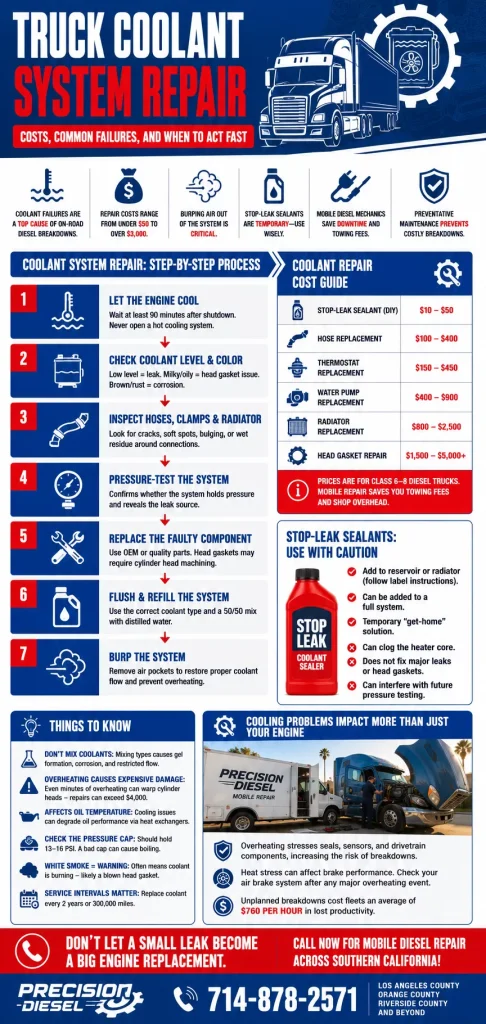
Cost is usually the first question fleet managers and owner-operators ask. The answer depends entirely on which component has failed and how long it has been running hot. Here is a realistic breakdown:
| Repair Type | Estimated Cost (USD) | Notes |
|---|---|---|
| Stop-leak sealant (DIY) | $10 – $50 | Temporary fix, not for severe leaks |
| Hose replacement | $100 – $400 | Labor + parts, easy access required |
| Thermostat replacement | $150 – $450 | Often overlooked but critical |
| Water pump replacement | $400 – $900 | Higher on larger diesel engines |
| Radiator replacement | $800 – $2,500 | Varies by truck class |
| Head gasket repair | $1,500 – $5,000+ | Most expensive cooling-related failure |
These figures apply to Class 6-8 diesel trucks. If you are running a semi truck or heavy-duty fleet vehicle, parts alone can push labor costs higher. Mobile repairs often reduce the total bill significantly because you avoid towing fees and shop overhead. When calculating the total expense of a truck coolant system repair, factor in both parts and potential downtime losses. Precision Diesel operates across Los Angeles County, Orange County, Riverside County, and surrounding areas, delivering shop-level work directly to your yard or job site.
For more context on the full picture of diesel engine repair costs and common failure points, the resource on fixing diesel engine socal fleet tips breaks down what Southern California fleet operators typically deal with throughout the year.
How to Fix Coolant System Failure: Step-by-Step
Fixing a cooling system failure is not a single task. It is a diagnostic process that works through potential causes until the root problem is identified. If you handle it in-house or call a mobile mechanic, a proper truck coolant system repair requires a systematic approach to ensure the root cause is resolved. Rushing past the diagnosis phase is one of the most common and expensive mistakes a driver or fleet manager can make.
Step 1: Let the engine cool completely. Opening a hot cooling system is dangerous. Pressurized coolant can spray at temperatures above 212°F and cause serious burns. Wait at least 90 minutes after shutdown.
Step 2: Check the coolant level and color. Low fluid points to a leak. Milky or oily coolant indicates combustion gas contamination, which usually means a head gasket issue. Brown or rust-colored coolant signals corrosion inside the system.
Step 3: Inspect hoses, clamps, and the radiator. Look for cracks, soft spots, bulging, or wet residue around connection points. Even a pinhole leak can drop system pressure enough to cause overheating at highway speed.
Step 4: Pressure-test the system. A cooling system pressure tester (available at most parts stores) can confirm whether the system holds pressure or bleeds down, pointing to a specific leak source.
Step 5: Replace the faulty component. Once identified, replace with OEM or quality aftermarket parts. For head gaskets, cylinder head machining is often required.
Step 6: Flush and refill the system. Never mix coolant types. Use the manufacturer-specified coolant type and concentration, typically a 50/50 mix with distilled water for temperatures down to about -34°F.
Step 7: Burp the system. This step is covered in detail below.
The how to identify and fix common diesel fuel system problems resource illustrates how systematic diagnosis also applies across other diesel systems, reinforcing why skipping steps creates bigger problems downstream.
How to Burp a Truck Coolant System
Air pockets trapped in the cooling system after a repair or refill prevent proper coolant circulation and cause localized overheating even when the reservoir is full. Bleeding this trapped air is a non-negotiable step to complete a successful truck coolant system repair. Burping removes those air pockets.
Here is how to do it correctly:
- Fill the coolant reservoir to the cold-fill line with the correct coolant mixture.
- Remove the radiator cap (engine cold only).
- Start the engine and let it idle.
- Watch the coolant in the radiator opening. As the thermostat opens, air bubbles will rise to the surface.
- Gently squeeze the upper radiator hose repeatedly to help dislodge trapped air pockets.
- Add coolant as needed to keep the level at the filler neck.
- Once bubbles stop and coolant flows freely without air, replace the radiator cap.
- Run the engine to operating temperature and watch the temperature gauge. If it stays in the normal range, the burp was successful.
- After shutdown, check the reservoir level again once the engine is cold. Top off if needed.
On some larger diesel trucks, particularly those with cab-over designs or elevated radiator necks, you may need to park on an incline with the front raised to help air migrate toward the filler point. This is a detail that trips up many operators doing a first-time coolant service.
Stop-Leak Sealants: Where to Pour Them and Whether They Are Safe
Stop-leak sealants are liquid or powder additives that circulate through the cooling system and form a seal around small cracks or pinholes when exposed to air or the temperature differential at a leak point. While these additives can help you get to a safe location, they should never be viewed as a permanent truck coolant system repair. They are a short-term solution, not a substitute for a proper repair.
Where to pour cooling system repair sealant: Add it directly to the coolant reservoir or through the radiator cap opening. Always follow the product label. Most products specify whether the engine should be cold or warm.
Can you pour cooling system repair leak sealant while coolant is full? Yes, in most cases you can. The majority of commercial stop-leak products are designed to be added to a full system without draining coolant first. Check the product label, as some require a partial drain to avoid diluting the formula. Products like Bar’s Leaks or BlueDevil are formulated to work within a full system.
However, there are important trade-offs:
- Stop-leak products can clog the heater core, a small and expensive component to replace.
- They do not work on major cracks or blown head gaskets.
- They can interfere with pressure testing later, making diagnosis harder.
For a fleet vehicle covering serious miles across Southern California, stop-leak is a get-home solution, not a repair strategy. If you see recurring low coolant levels after using a sealant, the underlying leak needs professional attention immediately.
You can also cross-reference the engine restoration process with diesel engine restoration steps how we do it to understand how professional technicians approach more extensive cooling and mechanical repairs.
Things to Know
- Mixing coolant types causes gel formation. Orange DEX-COOL and green conventional coolant are not compatible. Mixing them creates a thick sludge that restricts flow and accelerates corrosion.
- Overheating for even a few minutes can warp aluminum cylinder heads. The repair cost for a warped head on a Class 8 truck can exceed $4,000.
- A functioning cooling system also controls oil temperature. Many diesel engines use coolant-to-oil heat exchangers, so a coolant problem can also degrade oil performance.
- The pressure cap is often overlooked. A cap that does not hold the correct pressure (typically 13-16 PSI on commercial diesel trucks) causes the system to boil at a lower temperature, mimicking a more serious failure.
- White smoke from the exhaust is a warning sign. This often indicates coolant is burning inside the combustion chamber, pointing to a blown head gasket, not just a minor leak.
- Coolant service intervals matter. Most heavy-duty diesel coolants need to be replaced every two years or 300,000 miles, whichever comes first. Staying on top of these routine service schedules reduces the likelihood of needing an emergency truck coolant system repair on the road. Ignoring this causes corrosion-related failures.
The article on fixing diesel engine is worth reading alongside this one, as many cooling failures stem from or lead to broader engine issues.
How Cooling Problems Connect to Other Truck Systems
A cooling system failure rarely exists in isolation. When a truck overheats, the thermal stress affects rubber seals, metal tolerances, and electronic sensors throughout the drivetrain. According to the National Highway Traffic Safety Administration, mechanical failures are a leading cause of commercial vehicle crashes, and overheating is among the most preventable mechanical failures with proper maintenance.
Brake system performance can also be affected. Heat stress from extended overheating can migrate to braking components through shared mounting surfaces. If you are managing a fleet that has experienced a cooling failure and you want to evaluate the full picture, the guide on semi truck air brake system failure covers what to check after any major thermal event.
The Mayo Clinic would not advise treating a broken bone with a bandage, and the same logic applies to truck repairs. Surface fixes without root-cause diagnosis always create larger problems.
Research from the American Trucking Associations consistently shows that unplanned breakdowns cost fleets an average of $760 per hour in lost productivity. Scheduling an on-site truck coolant system repair before minor leaks escalate is one of the most effective ways to avoid these costly roadside delays. A mobile repair response that reaches you within the hour is not just convenient. It is a financial decision.
Get Your Cooling System Fixed Without Losing a Day of Revenue
If your truck is overheating, losing coolant, or showing any of the warning signs covered here, the clock is already running. Our team specializes in mobile truck coolant system repair to get your rig back up and running fast. Precision Diesel’s mobile technicians are ready to come to your location across Los Angeles County, Orange County, Riverside County, and beyond.
Call (714) 878-2571 now for emergency diesel repair, or schedule a coolant system inspection before a small leak turns into a costly engine replacement. Do not wait until you are on the side of the 405 watching your temperature gauge pin out.
Frequently Asked Questions
How much does it cost to fix your coolant system?
Cooling system repair costs range from $50 for a basic stop-leak additive to over $5,000 for a blown head gasket repair.
The final number depends on which component has failed and the truck’s engine size. Hose replacements and thermostat swaps are on the lower end, while radiator replacements and head gasket jobs drive costs significantly higher. Mobile repair services can reduce the total cost by eliminating towing and shop overhead.
How to fix coolant system failure?
Fixing a cooling system failure requires diagnosing the specific failed component before any repair work begins.
Start by checking coolant level, color, and visible leaks, then pressure-test the system to confirm the leak location. Replace the faulty part, flush and refill the system with the correct coolant type, and burp air from the lines before returning the truck to service.
How to burp a truck coolant system?
Burping a truck’s cooling system means running the engine with the radiator cap off and squeezing the upper hose to release trapped air bubbles.
Fill the system, start the engine, and watch for air bubbles escaping at the filler neck as the thermostat opens. Add coolant as needed, then replace the cap once bubbles stop. Recheck the cold-fill level after the engine cools.
Where to pour cooling system repair?
Pour stop-leak cooling system repair products directly into the coolant reservoir or through the radiator cap opening, depending on the product instructions.
Always read the label first. Some formulas specify a warm or cold engine. Avoid pouring directly onto components or mixing with incompatible coolant types.
Can I pour cooling system repair leak sealant while coolant is full?
Yes, most commercial coolant stop-leak sealants are specifically formulated to be added to a full coolant system without draining first.
Check the product label to confirm compatibility with your coolant type. Be aware that these products are a temporary measure and can clog the heater core if overused. A full system inspection by a qualified technician should follow any stop-leak application.
The Bottom Line on Truck Coolant System Repair
Truck coolant system repair is not something to treat as optional or to keep delaying with repeated stop-leak applications. Every mile you run with a compromised cooling system is a mile closer to an engine failure that costs far more to fix than any repair you could have handled proactively.
If you are in Southern California and your truck is showing signs of cooling trouble, taking action now will save you thousands of dollars in repairs and keep your rig where it belongs, on the road making money.
