
TL;DR
Fuel injector parts are critical to diesel engine performance because they control precise fuel timing, pressure, and atomization. Small injector wear can quickly lead to power loss, poor fuel economy, and emissions issues, especially in heavy-duty trucks operating under demanding conditions like those in California. Using high-quality components and maintaining clean fuel systems helps prevent breakdowns and extends engine life.
Key Takeaways
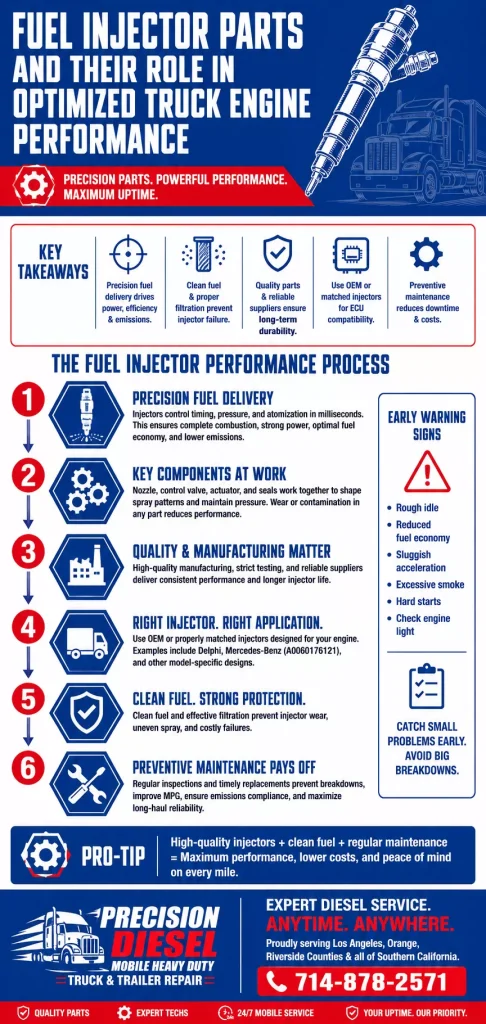
- Fuel injectors directly impact engine power, efficiency, and emissions through precise fuel delivery.
- Early injector wear shows up as rough idle, reduced MPG, sluggish acceleration, and smoke.
- Nozzle design and atomization quality strongly affect combustion efficiency and soot formation.
- Manufacturing quality and supplier reliability influence injector lifespan and consistency.
- Dirty fuel and poor filtration are major causes of injector failure and uneven wear.
- OEM or properly matched injectors are essential for modern truck ECU compatibility.
- Preventive maintenance reduces downtime and avoids costly roadside breakdowns.
- Injector performance is especially important for fleets under strict emissions regulations like California.
Introduction: Why Fuel Delivery Problems Start Small but Cost Big
Fuel injector parts play a much larger role in engine health than most truck drivers realize, especially in California where emissions regulations and long haul demands push diesel systems to their limits. Early in my career working roadside diesel repairs across Southern California, I learned that injector related failures rarely announce themselves loudly at first. They begin with subtle power loss, rough idle, or increased fuel consumption that drivers often dismiss until a breakdown forces the issue.
Modern diesel engines rely on precise fuel delivery, and when injector components wear unevenly, performance drops quickly. Understanding how different injector designs, materials, and manufacturers affect reliability helps drivers make smarter maintenance decisions before those warning signs turn into costly downtime.
Understanding the Basics of Diesel Fuel Injection Systems
Why Diesel Engines Depend on Precision
Truck engine performance depends on precise timing and fuel atomization to maintain torque, efficiency, and emissions compliance. Diesel engines compress air to extreme levels, and even slight inconsistencies in fuel spray patterns can cause incomplete combustion. Over time, this imbalance stresses pistons, valves, and exhaust systems, especially under heavy loads common on California highways.
When injection timing or spray consistency drifts, drivers notice sluggish acceleration or excessive smoke. These symptoms are not random. They are mechanical responses to deteriorating injector accuracy.
How Fuel Delivery Affects Efficiency
Diesel engine fuel delivery is a controlled process that balances pressure, volume, and timing within milliseconds. If fuel arrives too early, combustion knocks. Too late, and power drops while emissions rise. In my experience servicing fleets running daily routes from Los Angeles to Riverside County, inefficient fuel delivery is one of the most common causes of reduced miles per gallon.
The injector system must work as a synchronized unit, and even one weak component can disrupt the entire process.
Key Components Inside a Diesel Injector
Breaking Down Internal Architecture
Diesel injector components include the nozzle, control valve, solenoid or piezo actuator, and internal seals. Each piece has a specific role that affects pressure control and spray shape. During teardown inspections, uneven wear patterns often reveal contamination or poor quality materials that shorten injector life.
Understanding these internals helps drivers appreciate why not all injectors perform equally, even if they appear identical from the outside.
The Role of the Nozzle
Fuel injector nozzle design directly influences combustion quality. The nozzle controls how fuel is dispersed into the combustion chamber, shaping the spray cone and droplet size. I have seen engines regain lost power simply by correcting nozzle wear that caused uneven fuel distribution.
High quality nozzle machining ensures consistent spray patterns, which improves throttle response and reduces soot buildup.
Advanced Atomization Technology
Fuel atomization nozzle technology has evolved significantly to meet stricter emissions standards. Finer atomization allows fuel to mix more completely with air, reducing unburned hydrocarbons. In California, this is especially important for trucks subject to frequent inspections and compliance checks.
Poor atomization leads to incomplete combustion, higher exhaust temperatures, and accelerated engine wear.
Comparing Injector Manufacturers and Designs
Manufacturer Standards Matter
Fuel injector part manufacturer quality standards determine machining tolerances, material durability, and testing protocols. Over years of field repairs, I have observed that injectors from reputable manufacturers maintain consistent performance longer, even under high mileage conditions.
Cutting corners in manufacturing often results in premature failures that negate any upfront cost savings.
Sourcing Reliable Parts
Fuel injector part supplier reliability impacts not only part quality but also traceability and warranty support. When sourcing injectors for commercial fleets, consistent supply chains ensure compatibility and reduce downtime caused by mismatched components.
Reliable suppliers also provide documentation that supports emissions compliance audits.
Wholesale Considerations
Wholesale fuel injector part purchasing can benefit fleet operators managing multiple vehicles, but only when quality assurance is maintained. Bulk purchasing should never mean sacrificing testing standards or material integrity.
In my experience, fleets that balance cost savings with verified quality see the best long term performance.
Brand Specific Injector Insights
Delphi Injector Engineering
Delphi fuel injector systems are known for precise spray control and durability under high pressure conditions. I have serviced many trucks running Delphi injectors that exceeded expected service intervals when maintained properly.
Their engineering focuses on consistent fuel metering, which supports stable engine output.
Diesel Applications from Delphi
Delphi diesel fuel injector designs are widely used in commercial diesel platforms due to their adaptability and emissions focused engineering. These injectors are often found in fleets operating across mixed terrain, from urban delivery routes to long haul freeway driving.
Their balance of performance and longevity makes them a common choice for California operators.
Specific Model Performance
Delphi B03004B fuel injector models are engineered for precise injection timing and controlled spray patterns. When installed correctly, they help restore lost throttle response and improve cold start reliability.
These injectors perform best when paired with clean fuel systems and regular maintenance intervals.
Alternative Model Comparison
LRBB03004B fuel injector designs are often compared with similar high pressure models for durability and flow consistency. Field observations show stable performance when fuel filtration is properly maintained.
Injector longevity is strongly influenced by fuel cleanliness and operating conditions.
Mercedes-Benz Truck Injector Systems
Engine Compatibility
Mercedes-Benz truck engines rely on advanced fuel injection systems to meet performance and emissions targets. These engines are sensitive to injector tolerances, making part selection especially critical.
Improper injectors can quickly trigger fault codes and limp mode conditions.
OEM Injector Specifications
Mercedes-Benz truck fuel injector units are designed to integrate seamlessly with engine control modules. Precision calibration ensures proper communication between the injector and ECU.
Using compatible injectors prevents drivability issues and software conflicts.
OEM Part Identification
A0060176121 fuel injector part numbers correspond to specific Mercedes-Benz applications and calibration profiles. Correct identification prevents mismatched flow rates that can harm engine balance.
Part number accuracy is essential during replacements.
Assembly and Installation Factors
Complete Injector Units
Diesel fuel injector assembly includes multiple calibrated components that must function together. Replacing partial assemblies can introduce imbalance if tolerances differ.
Complete assemblies simplify installation and reduce risk.
Truck Specific Assemblies
Truck fuel injector assembly configurations vary based on engine displacement and duty cycle. Heavy duty applications require assemblies built for sustained high pressure operation.
Selecting the right assembly supports consistent performance under load.
Nozzle Variations
Injector nozzle L186PBC variants are designed for specific spray angles and flow characteristics. Proper matching ensures optimal combustion chamber coverage.
Incorrect nozzle selection can lead to uneven cylinder temperatures.
Quality, Durability, and Compliance
Quality Assurance Standards
Fuel injector quality assurance processes include pressure testing, leak detection, and flow verification. Injectors that skip these steps often fail prematurely.
Quality testing protects engine components and operator investment.
Long Term Durability
Fuel injector durability is influenced by material selection and internal coatings. Durable injectors resist wear from high pressure cycles and fuel contaminants.
Durability translates directly into reduced maintenance frequency.
Warranty Protection
Fuel injector warranty coverage reflects manufacturer confidence in their product. Strong warranties provide peace of mind for fleet managers and owner operators.
Warranty support also simplifies replacement decisions.
Emissions Regulations
Truck emissions compliance is non negotiable in California. Faulty injectors can increase particulate output and trigger inspection failures.
Proper injector performance supports clean combustion.
Performance Optimization and Efficiency
Maximizing Engine Output
Diesel engine performance optimization begins with balanced fuel delivery. Optimized injectors restore horsepower while reducing strain on internal components.
Performance improvements often coincide with smoother operation.
Improving Fuel Economy
Diesel engine efficiency improves when injectors deliver consistent spray patterns. Efficient combustion reduces wasted fuel and lowers operating costs.
Efficiency gains add up quickly for high mileage trucks.
Long Haul Reliability
Long-haul truck engine parts must withstand continuous operation under varying loads. High quality injectors are foundational to long haul reliability.
Preventive replacement reduces roadside failures.
Finding the Right Diesel Repair Support
Local Repair Access
Diesel shop near me searches are common when warning lights appear unexpectedly. Local access to experienced technicians reduces downtime and towing costs.
Proximity matters when time sensitive repairs are needed.
Mobile Expertise
Nearby diesel mechanic availability is critical for roadside breakdowns and fleet service. Mobile diagnostics allow faster decision making and repairs.
This approach minimizes disruption to delivery schedules.
How Precision Diesel Services Supports Southern California Drivers
Precision Diesel Mobile Heavy Duty Truck & Trailer Repair has supported truck drivers and fleet operators throughout Los Angeles, Orange, and Riverside counties, as well as across all of Southern California. With years of hands on experience responding to roadside breakdowns and preventive maintenance calls, the team understands how injector related issues impact real world operations. For service inquiries, call 714-878-2571 to speak with professionals who know California diesel systems inside and out.
Frequently Asked Questions
How do injector issues affect daily driving?
Minor injector wear can reduce power and fuel economy before triggering warning lights.
How often should injectors be inspected?
Inspection intervals depend on mileage, fuel quality, and operating conditions.
Can injector problems cause emissions failures?
Yes, inconsistent fuel delivery often increases particulate output.
Is replacing injectors better than rebuilding?
In many cases, replacement ensures consistent calibration and reliability.
What are early warning signs of injector failure?
Rough idle, hesitation, excessive smoke, and hard starts are common indicators.
