

TL;DR
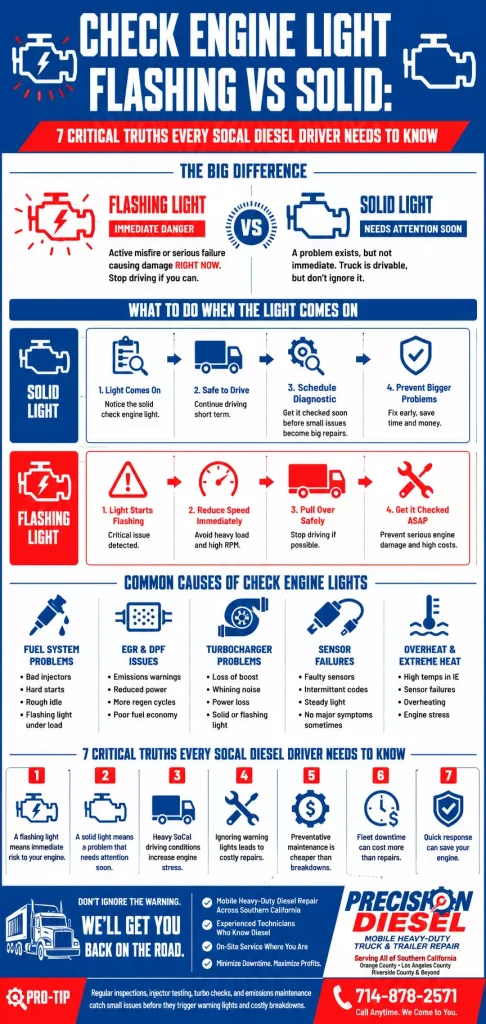
A solid check engine light means a non-urgent issue that still needs prompt diagnosis, while a flashing light signals active engine damage and requires you to stop driving as soon as it is safe. Diesel trucks in heavy SoCal conditions are more prone to these warnings due to heat, traffic, and load stress, making quick response essential to avoid costly repairs.
Key Takeaways
- A flashing light means immediate risk to your engine
- A solid light means a problem that needs attention soon
- Heavy SoCal driving conditions increase engine stress
- Ignoring warning lights leads to costly repairs
- Preventative maintenance is cheaper than breakdowns
- Fleet downtime can cost more than repairs
- Quick response can save your engine
If you’ve ever been rolling down I-5 through Anaheim or crawling through traffic near the Port of Long Beach and suddenly notice that little dashboard icon acting up, you’re not alone. The whole check engine light flashing vs solid thing confuses a lot of drivers. And honestly, it should. One version is annoying… the other can shut your whole operation down if you ignore it.
Out here in Southern California, where trucks run hard between Los Angeles, Santa Ana, Fontana, and the Inland Empire logistics corridor, that light isn’t just a suggestion. It’s your engine trying to talk to you before something expensive happens.
Let’s break this down in a real-world way. No fluff. Just what actually matters when you’re behind the wheel of a diesel truck trying to get through another packed day.
What the Check Engine Light Is Really Telling You
Before we get into the difference between flashing and solid, it helps to understand what’s going on behind the scenes.
Modern diesel engines are packed with sensors. They track everything. Fuel pressure, air intake, emissions systems, temperature, you name it. When something drifts out of normal range, the system throws a code. That’s when the light comes on.
But not all warnings are equal.
Sometimes it’s just a sensor acting up. Other times… it’s your engine waving a red flag.
Check Engine Light Flashing vs Solid: The Real Difference
1. Solid Light Means Something Needs Attention Soon
A solid engine light usually means there’s an issue, but not an emergency. Think of it like your body telling you something feels off, but you can still function.
You might notice:
- Slight drop in fuel efficiency
- Reduced power when hauling up the 91 freeway
- Rough idle at a stoplight in Long Beach
- Emissions system warnings
So when people ask, what does a solid check engine light mean, this is it. The truck is still drivable, but it needs attention. Ignoring it too long can turn a small repair into a big one.
2. Flashing Light Means Stop Driving If You Can
Now this is where things get serious.
A flashing engine light is urgent. It’s not just logging a code, it’s telling you damage is actively happening.
When drivers ask what does a flashing check engine light mean or what does flashing engine check light means, the answer is simple. Something critical is misfiring or failing in real time.
You might feel:
- Violent shaking under load
- Loss of power climbing grades like the Grapevine
- Engine knocking or sputtering
- Strong fuel smell
That flashing signal usually points to a misfire that can destroy your catalytic system or damage internal engine components.
And yeah… this is the one you don’t ignore.
Why Diesel Trucks in Southern California See This More Often
It’s not just bad luck. The way trucks are used out here puts extra strain on engines.
Stop-and-Go Traffic
Driving through Los Angeles County or dealing with congestion around Commerce and Vernon means constant braking and accelerating. That puts stress on fuel delivery and combustion systems.
Heavy Loads Near Ports
Hauling containers in and out of the Port of Los Angeles or Port of Long Beach puts serious pressure on injectors and turbo systems.
Heat in the Inland Empire
Summer runs through Riverside County and Fontana can cook an engine. High temps increase the chance of sensor failures and overheating.
Long Climbs
Routes like Cajon Pass and Ortega Highway force engines to work hard for extended periods. That’s when misfires and fuel issues show up fast.
When a Flashing Light Turns Into a Solid One
You might notice a situation where the check engine light flashing then solid happens. That’s actually pretty common.
Here’s what that usually means:
- The engine detected a severe issue temporarily
- The immediate risk passed, but the underlying problem remains
- The system stored a fault code for later diagnosis
So if you experienced a flashing light that later became steady, don’t assume you’re in the clear. The problem is still there, just not actively damaging at that moment.
Common Causes Behind These Warning Lights
Let’s get into the real stuff mechanics see every day across places like Irvine, Torrance, and Downey.
Fuel System Problems
Bad injectors are a big one. Especially with diesel trucks running heavy loads between distribution centers in Ontario and Santa Fe Springs.
Symptoms:
- Hard starts
- Rough idle
- Flashing light under load
EGR and DPF Issues
Emission systems take a beating, especially with short trips or idle-heavy routes.
This is often behind a solid engine light.
You’ll notice:
- Reduced power
- Increased regen cycles
- Poor fuel economy
Turbocharger Problems
Running high speeds on I-405 or hauling uphill can stress turbo systems.
A failing turbo can trigger either a solid or flashing light depending on severity.
Sensor Failures
Sometimes the issue isn’t mechanical. Sensors fail all the time.
That’s usually when you see a steady light without major performance changes.
What Does a Flashing Service Engine Light Mean in Real Life?
It’s not just a warning. It’s a countdown.
If your truck is shaking and the light is flashing, the engine isn’t burning fuel properly. That raw fuel can damage internal components quickly.
That’s why when drivers ask what does a flashing check engine light indicate, the honest answer is this:
You’re risking serious engine damage every minute you keep driving.
Real Scenario from Southern California Roads
Picture this.
You’re hauling through Carson toward the ports. Traffic is slow. Suddenly the truck starts hesitating. Then the light starts blinking.
At first you think maybe it’s bad fuel.
But then the power drops climbing a slight grade. That’s your sign.
Keep driving, and you risk blowing out expensive components.
Pull over, and you might save thousands.
What You Should Do When the Light Comes On
If It’s Solid
You can keep driving short term, but don’t wait too long.
Schedule a diagnostic. Especially if you’re running routes between places like Garden Grove, Westminster, or Huntington Beach where stop-and-go driving makes issues worse.
If It’s Flashing
Reduce speed immediately.
If possible, pull over safely. Don’t push the engine. Especially not under load.
How This Affects Fleet Operations
For fleet owners managing trucks across Los Angeles County and Orange County, this isn’t just about one vehicle.
A single breakdown can:
- Delay deliveries
- Disrupt schedules
- Cost serious downtime money
Ignoring the difference between check engine light solid or blinking can turn a minor issue into a full engine rebuild.
Preventing These Problems in the First Place
This is where experience matters.
Regular inspections catch small issues before they trigger warning lights.
Things like:
- Injector testing
- Fuel system checks
- Turbo inspections
- Emissions system cleaning
Especially for trucks running between El Segundo, LAX cargo routes, and inland distribution hubs, preventative work saves time and money.
Wrapping It All Together
Out here, trucks don’t get a break. Whether you’re running freight through Long Beach, hauling equipment across Anaheim, or moving goods between Riverside and Los Angeles, your engine is constantly under pressure.
That’s why understanding the difference between a check engine light flashing vs solid isn’t just helpful. It’s necessary.
Ignoring it can cost you days of downtime. Or worse, a full engine rebuild.
And when that light comes on at the worst possible time, like stuck on the 710 near the port or climbing through inland heat, having someone who knows these roads and these trucks makes all the difference.
That’s where Precision Diesel Mobile Heavy-Duty Truck and Trailer Repair comes into the picture. Not in a flashy way. Just real help when things go sideways. Whether you’re in Orange County, Los Angeles County, or out toward Riverside, they’ve seen these problems before and handled them in real conditions.
If you’re dealing with warning lights, engine hesitation, or just something that doesn’t feel right, getting a second look can save you a lot of trouble later. You can reach them at 714-878-2571, and they cover pretty much all of Southern California, meeting trucks where they are instead of making you figure it out on your own.
FAQ Section
What does a flashing check engine light mean compared to a solid one?
A flashing light signals immediate danger, usually a misfire causing active damage. A solid light means there’s a problem, but not urgent yet.
What does a solid check engine light mean for diesel trucks?
It usually points to emissions issues, sensor faults, or fuel system inefficiencies. The truck can still run, but repairs shouldn’t be delayed.
Why does my check engine light flashing then solid happen?
The engine detected a serious issue briefly, then stabilized. The fault is still stored and needs inspection.
What does a flashing service engine light mean when towing?
It often indicates a misfire under load. Towing increases stress, making issues show up faster and more aggressively.
Should I keep driving with a flashing engine light?
No. Continuing to drive can cause major engine damage. Pull over and get it checked as soon as possible.
