

TL;DR
Chevy EGR valve symptoms usually start with subtle drivability issues like hesitation, rough idle, reduced fuel economy, and occasional check engine lights. In Southern California’s heavy traffic, heat, and port-related stop-and-go driving, carbon buildup happens faster and worsens failures across Chevy, GMC, and older S10 vehicles. Early diagnosis and preventive maintenance are key to avoiding costly downtime and engine damage.
Key Takeaways
- Chevy EGR Valve Symptoms often begin subtly with performance hesitation and idle instability
- Southern California traffic and heat significantly accelerate EGR system buildup
- Silverado and GMC platforms show similar airflow restriction patterns under fleet use
- Older S10 trucks experience faster carbon accumulation due to simpler EGR systems
- Proper diagnostics prevent unnecessary repairs and downtime
- Preventive maintenance is essential for fleets operating across ports, freeways, and inland logistics hubs
In Southern California’s demanding diesel landscape, recognizing early chevy egr valve symptoms can be the difference between a minor repair and a full engine failure that sidelines your truck for days. Whether you’re operating along the I-5 corridor near the Ports of Los Angeles and Long Beach or managing delivery routes through the Inland Empire logistics hubs, understanding these warning signs is essential for keeping diesel engines reliable and compliant.
For fleets and independent drivers relying on Precision Diesel Mobile Heavy-Duty Truck and Trailer Repair, based across Los Angeles County, Orange County, Riverside County, and broader Southern California, these symptoms are not just mechanical issues—they are operational risks that affect uptime, fuel economy, and long-term engine health.
This guide breaks down real-world field experiences, diagnostic insights, and region-specific conditions that influence EGR system failures across Chevy, GMC, and other light-duty diesel and gas platforms.
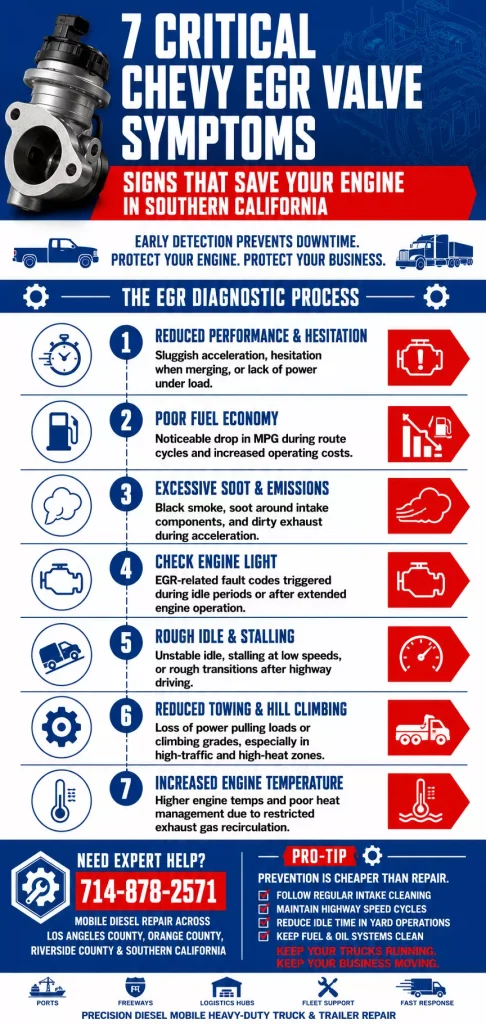
What the EGR System Does in Diesel Engines
The Exhaust Gas Recirculation (EGR) system is designed to reduce nitrogen oxide emissions by redirecting a portion of exhaust gases back into the combustion chamber. This lowers combustion temperatures and helps meet emissions standards enforced across California’s strict regulatory environment, including ports and industrial zones in Long Beach, Los Angeles, and Commerce.
However, when the system begins to fail, it directly impacts drivability, fuel efficiency, and engine temperature control.
For reference on emissions control systems, the U.S. Environmental Protection Agency provides additional technical insight here:
https://www.epa.gov/emissions-standards-reference-guide
In heavy-duty field conditions—especially stop-and-go traffic on the I-710 or long-haul climbs through the Grapevine—EGR systems accumulate carbon faster than in controlled testing environments.
Understanding Chevy EGR Valve Symptoms in Real-World Driving
The most common chevy egr valve symptoms often appear gradually, which is why many drivers overlook them until performance issues become severe.
One of the first signs technicians notice in mobile diagnostics is inconsistent engine response during acceleration. Trucks operating between Santa Ana, Anaheim, and Fullerton often show hesitation when merging onto the SR-91 due to restricted exhaust flow.
Another key indicator is rough idling after extended freeway driving, especially common in vehicles commuting between Torrance, Gardena, and Downtown Los Angeles.
Early Warning Signs of EGR Trouble
Technicians working across fleets in Fontana, Ontario, and Vernon frequently report similar early-stage symptoms:
- Reduced throttle response under load
- Slight engine knock during acceleration
- Increased soot buildup around intake components
- Noticeable drop in fuel efficiency during route cycles
These early symptoms are often mistaken for fuel injector issues, but mobile diagnostics frequently trace them back to EGR valve restriction or sticking mechanisms.
A deeper understanding of chevy egr valve symptoms helps prevent misdiagnosis and unnecessary parts replacement.
Chevy Silverado EGR Valve Problems in Fleet Operations
In fleet environments using Silverado trucks for construction, delivery, or utility work across Los Angeles and Orange County, chevy silverado egr valve problems often appear under high-load, low-speed conditions.
For example, trucks operating near Irvine Spectrum or distribution centers in Commerce experience constant idle cycles. This leads to carbon buildup inside the EGR passageways.
Drivers frequently report:
- Engine hesitation when climbing hills near Laguna Hills or Mission Viejo
- Check engine light activation during long idle periods in Santa Fe Springs yards
- Reduced towing performance along I-405 and I-5 corridors
When these symptoms combine, they often mirror advanced chevy egr valve symptoms, requiring immediate cleaning or replacement.
GMC EGR Valve Symptoms in Southern California Conditions
Across fleets using Sierra or Savana platforms, gmc egr valve symptoms are commonly reported in high-traffic industrial routes.
In areas like Carson, Paramount, and Bellflower, frequent stop-and-go driving leads to excessive soot accumulation. Combined with high ambient temperatures in the Inland Empire, this accelerates valve sticking.
Technicians frequently observe:
- Rough idle after highway-to-city transitions
- Excessive exhaust smoke during acceleration from signal stops in Downey or Norwalk
- Reduced engine efficiency during heavy cargo hauling near Port of Long Beach routes
These patterns often overlap with broader chevy egr valve symptoms, especially when platforms share similar engine architecture.
S10 EGR Valve Symptoms in Older Work Trucks
Older Chevrolet S10 trucks are still widely used in small business operations across La Habra, Buena Park, and West Covina. These vehicles often operate under heavier loads than originally intended, which makes s10 egr valve symptoms more pronounced.
Common field issues include:
- Engine stalling during low-speed maneuvering
- Poor cold-start performance in coastal cities like Huntington Beach or Seal Beach
- Noticeable fuel odor during idle in enclosed job sites
Because these systems are less advanced than modern diesel EGR setups, buildup occurs faster, and repair cycles tend to be shorter.
Understanding chevy egr valve symptoms in relation to older platforms helps prevent premature engine wear.
Pontiac Grand Prix EGR Valve Symptoms in Mixed Vehicle Fleets
Although not a diesel platform, many mixed fleets across South Pasadena, Alhambra, and Montebello still operate passenger vehicles like the Pontiac Grand Prix for support operations. In these cases, pontiac grand prix egr valve symptoms present differently but still follow similar airflow disruption patterns.
Symptoms often include:
- Engine misfires during acceleration from stoplights
- Rough idle after highway travel through Pasadena or Glendale
- Increased fuel consumption during city driving cycles
These gas engine behaviors mirror the airflow disruption principles seen in diesel chevy egr valve symptoms, reinforcing how critical exhaust recirculation systems are across vehicle types.
How Southern California Driving Conditions Worsen EGR Issues
Southern California creates one of the most demanding environments for EGR systems in the country.
High-traffic zones like the I-405 through Inglewood, the I-710 near Long Beach ports, and SR-60 through the City of Industry produce constant low-speed engine stress.
Additional environmental factors include:
- High temperatures in Riverside and San Bernardino County
- Dust exposure from inland construction zones in Pomona and Fontana
- Coastal humidity in Santa Monica, Redondo Beach, and Newport Beach
These conditions accelerate carbon accumulation inside EGR valves, making chevy egr valve symptoms appear earlier than expected.
Port, Freeway, and Logistics Stress Zones
The logistics network spanning Los Angeles and Orange County plays a major role in diesel wear patterns.
Trucks operating between the Port of Los Angeles, Port of Long Beach, and distribution hubs in Vernon, Commerce, and Santa Fe Springs experience:
- Extended idle times at dock gates
- Frequent short-haul trips between warehouses
- High-frequency stop-and-go freeway traffic
Routes along Anaheim, Garden Grove, and Costa Mesa further increase engine cycling stress.
In these conditions, technicians frequently encounter overlapping chevy egr valve symptoms, especially in fleet Silverado and Express van platforms.
Diagnostic Process Used in Mobile Diesel Repair
Mobile technicians servicing fleets across Lakewood, Cypress, and Stanton rely on structured diagnostics rather than guesswork.
The process typically includes:
- Electronic scan for EGR-related fault codes
- Intake airflow and backpressure testing
- Visual inspection of valve carbon buildup
- Road test under load conditions similar to real fleet routes
In many cases, what appears to be turbo lag or injector issues is traced back to EGR restriction.
For technical background on diesel airflow systems, Bosch provides helpful engineering references:
https://www.bosch-mobility.com
Preventive Maintenance Strategies That Reduce EGR Failure
Preventing EGR failure is more cost-effective than repairing it after symptoms appear.
Fleet operators across Orange, Tustin, and Yorba Linda often implement:
- Regular intake cleaning schedules
- Highway speed cycles to reduce soot buildup
- Fuel system cleaning intervals aligned with oil changes
- Idle time reduction policies in yard operations
These strategies significantly reduce the likelihood of recurring chevy egr valve symptoms in high-mileage vehicles.
Common Field Scenarios Seen Across Southern California
Technicians working from El Segundo to San Clemente often report repeat patterns:
- Delivery trucks in Santa Ana experiencing reduced acceleration after repeated short trips
- Construction fleets in Riverside showing increased idle instability during summer heat
- Highway transport vehicles between Los Angeles and San Diego corridors developing intermittent check engine lights
Each of these scenarios typically traces back to airflow restriction or EGR contamination.
In The End
Southern California’s diesel environment demands consistent awareness of airflow and emissions system health, especially when trucks operate daily between logistics hubs, ports, and freeway corridors stretching from Los Angeles County through Orange County and into Riverside County.
Understanding early chevy egr valve symptoms helps prevent downtime, but accurate diagnosis requires hands-on experience in real operating conditions. That is why mobile diesel service remains critical for fleets moving through high-demand corridors like Vernon industrial zones, the Anaheim logistics district, and the Long Beach port area.
For drivers and fleet managers relying on fast response service across Southern California, Precision Diesel Mobile Heavy-Duty Truck and Trailer Repair continues to support operations where uptime matters most. For direct assistance, fleets often reach out through 714-878-2571, especially when breakdowns occur across LA County, Orange County, Riverside County, and surrounding Southern California routes where rapid response keeps trucks moving.
Frequently Asked Questions
What causes chevy egr valve symptoms in diesel engines?
The most common cause is carbon buildup from incomplete combustion, especially in stop-and-go driving conditions across Los Angeles and Orange County.
Are chevy silverado egr valve problems expensive to fix?
Costs vary depending on severity. Cleaning is less expensive, but full replacement may be needed if the valve is stuck or damaged.
How do gmc egr valve symptoms differ from Chevy trucks?
They are often similar due to shared engine platforms, though load conditions and usage patterns may influence severity.
Can s10 egr valve symptoms affect fuel economy?
Yes, restricted airflow can significantly reduce efficiency, especially in older engines used for commercial work.
Are pontiac grand prix egr valve symptoms related to diesel issues?
While gasoline-based, the airflow principles are similar, making diagnosis patterns comparable.
Can driving conditions in LA worsen chevy egr valve symptoms?
Yes, heavy traffic, heat, and frequent idling across LA freeways accelerate buildup inside the EGR system.
