

TL;DR
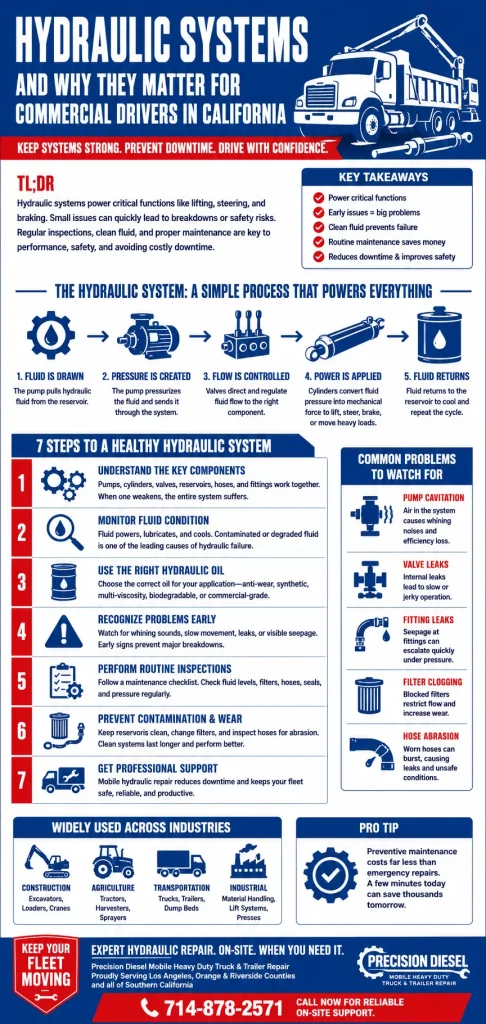
Hydraulic systems are essential for commercial trucks and heavy equipment in California, powering functions like lifting, steering, and braking. Small issues such as leaks, noise, or slow response often signal early failures that can quickly lead to costly breakdowns or safety risks. Regular inspections, clean fluid, and proper maintenance are critical to prevent contamination, extend equipment life, and avoid downtime, especially in high-stress environments like Southern California traffic and job sites.
Key Takeaways
- Hydraulic systems power critical truck and heavy equipment functions including lifting, steering, and braking
- Early warning signs like slow response, noise, or small leaks should never be ignored
- System performance depends on key components such as pumps, cylinders, valves, hoses, and reservoirs working together
- Hydraulic fluid condition is a major factor in system health, affecting lubrication, cooling, and pressure transfer
- Contaminated or degraded fluid is one of the most common causes of hydraulic failure
- Choosing the right hydraulic oil (anti-wear, synthetic, multi-viscosity, biodegradable) improves durability and performance
- Common problems include pump cavitation, valve leaks, hose abrasion, and filter clogging
- Routine inspections and preventive maintenance significantly reduce breakdown risk and repair costs
- Hydraulic systems are widely used across construction, agriculture, transportation, and industrial applications
- Mobile hydraulic repair and proactive servicing help reduce downtime and improve safety for commercial fleets
Hydraulic systems play a critical role in how commercial trucks, trailers, and heavy duty equipment operate across California highways and job sites. Reliable truck hydraulics keep many of these systems working as expected, making regular inspections and maintenance an important part of keeping commercial vehicles on the road. From lifting heavy loads to controlling braking and steering functions, these systems are often working silently in the background until something goes wrong.
For drivers and fleet owners, the problem usually starts with a small performance change that is easy to ignore. A slow response, a strange sound, or a minor leak can quickly turn into downtime, missed deliveries, or unsafe driving conditions. In Southern California, where traffic congestion and demanding terrain push equipment harder than most regions, ignoring early warning signs can become costly.
I have personally seen hydraulic failures sideline trucks on the 91 Freeway during peak hours, turning a manageable repair into an expensive emergency. Understanding how these systems work and what they need to stay healthy helps drivers make smarter decisions and avoid breakdowns.
How Hydraulic Power Works in Commercial Vehicles
At its core, hydraulic power is based on Pascal’s Law, which explains how force is transmitted through pressurized fluid. When pressure is applied in one area, that force moves evenly throughout the system, allowing small inputs to move heavy machinery.
This principle allows pressurized fluid systems to create force amplification that mechanical systems alone cannot achieve. In commercial trucks, this power translates into smooth lifting, controlled braking, and precise steering.
Over time, repeated stress affects hydraulic system operation, especially when loads are heavy or driving conditions are demanding. When performance drops, it often signals internal wear or contamination that needs attention before failure occurs.
Understanding Hydraulic System Components in Heavy Duty Equipment
Every hydraulic setup relies on carefully engineered hydraulic system components working together in balance. When one component weakens, the entire system feels the impact.
A hydraulic pump is responsible for moving fluid through the system and generating pressure. If the pump struggles, everything downstream loses efficiency.
Hydraulic cylinders convert fluid pressure into mechanical movement. These are commonly used for lifting beds, operating booms, or controlling steering.
Control valves direct fluid flow and regulate pressure to ensure smooth operation. Even slight calibration issues can cause jerky movement or slow response.
A hydraulic reservoir stores fluid and helps regulate temperature. When contamination enters the reservoir, damage spreads quickly.
Supporting parts like hydraulic hoses and fittings move fluid between components and must remain sealed under high pressure.
Why Hydraulic Fluid Condition Directly Impacts Performance
The health of a system depends heavily on hydraulic fluid condition. Fluid acts as a power transmitter, lubricant, and heat regulator all at once.
Proper hydraulic fluid properties allow smooth hydraulic fluid power transmission while protecting internal surfaces from wear. When fluid overheats, hydraulic fluid heat dissipation becomes compromised.
In my experience, contaminated fluid is one of the most common causes of system failure. Hydraulic fluid contaminant removal is critical because particles can damage seals and valves rapidly.
Drivers often underestimate how important fluid quality is until performance drops suddenly. At that point, damage has often already begun.
Choosing the Right Hydraulic Oil for Commercial Applications
Selecting the correct hydraulic oil is essential for system longevity and efficiency. Different equipment and climates require specific formulations.
Anti-wear hydraulic oil protects moving components under heavy loads. In fleets that run daily, this protection is non negotiable.
Multi-viscosity hydraulic oil performs well across temperature changes, which is especially important in Southern California where mornings can be cool and afternoons hot.
Environmentally sensitive job sites may require biodegradable hydraulic oil, while high demand fleets often rely on synthetic hydraulic oil for extended service intervals.
Commercial operators frequently choose commercial-grade hydraulic oil to ensure consistent protection across mixed equipment fleets.
Recognizing Common Hydraulic System Problems Early
Most breakdowns begin with subtle symptoms that drivers overlook. Common hydraulic system problems rarely appear without warning.
A whining sound often points to hydraulic pump cavitation, which occurs when air enters the system.
Slow or uneven movement may indicate hydraulic valve leaks, reducing pressure control.
Visible seepage near fittings usually signals hydraulic fitting leaks, which can worsen quickly under pressure.
Ignoring these early signs reduces equipment reliability and increases the risk of unplanned downtime.
The Importance of Routine Inspections and Maintenance
A routine hydraulic system inspection is the most effective way to catch issues before they escalate. Regular inspections also help technicians spot small truck hydraulics problems before they turn into expensive repairs or unexpected downtime. Inspections allow technicians to identify wear, contamination, and pressure loss early.
Following a structured hydraulic system maintenance checklist helps ensure no component is overlooked. Filters, hoses, fluid levels, and seals all need consistent review.
Through years of field experience, I have seen preventive checks reduce failures dramatically. Preventive hydraulic maintenance is always less expensive than emergency repair.
Preventing Contamination and Wear in Hydraulic Systems
Contamination is a leading cause of failure in commercial hydraulic systems. Hydraulic reservoir contamination often spreads debris throughout the system.
Blocked filters lead to hydraulic filter clogging, which starves components of clean fluid.
External wear like hydraulic hose abrasion weakens lines and increases leak risk.
Addressing these issues early protects hydraulic system performance and extends equipment life.
Hydraulic Equipment Across Commercial Applications
Modern work vehicles rely on hydraulic equipment across a wide range of industries. Hydraulic systems in commercial equipment are essential for construction, agriculture, and transportation.
On job sites, hydraulic systems for excavators and hydraulic systems for loaders handle constant lifting and digging.
Lifting operations depend on hydraulic systems for cranes, while farming relies on hydraulic systems for tractors and hydraulic systems for harvesters.
Material application uses hydraulic systems for sprayers and spreaders, proving how versatile hydraulic power has become.
Mobile and Industrial Hydraulic Applications in California
California fleets operate in both industrial hydraulic applications and mobile hydraulic applications daily. From ports to inland job sites, equipment faces constant strain.
These demanding environments make hydraulic maintenance essential for reducing downtime and maintaining safety standards.
When systems operate efficiently, they support system downtime reduction and improve overall fleet productivity.
Real World Experience From the Field
Over the years, I have personally worked alongside drivers stranded due to neglected fluid changes or overlooked leaks. One case involved a fleet truck near Riverside that lost steering control because of hydraulic fluid contamination that could have been prevented with routine checks.
That experience reinforced how critical hydraulic inspection and hydraulic system troubleshooting truly are for safety and reliability.
How Precision Diesel Repair Supports Southern California Drivers
Precision Diesel Mobile Heavy Duty Truck & Trailer Repair provides trusted mobile support for commercial drivers across Los Angeles, Orange, and Riverside counties and throughout Southern California. When hydraulic issues arise, having experienced technicians who understand heavy duty systems makes all the difference.
With real world knowledge of hydraulic system maintenance, the team helps drivers avoid repeat failures and unexpected downtime. Precision Diesel Services can be reached at 714-878-2571 for dependable on site support when it matters most.
Frequently Asked Questions
What causes hydraulic system pressure loss
Pressure loss is commonly caused by worn seals, internal leaks, or fluid contamination that reduces efficiency.
How often should hydraulic fluid be replaced
Fluid replacement depends on usage, environment, and manufacturer guidelines, but regular inspections help determine the right interval.
Why do hydraulic pumps fail
Pump failure often results from cavitation, contamination, or running low quality fluid for extended periods.
Can hydraulic problems affect vehicle safety
Yes, failing hydraulic systems can impact steering, braking, and load control, creating serious safety risks.
Is mobile hydraulic repair effective
Mobile service allows issues to be addressed quickly on site, reducing towing costs and downtime.
